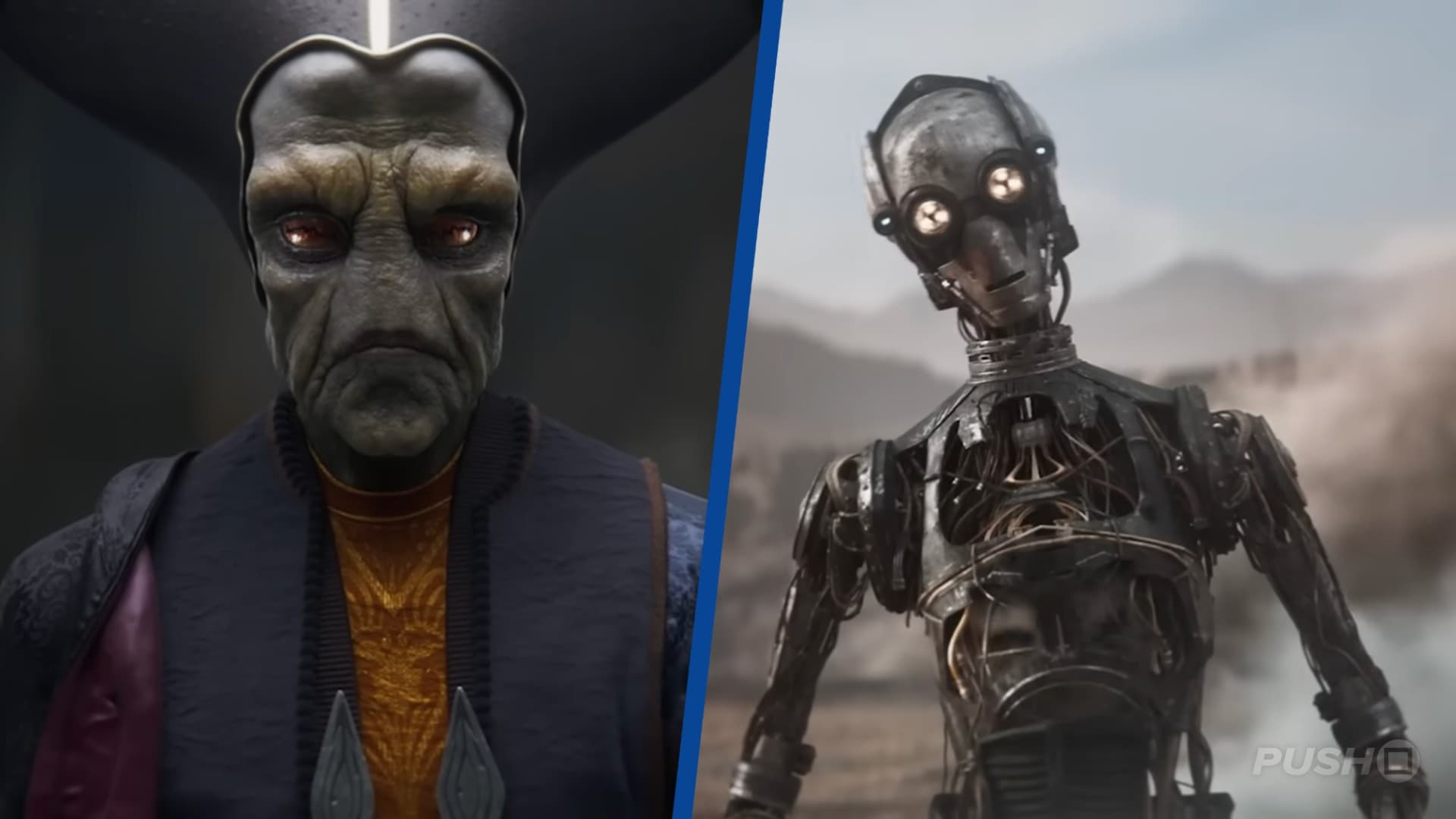
Quantic Dream’s long-teased, cinematic Star Wars Eclipse is reportedly nowhere near the finish line—despite being announced back in December 2021. A new insider report claims development has been “very slow going,” with sources suggesting the game remains “years off from completion,” and that its fate may hinge on whether Quantic Dream’s newer live-service project can generate enough revenue to keep the lights on. If you’ve been waiting for the studio behind Detroit: Become Human and Heavy Rain to take a big swing in a galaxy far, far away, the wait may be getting even longer—and the stakes sound higher than ever.
A High Republic dream that still hasn’t solidified
When Star Wars Eclipse debuted with that striking CGI trailer at The Game Awards 2021, it instantly positioned itself as one of the most intriguing Star Wars game announcements in years. Not because we saw gameplay—we didn’t—but because the pitch was catnip for narrative-adventure fans: Quantic Dream, the studio synonymous with branching storylines and cinematic presentation, tackling Star Wars in the High Republic era.
That era detail matters. The High Republic is a relatively fresh corner of the franchise’s timeline, and it’s been a playground for new characters and political tensions without being boxed in by the Skywalker saga’s gravitational pull. In theory, it’s a perfect fit for Quantic Dream’s style: multiple perspectives, moral friction, and the kind of sweeping, character-driven drama that thrives when the canon isn’t already paved over with familiar faces.
The problem is that, more than four years after the announcement, official updates have been scarce. Quantic Dream has publicly maintained that work is ongoing, but it hasn’t meaningfully reintroduced the project with gameplay, a release window, or even a clearer sense of scope. And now, the latest reporting paints a picture of a project that may still be deep in the weeds.
The report: “Very slow going,” “very little progress,” and still “years off”
The newest claims come via Insider Gaming, which says it spoke to multiple anonymous sources about the state of Star Wars Eclipse. The language is blunt—and frankly, worrying for anyone hoping this game would surface in the near future.
Development is described as “very slow going,” and one source claims the team has made “very little progress over months.” Another quote is even more direct: “The game, at this stage, is still looking to be years off from completion.”
That’s the kind of phrasing that lands like a thud because it doesn’t just imply “not soon.” It implies “not close.” And in modern AAA development—especially for a licensed blockbuster where approvals, pipelines, and production realities can be brutal—“years off” can mean a lot more than a modest delay. It can mean the project is still fighting to become the game it’s supposed to be.
There is one potentially reassuring detail buried in the reporting: sources indicate it’s not that nothing exists. A “good portion” of the game is reportedly complete. But anyone who’s watched big-budget development up close knows how deceptive that can be. “A good portion” can mean prototypes, vertical slices, partially built chapters, or systems that don’t yet cohere into a shippable whole. And the final stretch—polish, performance, content lock, QA, certification, platform optimization, localization, accessibility, and the endless churn of bug fixing—is where games either become great… or collapse under their own weight.
Quantic Dream has not announced platforms, pricing, or a release window for Star Wars Eclipse as of this reporting. The game was revealed as being in “early development” at the time of its 2021 unveiling.
NetEase’s role, and why another game may be funding Eclipse’s future
Here’s where the story gets more complicated—and more precarious.
Quantic Dream is owned by NetEase, and the insider report suggests there was discussion about expanding the development staff to accelerate progress on Star Wars Eclipse. However, NetEase reportedly didn’t want to invest in more staff without a clearer long-term vision.
Instead, the report claims both NetEase and Quantic Dream are looking to another title—Spellcasters Chronicles—to help generate the revenue needed to further fund Eclipse’s development.
Spellcasters Chronicles is described as a free-to-play, team-based multiplayer game, and it’s currently in Early Access on PC (Steam). Multiple reports point to it as a MOBA-like or action-strategy, competitive multiplayer experience (including 3v3 framing), and it represents a notable pivot for a studio best known for single-player, narrative-driven games.
The most alarming quote attributed to a source in the reporting is this: “At this stage, the long-term outlook is less driven by creative capabilities and more by financial viability.” The source continues with a stark warning: “Should Spellcasters fail commercially, NetEase is expected to reevaluate its commitment to the studio and could opt to discontinue further investment.”
That’s not just a delay story. That’s a “this project’s runway may be tied to a separate product’s performance” story. And historically, when a major licensed game’s future becomes entangled with the commercial success of an unrelated live-service release, it’s rarely a comfortable place to be.
Spellcasters Chronicles’ Steam numbers look rough
The reporting also points to Steam player counts as a sign that Spellcasters Chronicles may not be generating the momentum needed to become the studio’s financial engine.
Across the coverage, the cited figures include:
- A peak of 888 concurrent players on Steam
- A 24-hour peak in the range of 73–86 players (depending on when the numbers were checked)
- A snapshot of around 45 concurrent players at one point
It’s worth emphasizing what even the reporting itself acknowledges: Steam charts aren’t the whole story. But for a PC-only Early Access free-to-play title—especially one that needs to meaningfully support a studio with a massive licensed AAA project in the background—those numbers don’t scream “breakout hit.”
There are also details about monetization and reception. Spellcasters Chronicles reportedly holds a “Mixed” rating on Steam from 680 reviews, with more recent reviews trending “Mostly Positive.” It also reportedly includes microtransactions ranging from $8.99 up to $69.99.
None of that automatically means it can’t turn around—Early Access games do sometimes find their audience later. But it does underline the risk: if the plan is for Spellcasters to materially influence Eclipse’s development capacity, it needs to perform like a pillar, not a side project.
The silence around Eclipse—and why that 2021 reveal keeps coming back
Quantic Dream has offered very little concrete information about Star Wars Eclipse since the initial reveal. The most notable recent official statement referenced in the reporting dates to October of last year, when studio head David Cage wrote: “Of course, development of Star Wars: Eclipse continues, and we are eager to share more with you in the future.”
That’s a reassuring line in isolation. But in context—years after a cinematic trailer, with no gameplay, no platforms, no window—it reads more like a holding pattern than a rallying cry.
And then there’s the detail that has haunted Eclipse since the day it was announced: Bloomberg’s Jason Schreier previously said the game consisted of “literally nothing” when it was revealed. That claim has circulated for years because it fits an uncomfortable industry reality: big announcements sometimes happen before a project is truly ready to be shown, especially when partnerships, hiring, and corporate strategy are involved.
If Eclipse really did begin its public life as more of a promise than a production-ready project, it would help explain why the game has remained so elusive. It would also make the “years off” language feel less like a shock and more like an overdue correction to expectations.
Why this matters for Star Wars games right now
Star Wars games are in a strange, transitional moment. On one hand, the franchise is clearly ramping up its gaming output, with multiple projects in development across different genres and studios. On the other hand, the big “event” titles—the ones meant to define an era—have been uneven in their visibility and timelines.
The reporting suggests Eclipse’s uncertainty may have influenced Lucasfilm Games to pursue other large-scale creative partnerships. One example cited is Star Wars: Fate of the Old Republic, led by Casey Hudson at Arcanaut Studios. (Hudson is noted as a veteran associated with Knights of the Old Republic and the original Mass Effect trilogy.)
Meanwhile, other Star Wars releases are expected sooner. The reporting points to Galactic Racer and the XCOM-like Zero Company as titles expected later this year.
That broader context is important because it reframes Eclipse’s delay. This isn’t happening in a vacuum. Star Wars as a brand will keep moving—new games will launch, new studios will get their shot, and the audience’s attention will shift. The longer Eclipse stays in limbo, the harder it becomes for it to reclaim the spotlight it had in 2021.
And make no mistake: Eclipse needs the spotlight. Quantic Dream’s entire identity is built around cinematic ambition and big narrative swings. If it returns after years of silence, it can’t just be “a Star Wars game.” It has to be the Quantic Dream Star Wars game—the one that justifies the wait, the budget, and the creative gamble of placing a branching narrative adventure inside one of entertainment’s most scrutinized universes.
My read: Eclipse sounds like it’s stuck between ambition and economics
Nothing in this reporting says Star Wars Eclipse is canceled. But it does paint a picture of a project whose timeline is being shaped as much by financial strategy as by creative progress.
That’s not inherently evil—game development is expensive, and publishers make resource decisions constantly. But it’s a dangerous dynamic when a studio’s ability to staff up for a flagship licensed title depends on a separate Early Access free-to-play game finding traction on Steam.
Quantic Dream is not a small indie outfit. It’s a studio with a global brand, a history of high-production storytelling, and now a Star Wars license attached to its name. If the reporting is accurate, the fact that Eclipse may still be “years off” after such a long runway suggests either:
- the project’s scope is enormous and hard to wrangle,
- the production has faced internal constraints (like staffing),
- or the game is still searching for its final form.
It could be some combination of all three. But the most telling line in the reporting is the one about the “long-term outlook” being driven by financial viability. That’s the kind of sentence you hear when a project is no longer being discussed purely as a creative mission, but as a risk profile.
And for fans, that translates into a simple, frustrating reality: the wait isn’t just long—it’s uncertain.
What Remains Unknown
- Platforms: No official platforms have been confirmed for Star Wars Eclipse.
- Release window: There is still no official release date or even a release year.
- Gameplay specifics: Beyond the original positioning as an “intricately branching action-adventure” with multiple playable characters, no gameplay systems or structure have been officially detailed.
- How far along the game truly is: Reports claim a “good portion” is complete, but what that means (content, systems, chapters, playable builds) hasn’t been clarified.
- NetEase’s long-term commitment: The reporting suggests investment could be reevaluated depending on Spellcasters Chronicles’ performance, but no official statement has been made about funding conditions or milestones.
- When Quantic Dream will show Eclipse again: The studio has said it’s eager to share more “in the future,” but no next reveal has been scheduled or teased.