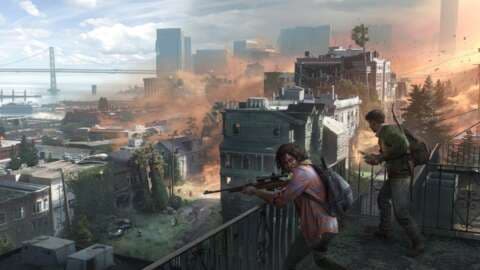
The canceled standalone multiplayer project set in the The Last of Us universe was far deeper into development than most fans ever realized. Former Naughty Dog director Vinit Agarwal says the game was roughly 80% complete, “very, very close to done,” and performing “really, really well internally” before Sony and Naughty Dog ultimately pulled the plug. If that stings, it should—because by Agarwal’s account, the decision came down to a brutal choice: finish the multiplayer experiment, or prioritize the studio’s next big single-player tentpole.
What makes this revelation hit harder is the human detail: Agarwal says he learned the project was being canceled only 24 hours before the news went public—after spending seven years on it.
How close was The Last of Us Online to release?
Agarwal, who served as game director on the project and previously worked on Uncharted 4: A Thief’s End, Uncharted: The Lost Legacy, and The Last of Us Part II, described the multiplayer game as being around 80% complete when it was canceled in 2023.
That “80%” figure is doing a lot of work—but Agarwal didn’t present it as a vague milestone. He characterized the game as “very, very close to done,” and said it had made “a lot of progress.” In other words: this wasn’t a prototype, a vertical slice, or a pitch that never got off the ground. This was a long-haul production that, at least internally, sounded like it had momentum and confidence behind it.
Agarwal also said the game was “doing really, really well internally,” which is the kind of phrase you almost never hear attached to a canceled project—especially one that had become a lightning rod for PlayStation’s broader live-service turbulence.
Why Sony and Naughty Dog reportedly made the call
Agarwal framed the project’s rise—and its fall—around the industry’s COVID-era boom and the sharp correction that followed.
He said Sony invested heavily in online gaming around 2020, when pandemic lockdowns drove a surge in playtime and made multiplayer games a social lifeline. That environment helped The Last of Us Online secure funding and scale up. But as the world shifted back toward offices and spending patterns changed, Agarwal described the broader market as declining in 2022–2023, with money being “pulled out” and spending collapsing after what he called an “overzealous” period.
Then came the internal crossroads at Naughty Dog.
Agarwal said a decision had to be made: continue building the multiplayer game, or focus on the next game being directed by Neil Druckmann—Naughty Dog’s studio head/president. Agarwal described the choice as the studio selecting its “bread and butter” rather than an “experimental game,” even though he believed the multiplayer title “was going to be really big.”
That context matters. Naughty Dog is one of the industry’s most identity-driven studios—synonymous with prestige single-player storytelling. A live-service The Last of Us spinoff was always going to be a cultural and operational shift, not just a new SKU.
“It killed me that people couldn’t play it”: the personal fallout
Agarwal didn’t hide how much the cancellation hurt. He called it a “devastating moment,” “soul-crushing,” and said he spent seven years working on the game.
One of the most striking details: Agarwal said he found out the game was being canceled 24 hours before the public announcement. He also suggested the short notice was tied to controlling messaging around the decision.
That’s a gut-punch scenario for any developer—especially a director. It also underscores how tightly managed major cancellations can be at the platform-holder level, where the business reality and the creative reality often collide in the worst possible way.
Agarwal has since left Naughty Dog, moved to Japan, and founded a new studio. Details on his new project remain under wraps, beyond comments that he’s building something new with lessons learned from his time on The Last of Us Online.
What this means for PlayStation’s live-service era—and Naughty Dog’s next chapter
Even without seeing the game, Agarwal’s comments reframe the cancellation from “this didn’t work” to “this was sacrificed.”
For years, the public narrative around The Last of Us Online (often associated with the old “Factions” legacy) has been dominated by absence: no release date, no gameplay deep dives, no playable beta, and then—suddenly—cancellation. Agarwal’s account suggests the project wasn’t simply struggling to find fun. He says it was close, it was progressing, and it was testing well internally.
That doesn’t automatically mean it would have landed with players. Live-service success isn’t just about quality—it’s about retention design, content cadence, monetization optics, and the sheer operational grind of supporting a “forever game.” But “80% complete” is still a staggering place to stop, and it speaks to just how dramatic the post-2020 industry whiplash has been.
As for Naughty Dog, the studio’s confirmed next title is Intergalactic: The Heretic Prophet, in development for PS5 with a 2027 release projection mentioned in recent coverage. Druckmann has also said the studio is working on another game alongside its big AAA release, though no official details have been confirmed about what that second project is.
What Remains Unknown
- Platforms and release plans for The Last of Us Online were never formally locked in publicly beyond its identity as a standalone multiplayer project; no final platform list or launch window has been confirmed.
- Monetization model (premium release vs. free-to-play vs. hybrid) has not been confirmed.
- Exact gameplay structure—modes, progression systems, and how it would have evolved beyond the original Factions concept—remains unconfirmed in detail.
- What Naughty Dog’s second in-development game is, beyond Intergalactic: The Heretic Prophet, has not been officially announced.
- How close “80% complete” was to a shippable build—and what the remaining 20% represented (content, polish, backend, live ops, certification)—has not been clarified.