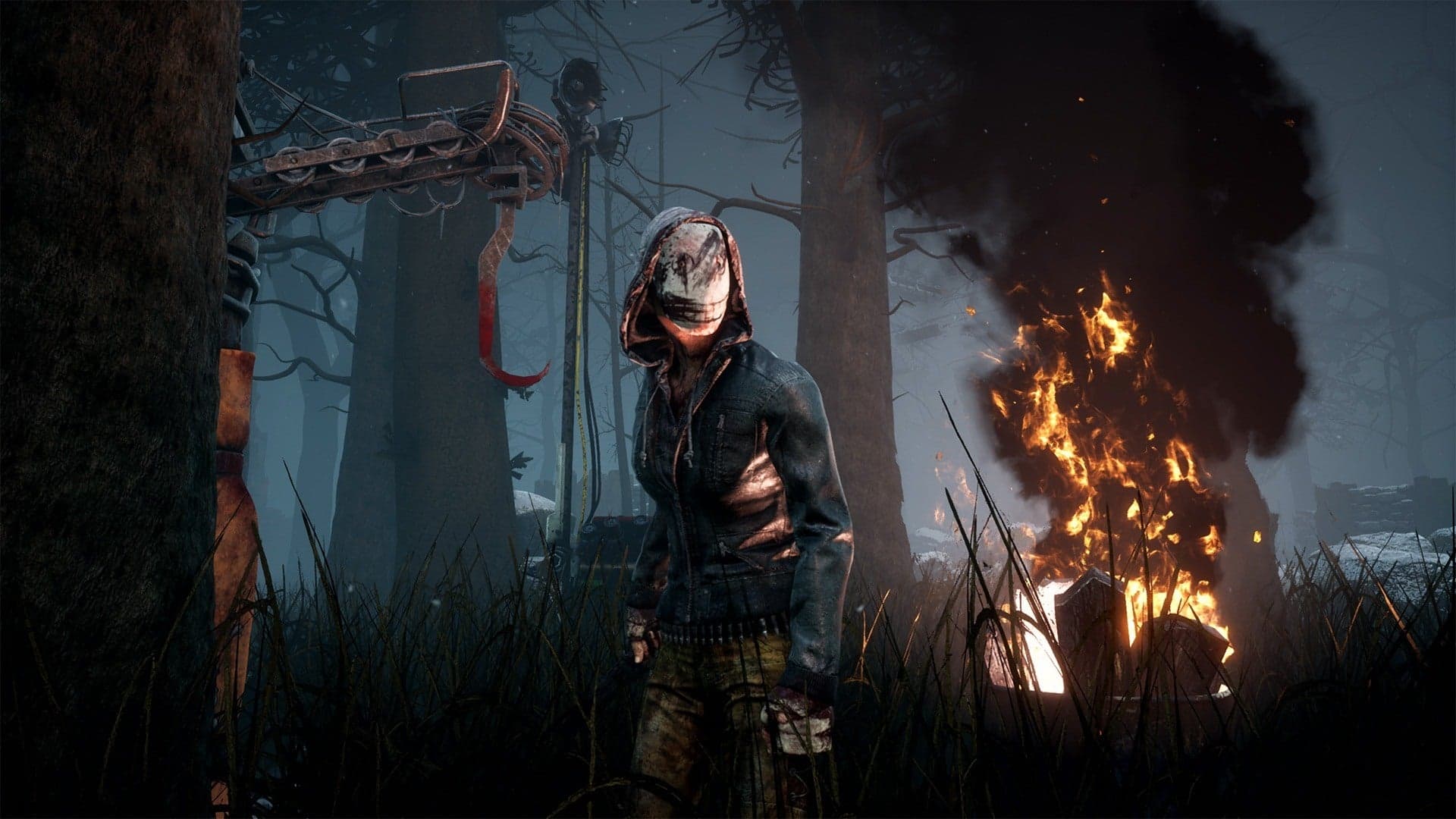
Dead by Daylight is barreling toward its 10th anniversary, and Behaviour Interactive isn’t treating it like a victory lap before moving on. Quite the opposite: the studio’s leadership is openly framing the next phase as a long-haul reinvestment—complete with a major matchmaking “re-imagination,” big-picture live-service lessons learned, and even wild spinoff daydreams like “Elden Ring, but Dead by Daylight.” Most importantly, Behaviour is drawing a hard line in the fog: there’s no plan for a numbered sequel, because the team believes Dead by Daylight 2 “never makes sense for the fans.”
This matters because Dead by Daylight isn’t just another multiplayer game that survived. It’s one of the rare live-service horror hits that’s stayed culturally loud for a decade—without hitting the reset button that so many other long-running online games eventually reach for.
Ten Years In, Behaviour’s Message Is Clear: The Future Is Still Dead by Daylight
At the Game Developers Conference last month, Behaviour Interactive’s head of partnerships Mathieu Cote and creative director Dave Richard spoke about Dead by Daylight’s tenth anniversary and what comes next. The tone isn’t nostalgic. It’s ambitious—almost defiant.
The headline takeaway is that Behaviour isn’t positioning the anniversary as a transition point to a replacement product. Instead, the studio is talking like a team that intends to keep evolving the same platform—keeping players’ purchases, progress, and time investment intact—while modernizing the experience around them.
That philosophy shows up repeatedly in Richard’s comments about sequels and remakes. He acknowledges the temptation: at some point, it can be “far easier” to build a sequel with a clean slate than to keep fixing long-running issues in an aging live game. But he argues that the clean-slate approach is fundamentally hostile to the community that kept the game alive.
And in live service, that’s the whole ballgame. Players don’t just buy a box; they buy into an ecosystem—cosmetics, characters, progression, and years of muscle memory. Behaviour is effectively saying: we’re not going to cash that in for a marketing-friendly “2.”
No Dead by Daylight 2: Behaviour Rules Out a Sequel (and Explains Why)
If you’ve been wondering whether the 10-year milestone would bring a “next-gen” reboot, a remake, or a numbered sequel, Behaviour’s answer is blunt.
Richard’s stance: a sequel to a popular live-service game “never makes sense for the fans. Never ever.” His reasoning is straightforward—players have “invested time and money on DBD,” and forcing them to start over would be a betrayal of that investment.
He goes further, explicitly stating Behaviour is “not going to do a DBD 2, that’s for sure.” Instead, the goal is to bring the existing game “kicking and screaming into the next decade.”
There’s also a practical, player-first hardware angle embedded in that decision. Richard notes that a more graphically demanding, “juiced-up” modern version could leave some of today’s audience behind—especially given the cost of hardware. In other words: even if a sequel could attract a new crowd, it risks cutting off the people who made Dead by Daylight what it is.
That’s a refreshingly grounded read of the live-service landscape. We’ve all seen what happens when an online game tries to “upgrade” by forcing a migration. Sometimes it works. Sometimes it fractures the community, breaks trust, and turns a long-running success into a prolonged argument about what was lost.
Behaviour is choosing continuity—then committing to the hard work that continuity requires.
A “Re-Imagination” of Matchmaking Is Coming — and Behaviour Calls It “Significant”
Keeping the same game for another decade isn’t just a promise; it’s a technical and design challenge. Behaviour has already signaled one of the biggest levers it plans to pull: a matchmaking rework the team describes as “significant,” and even a “re-imagination of how the game is played.”
That’s loaded language, and it’s not the sort of phrasing you use for a minor tuning pass.
While Behaviour hasn’t laid out every detail in the material at hand, the framing alone tells you how the studio views the problem. Matchmaking isn’t just a background system in Dead by Daylight—it’s the invisible hand that shapes nearly every player’s relationship with the game:
- Whether new players stick around or bounce off after a brutal first week
- Whether high-skill matches feel competitive or chaotic
- Whether killers feel empowered or bullied
- Whether survivors feel tense or doomed
- Whether the overall experience feels like horror… or like homework
Calling the rework a “re-imagination” suggests Behaviour is willing to rethink assumptions, not just tweak numbers. And if the studio is serious about another decade, it has to be. In a PvP horror game, the scariest monster is a bad match.
Behaviour’s Live-Service “Secret”: Don’t Start by Making a Live Game
Behaviour also shared what it calls its live-service secret: “You have to start by not making a live game.”
That line hits because it cuts against the trend-chasing mentality that’s swallowed so many studios. Too many live-service projects begin with monetization plans, retention loops, and roadmaps—then try to bolt a game onto the business model.
Behaviour’s claim is essentially that Dead by Daylight worked because it began as a compelling core game first, and then grew into a live-service ecosystem over time. That’s not just a philosophical point; it’s a survival trait. A live-service game can’t roadmap its way out of a weak foundation.
And it also explains why Behaviour is so adamant about not doing a sequel. If the foundation is still strong enough to build on—and if the team believes it can modernize without erasing player investment—then the “platform” approach is the more respectful (and arguably smarter) play.
Spinoff Dreams Get Weird (In a Good Way): “Elden Ring, but Dead by Daylight”
Even as Behaviour commits to the main game, the studio is clearly thinking about what Dead by Daylight could be beyond its current format.
When asked whether there were any stones left unturned for spinoffs, Richard floated a specific idea: a soulslike—summed up in a wonderfully chaotic pitch: “Elden Ring, but Dead by Daylight.”
To be clear, this is not an announced product, and no official spinoff has been confirmed here. But the fact that Behaviour leadership is willing to say the quiet part out loud—“yes, we think about genre-hopping”—is meaningful.
It also speaks to the strength of Dead by Daylight’s identity. You don’t pitch “X, but DBD” unless you believe the world, tone, and themes are portable. And whether you love or hate the idea, it’s hard not to see the appeal: the oppressive dread, the iconography, the obsession with killers as larger-than-life threats—those ingredients could absolutely fuel a different kind of game.
The bigger point: Behaviour isn’t creatively boxed in by its own success. It’s celebrating 10 years, but it’s still thinking like a studio with something to prove.
Why This Anniversary Moment Actually Matters
A 10-year anniversary can be a marketing beat. For Dead by Daylight, it’s also a referendum on a particular kind of longevity—one that doesn’t rely on annual sequels, and doesn’t require a hard reset to stay relevant.
Behaviour is making three big bets at once:
- Players will reward continuity more than they’ll reward a shiny new box labeled “2.”
- Systems-level reinvestment (like a major matchmaking rework) can refresh the experience without erasing it.
- The DBD brand is strong enough to support experimentation—maybe even spinoffs in wildly different genres.
If you’re a long-time player, the “no sequel” stance is a promise: your time and money aren’t being written off as “legacy content.” If you’re a lapsed player, the matchmaking rework talk is the most intriguing hook—because it implies Behaviour knows the on-ramp and the high-skill experience both need attention. And if you’re just watching the industry, Behaviour’s live-service lesson is a quiet critique of how many publishers still try to manufacture “forever games” from the top down.
What Remains Unknown
Even with Behaviour talking big about the next decade, there are still major unanswered questions:
- What exactly will change in the upcoming matchmaking rework, and when will it roll out?
- What does “re-imagination of how the game is played” mean in practice—is it purely matchmaking, or does it imply broader structural changes?
- What concrete plans (if any) exist for spinoffs, including the soulslike concept Richard mentioned?
- What the 10th anniversary celebrations will include in-game or otherwise, beyond the studio’s public reflections—specific event details have not yet been confirmed here.
For now, Behaviour’s anniversary-era message is refreshingly direct: Dead by Daylight isn’t being replaced. It’s being rebuilt—piece by piece—so it can keep haunting the genre for “many, many more” years.