Four years after Elden Ring first swallowed our lives whole, a deleted, never-before-seen cutscene has surfaced showing Miquella planting—and literally blood-feeding—the Haligtree. The footage comes from an unused map file discovered by prominent dataminer Lance McDonald, and it reframes one of the base game’s most haunting locations with a startlingly direct piece of visual storytelling. For lore obsessives and Shadow of the Erdtree veterans alike, this is the kind of find that doesn’t just add trivia—it changes the texture of what you thought you knew.
This isn’t a fan animation or a speculative reconstruction. It’s a real cutscene file sitting inside the game’s data, paired with a modified version of Malenia’s arena that appears to have been built specifically to stage this moment. And yes: it’s exactly as eerie as it sounds.
A Cutscene From the “Other” Elden Ring We Never Got
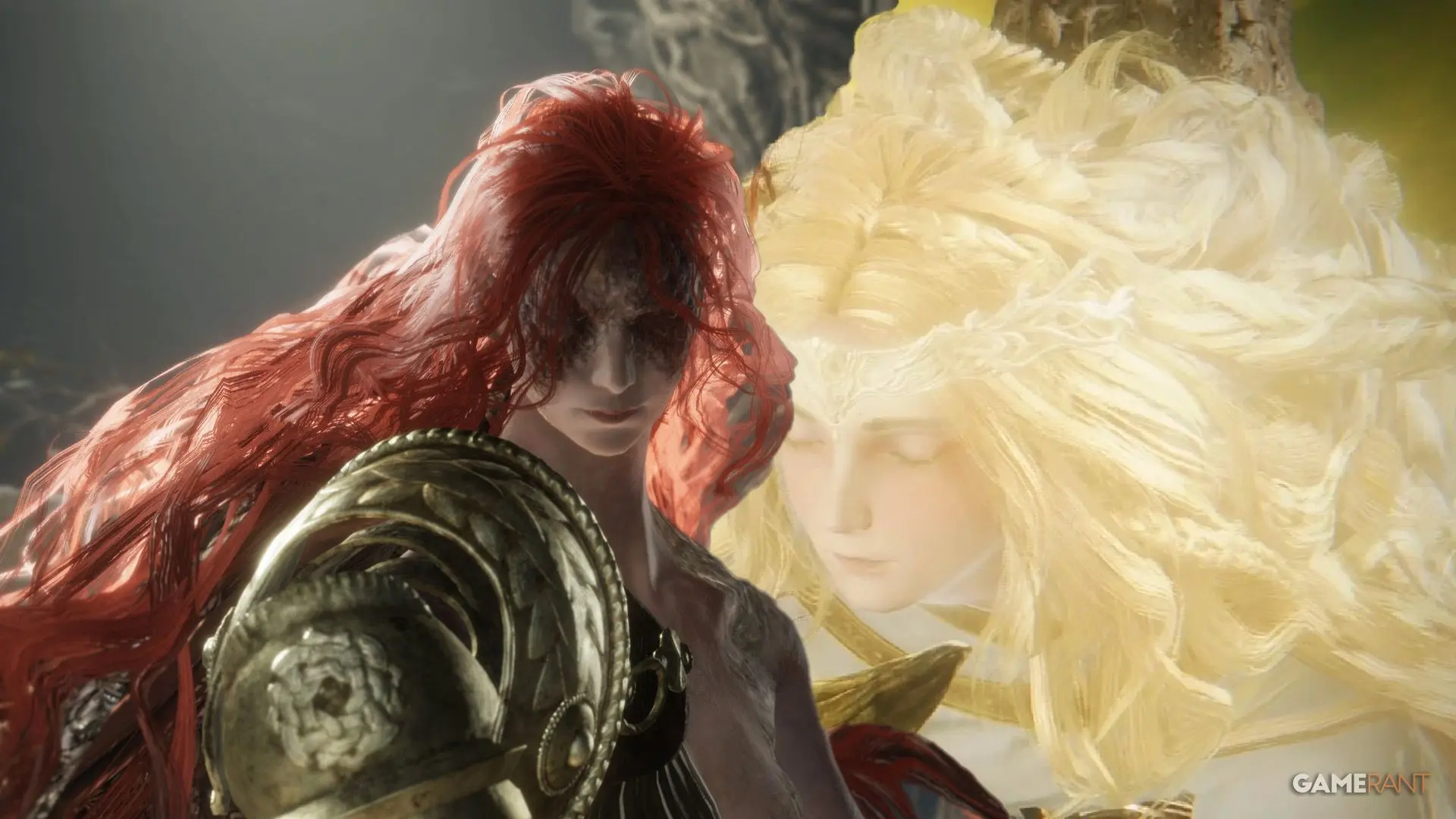
The newly uncovered scene depicts Miquella planting a sapling Haligtree and watering it with his own blood. Visually, it plays out in a modified version of Malenia’s boss room—a strong signal that this was once meant to be a foundational “origin” beat for the entire Haligtree endgame dungeon.
McDonald’s video also showcases the unused map file itself, including a version of the arena where a small Haligtree sprout sits at the center. That’s a striking contrast to what players know: the final game presents the Haligtree as an immense, decaying monument you descend into, not something you ever see being born.
What makes this discovery hit harder is how deliberate it feels. FromSoftware doesn’t usually hand players clean, cinematic answers—especially not for a figure as mythologised as Miquella. The fact that this scene exists at all suggests the studio once considered a more explicit breadcrumb trail leading players toward the Haligtree subplot.
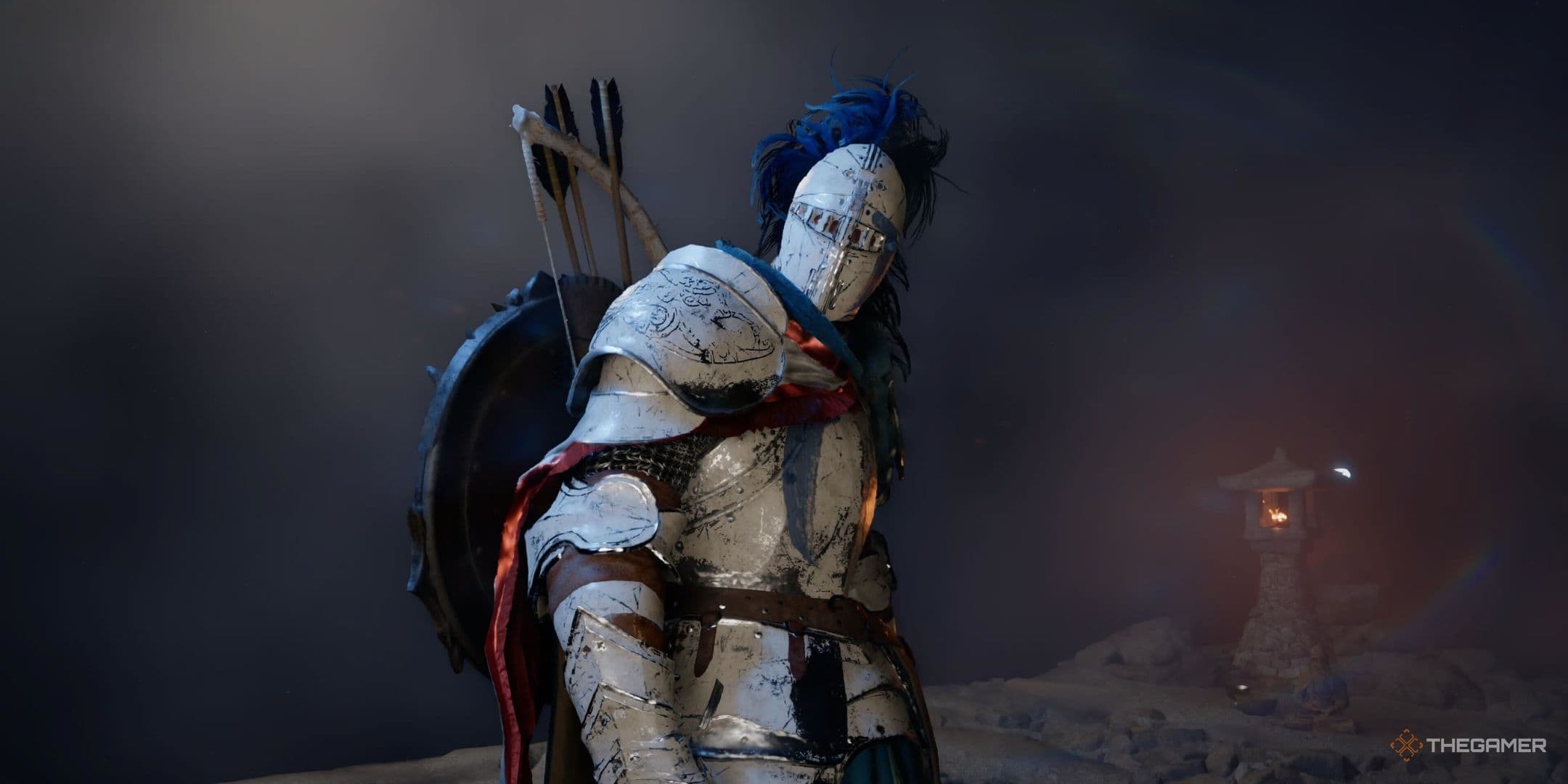
And it’s not like the “blood-watered” idea came out of nowhere. The Haligtree Knight Armour flavour text already states the tree was “watered with Miquella’s own blood since it was a sapling,” and that it ultimately failed to become an Erdtree. The cutscene doesn’t invent that lore—it shows it, which is a very different kind of storytelling power.
The Unused Dialogue: “All Things Flourish, Whether Graceful or Malign.”
Alongside the map file, McDonald also surfaced unused spoken dialogue associated with the cutscene. There’s an important caveat: an intermediate file that would normally define how these lines connect is missing, so the exact intended order and usage isn’t fully certain. Still, McDonald shared the lines in the order they appear in the game’s files, and they’re pure, intoxicating FromSoftware incantation:
“Young seedling, young seedling, grow larger, stronger.
My dear twin, accept this gift, a gift of abundance.
My last drop of dew.
Let all things flourish, whether graceful or malign.
If thou coveteth the throne, impress my vision upon thine heart.
In the new world of thine making, all things will flourish, whether graceful or malign.”
That repeated phrase—“whether graceful or malign”—is the line that sticks like a thorn. It reads like a mission statement, and depending on how you interpret Miquella post-Shadow of the Erdtree, it can sound either benevolent (a utopian promise) or chilling (a justification that makes room for atrocity).
There’s also a fascinating ambiguity in who Miquella is addressing. The line “my dear twin” strongly implies Malenia, but later lines (“If thou coveteth the throne…”) feel like they could be aimed at someone else—possibly the player. Whether that’s a deliberate rhetorical shift or simply a byproduct of cut, rearranged content is unclear, but the effect is unmistakable: it makes Miquella feel like a character who was once meant to reach through the lore and speak more directly to you.
One more intriguing detail: McDonald notes that Miquella’s model appears to match the one seen in his final scene in Shadow of the Erdtree. That continuity matters. It suggests this wasn’t some ancient prototype from a totally different era of development—it may have remained in the project long enough to share assets with later, shipped material.
How It Was Supposed to Trigger (And Why You Never Saw It)
McDonald’s findings also point to how this cutscene might have been delivered in the base game. The scene seemingly would have triggered after receiving the Left Dectus Medallion from Sir Gideon Ofnir at Roundtable Hold—almost like a narrative teaser nudging players toward the Haligtree’s significance.
That’s a radically different setup than what shipped. In the final version of Elden Ring, the Left Dectus Medallion is obtained from a chest in Fort Haight, not from Gideon. With that change, the cutscene becomes inaccessible through normal play—yet the video file and related content remained buried in the data.
It’s a classic FromSoftware development ghost: a scene that once had a clear place in the game’s flow, then got severed when quest logic, item placement, or narrative pacing changed. Anyone who’s followed FromSoft cut content over the years knows this pattern well—ideas don’t always get deleted so much as entombed.
And the Haligtree is exactly the kind of content that could have benefited from a stronger narrative “hook.” In the released game, reaching it is famously obtuse: players must travel to Ordina, Liturgical Town, enter a nearby Evergaol, and solve a puzzle involving lighting unlit candles to open a Waygate. Only then do you arrive at the Haligtree’s upper reaches and begin the long descent toward Elphael, Brace of the Haligtree, and ultimately Malenia, Blade of Miquella.
A cutscene tied to a major medallion acquisition would have made that entire chain feel less like a secret society handshake and more like an intended late-game thread. FromSoftware clearly decided against that kind of clarity—and honestly, that decision is very on-brand. But seeing what they cut makes the final choice feel newly intentional, not just mysterious.
Why This Matters More After Shadow of the Erdtree
If this cutscene had surfaced before Shadow of the Erdtree, it would have been “cool lore.” After the DLC, it’s something sharper: a window into an earlier version of Miquella’s framing—one that seems to lean harder into the image of a visionary cultivating a refuge.
In the base game’s lore, Miquella created the Haligtree as a place where he could grow into godhood, and it served as a haven for those without grace, including the Albinaurics. But the story also tells us that before the Haligtree could fully reach its promise, Miquella was kidnapped by Mohg and taken to Mohgwyn Palace.
Then Shadow of the Erdtree arrives and complicates everything. Miquella’s “Kindly” reputation becomes harder to take at face value, and the DLC paints his intentions in a far more sinister light than many players expected from the base game’s tone around him.
That’s why this cutscene lands like a bomb: it confirms, in a literal visual sense, that Miquella did plant the Haligtree—and it does so with language that can be read as either compassionate or ruthlessly ideological. The scene doesn’t “redeem” him, and it doesn’t “condemn” him. It simply shows the act, the ritual, the conviction.
And conviction is the scary part. “Let all things flourish, whether graceful or malign” is not the line of someone worried about moral boundaries. It’s the line of someone who has already decided the outcome is worth any cost.
The Bigger Picture: Elden Ring’s Lore Machine Still Has Teeth
The most astonishing part of this story isn’t just that a deleted Elden Ring cutscene exists. It’s that we’re still finding meaningful, coherent pieces of cut narrative four years after launch—and that they still connect cleanly to shipped item descriptions, locations, and even DLC characterization.
This discovery also reinforces something longtime FromSoftware fans have argued for years: these games aren’t written like traditional scripts. They’re built like archaeological sites. Assets, maps, voice lines, and item text evolve in parallel, and when something gets cut, traces remain—sometimes enough to reconstruct an entire “shadow version” of the story.
In this case, the cutscene doesn’t just add flavour. It suggests a version of Elden Ring where the Haligtree thread was more overtly signposted, and where Miquella’s “abundance” rhetoric may have been foregrounded earlier.
There’s also a notable connective tissue to older datamining history: the dialogue’s reference to “abundance” echoes the long-circulated cut weapon name “Abundance and Decay Twinblade,” which was datamined shortly after Elden Ring’s launch and linked to Miquella-related cut content. That weapon model was later reworked into Euporia in Shadow of the Erdtree—one more example of how FromSoftware repurposes cut ideas rather than discarding them outright.
The result is a kind of long-tail storytelling that almost no other studio can match. Even the cutting-room floor is canon-adjacent.
What Remains Unknown
- Why the cutscene was removed and at what stage of development it was cut has not been officially explained by FromSoftware.
- The intended final sequencing of the voice lines is uncertain due to a missing intermediate cutscene file that would normally define playback order and context.
- Whether additional Miquella/Haligtree cutscenes exist in the data (or were removed entirely) remains to be seen.
- If the cutscene was ever fully implemented in a playable build—as opposed to being a filmed test scene—has not been confirmed.
For now, this is one of those rare discoveries that makes Elden Ring feel alive again in the best way: not because it’s changing, but because we’re still learning how much of it was almost different. And when the character at the center of that “almost” is Miquella, every new fragment feels like it could tilt the entire mythos.