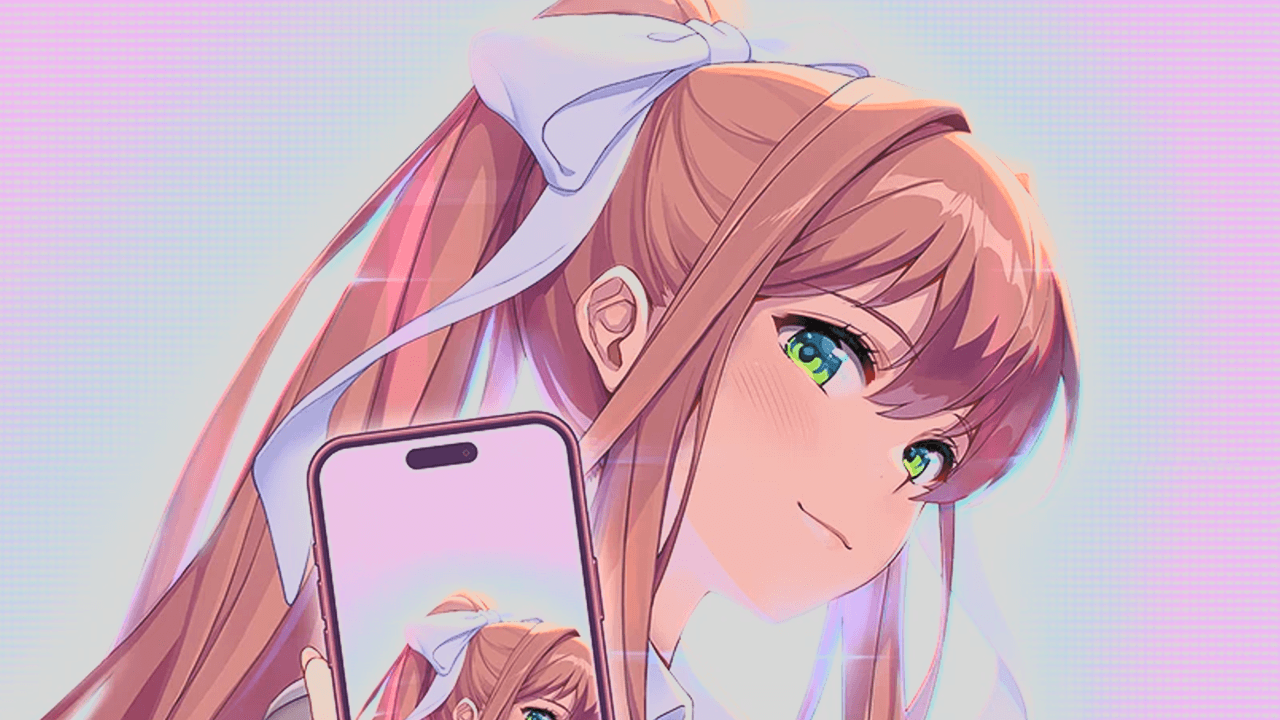
Doki Doki Literature Club—the famously deceptive “cute-until-it-isn’t” cult visual novel—has been delisted from the Google Play Store, roughly four months after its Android launch in December 2025. Google reportedly cited a Terms of Service violation tied to the game’s “depiction of sensitive themes,” prompting creator Dan Salvato and publisher Serenity Forge to push for reinstatement while also exploring alternate Android distribution options. For a game that’s been openly warning players about its content for years, the timing and rationale raise uncomfortable questions about how platform moderation works when mental health, horror, and policy collide.
What Happened: Google Delists DDLC on Android
Sometime this week, players noticed Doki Doki Literature Club had vanished from Google Play, and it was later confirmed that Google removed the game rather than the developer or publisher pulling it voluntarily. Reporting indicates the takedown occurred on Wednesday, April 8.
In a joint public statement shared by Dan Salvato and Serenity Forge, the team said Google’s explanation was that the game’s content violates Google Play’s Terms of Service due to its “depiction of sensitive themes.” Salvato and Serenity Forge also emphasized that the game remains available on other platforms and that they’re actively working to get it back on Google Play.
“DDLC is available on many different major platforms, including iOS, Nintendo Switch, PlayStation, and more,” Salvato said in the statement. “We’re continuing to do everything we can to find a path forward for getting DDLC reinstated on the Google Play Store. Meanwhile, we’re also looking into potential options for alternate methods of distribution on Android devices.”
That last line is the key takeaway for Android players: this isn’t being treated as a shrug-and-move-on moment. The team is explicitly pursuing both reinstatement and workarounds.
Why Google Might Have Acted — and Why the Timing Is So Strange
Google has not publicly detailed the specific clause or content element that triggered the removal, but the stated reason—sensitive themes—lands squarely in the territory DDLC is known for. The game famously pivots from a dating sim façade into psychological horror, and it includes graphic depictions of suicide. That content has always been central to the game’s identity, and it’s also exactly the kind of material that app storefront policies often treat with extreme caution.
One of the more pointed angles here is that DDLC’s mobile release wasn’t stealthy about what it is. The game is widely known for its disturbing turn, and the mobile versions have been presented with clear content warnings. On iOS, it carries a 17+ rating, and the description includes a blunt warning: “This game is not suitable for children or those who are easily disturbed.” On Android, the game also carried a Mature 17+ rating, and the game itself warns players up front about disturbing content—plus, there are additional content warnings available via settings.
So why approve it in December 2025 and then delist it in April 2026?
That’s the part that makes this story feel less like a simple moderation call and more like a case study in platform inconsistency. Either the game was not reviewed in a way that accounted for its content at launch, or something changed—policy interpretation, enforcement priorities, internal review, external pressure, user reports, or any combination of factors. None of those possibilities have been officially confirmed, but the whiplash is real: DDLC didn’t suddenly become DDLC. It’s been DDLC for nearly a decade.
What Salvato and Serenity Forge Are Saying (and What It Signals)
Salvato and Serenity Forge didn’t just dispute the removal—they defended the game’s intent and impact, framing it as a work that resonates with players who have struggled with mental health.
“DDLC is widely celebrated for portraying mental health in a way that meaningfully connects deeply with players around the world, helping them feel heard, understood, and less alone on their journey,” Salvato said in the statement.
That’s not a throwaway line. It’s a direct challenge to the idea that depicting suicide or depression is inherently disallowed, irresponsible, or unfit for a mainstream storefront—especially when the work is framed as empathetic rather than exploitative.
The statement also makes clear the team is trying to avoid a scenario where the only way back onto Android is through censorship or alteration, though no official details have been provided about what Google would require (if anything) to reinstate the app. What we do know is that the publisher is exploring “alternate methods of distribution” on Android devices, which could mean anything from third-party storefronts to direct downloads—though no specific plan has been announced yet.
Why This Matters: Android Access, Storefront Power, and Horror’s New Fault Line
This isn’t just about one visual novel getting yanked. It’s about the reality that storefronts are gatekeepers, and on mobile—especially Android—Google Play is the default pipeline for most players. When a game is removed from Play, it’s not merely “harder to buy.” It can become effectively invisible to the mainstream audience, even if it remains available elsewhere.
And DDLC isn’t some obscure shock title. It’s one of the most influential psychological horror visual novels of the last decade, with a reputation that extends far beyond its genre niche. On PC, it’s also famously accessible: the original version remains free on Steam, and the game’s legacy has been sustained by years of streaming culture, word-of-mouth, and critical discussion.
The removal also lands amid broader anxiety in the games industry about who gets to decide what’s acceptable—and how quickly those decisions can change. Over the past year, there’s been heightened discussion around games being delisted or restricted across platforms, particularly in adult categories, but also spilling into horror. Whether DDLC’s case is connected to those trends has not been confirmed. Still, the optics are hard to ignore: a game with clearly labeled mature content gets approved, builds an Android audience for months, then gets removed for the very themes it has always openly contained.
From a player perspective, the immediate impact is practical and frustrating: new Android users can’t buy it on Google Play right now, and anyone who was waiting for a sale or simply “the right time” has lost the easiest path to purchase.
There is one small silver lining reported by players: some who already installed it say it remains playable on their devices. But that’s not a solution—it’s a snapshot of how messy digital ownership becomes when storefront access is revoked.
What Remains Unknown
- Google’s exact reasoning: no specific policy clause or content example has been publicly cited beyond “depiction of sensitive themes.”
- Whether DDLC will return to Google Play: there’s no timeline or confirmation of reinstatement.
- What changes (if any) Google would require for reinstatement: no official guidance has been shared publicly.
- How Android distribution will work going forward if reinstatement fails: Serenity Forge has said it’s exploring alternatives, but no method has been announced.
- Whether external factors influenced the decision (reports, policy shifts, or other pressure): nothing has been confirmed.
For now, Doki Doki Literature Club remains available on iOS and other major platforms including Nintendo Switch and PlayStation, while Android players are stuck in limbo—waiting to see whether Google reverses course, or whether Serenity Forge has to carve a new path around the Play Store entirely.