Yoshihisa Kishimoto—best known as the creator of Double Dragon and the Kunio-kun/River City lineage that helped define the beat ’em up—has passed away. He was 64. The news was shared publicly by his son, Ryūbō, who said Kishimoto died on April 2, 2026, a loss that lands like a gut-punch for anyone who grew up feeding quarters into arcade brawlers or still swears by River City’s scrappy, street-level charm.
Kishimoto wasn’t just “involved” in a genre. He helped write its grammar—how crowds fight, how streets scroll, how a brawler can feel personal, angry, and alive.
A Son’s Message Confirmed Kishimoto’s Passing
The announcement came via a social media reply from Kishimoto’s son, Ryūbō, posted in response to a message celebrating the 40th anniversary of Kunio-kun (widely known in the West through the River City branding). In a translated message, Ryūbō wrote:
“I am the son of Yoshihisa Kishimoto, director of the passionate, hardcore Kunio-kun series. I am writing to inform you that my father passed away on April 2, 2026. Please feel free to contact me anytime if you need to confirm details or anything else. Thank you so much for sharing so much information over the years for the Kunio-kun fans. We appreciate your continued support moving forward.”
A follow-up message from Ryūbō, also translated, thanked fans for their condolences and reflected on how far Kishimoto’s work traveled:
“I'm sorry for not being able to reply, but thank you very much for the many heartfelt memory messages. I'm truly delighted to learn that there are people around the world who have played the Kunio-kun series extensively and understand my father even more deeply than I do. Please continue to enjoy my father's works with a smile in the future.”
The passing was also confirmed publicly by Japanese outlet Famitsu and by gaming historian and biographer Florent Gorges, who posted a tribute stating he was “devastated” by the sudden loss of his friend and that Kishimoto had accepted him as his biographer.
The Career Path: From Data East to Technos Japan, and Into Arcade Immortality
Kishimoto’s career traces a path through some of the most formative companies of the 1980s arcade boom. He began in the industry at Data East, where he worked on titles including Cobra Command and Road Blaster—games that sit in that fascinating era when developers were experimenting with spectacle, presentation, and arcade immediacy.
But Kishimoto’s name becomes inseparable from the moment he moved to Technos Japan Corp, where he created Nekketsu Kōha Kunio-kun—released outside Japan as Renegade. That game matters for two reasons:
- It’s a foundational pillar for the modern beat ’em up.
- It’s personal.
Kishimoto described Renegade as semi-autobiographical, partially based on fights he frequently got into as a teenager. That’s not a marketing bullet point; it’s a creative thesis. Beat ’em ups, at their best, aren’t just about punching sprites—they’re about attitude, momentum, and the feeling that the street is pushing back.
And Kishimoto understood that feeling intimately.
In an interview about the history of Double Dragon, Kishimoto also spoke about how intense youthful emotions fueled his creative drive. He said: “There was a girl and she dumped me… which pulled the trigger.” That emotional spark, channeled into design, is part of why these games still feel raw decades later.
Renegade, Kunio-kun, and the Birth of River City’s DNA
Renegade (Nekketsu Kōha Kunio-kun) didn’t just succeed—it set a template. It wasn’t the first beat ’em up, but it helped crystallize key ideas that would become genre staples: navigating space, moving through a scrolling environment, and turning street fights into a readable, playable language.
When the game was localized internationally, the original Japanese high school delinquent framing was altered, and the game became Renegade for worldwide markets. That cultural shift—one version rooted in youth delinquency, the other in a more generalized “urban bedlam” vibe—became part of the franchise’s complicated identity across regions.
From that Kunio-kun foundation came a broader series that includes River City Ransom and later River City games, plus spinoffs like Super Dodge Ball and Crash ‘n’ the Boys: Street Challenge. Kunio-kun became such a hit that he effectively served as a mascot figure for Technos, even shifting into a cuter style and appearing in sports-themed entries.
It’s worth noting a key nuance: Kishimoto was not directly involved with the development of River City Ransom itself, but he revisited the River City universe later in his career. He served as a collaborative director on Stay Cool, Kobayashi-san!: A River City Ransom Story (2019). He also revisited the broader Kunio-kun/River City lineage through later projects referenced in reporting, including River City Girls Zero (originally released in 1994 on Super Famicom under a different title and later localized).
That’s the thing about Kishimoto’s legacy: even when he wasn’t hands-on with every single landmark entry, the ecosystem was his. The tone, the structure, the street-level storytelling—those fingerprints are all over the genre’s most beloved brawlers.
Double Dragon: The 1987 Hit That Turned Beat ’Em Ups Into a Global Language
If Renegade was the spark, Double Dragon was the wildfire.
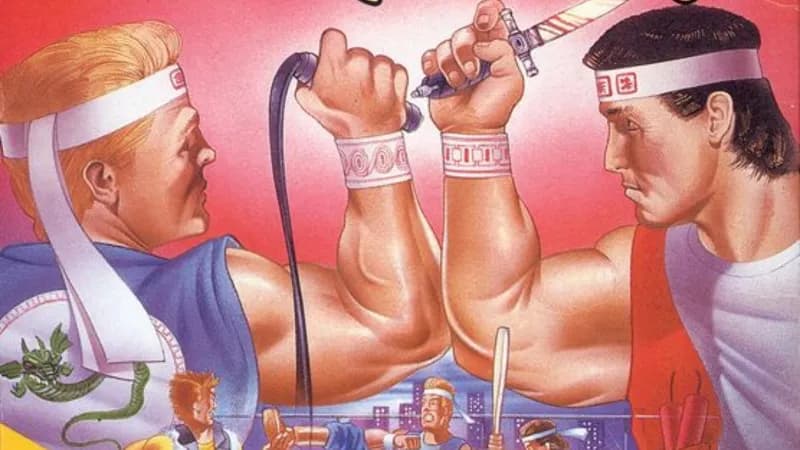
Kishimoto created Double Dragon, which launched in 1987, and it became a massive hit—one that didn’t just spawn sequels, but helped cement the beat ’em up as arcade royalty. The series went on to generate numerous follow-ups and offshoots, plus a 1993 animated series and a 1994 live-action film.
There’s an origin story here that speaks to how games evolve mid-development. Double Dragon was originally envisioned as the third brawler entry in the Kunio-kun saga, but development shifted toward something closer to the international version of Renegade. The result was a new identity: twin brothers Billy and Jimmy Lee, brawling through gangs to rescue girlfriends in a heightened, stylized setting.
That pivot matters historically. It’s a reminder that genre-defining games aren’t always born from a single clean “vision statement.” Sometimes they’re forged in the messy middle—where market realities, localization differences, and creative instincts collide. Kishimoto and Technos didn’t just make a sequel; they made a new pillar.
Kishimoto served as director or producer on multiple Double Dragon entries, including:
- Double Dragon
- Double Dragon II: The Revenge
- Double Dragon III: The Sacred Stones
- Super Double Dragon
- Double Dragon IV (the final game he directed)
And while Kishimoto’s last directed entry was Double Dragon IV, the franchise itself has continued. The most recent sequel mentioned in reporting is Double Dragon Revive (2025).
Why Kishimoto’s Work Still Matters (and Always Will)
It’s easy to reduce beat ’em ups to nostalgia: the sound of a coin drop, the crunch of a pixelated punch, the ritual of playing co-op with a friend. But Kishimoto’s work deserves more respect than “remember arcades?”
He helped define how brawlers move—how a crowd forms around the player, how space becomes a weapon, how aggression becomes rhythm. Renegade and Double Dragon didn’t just entertain; they taught designers what the genre could be. That influence echoes through brawling games that followed, and through the broader language of fighting games and street-level action design.
And there’s a human core to it. Kishimoto’s own words—about heartbreak, about youth, about channeling emotion into creation—underline why these games hit harder than their simple premises suggest. They’re not sterile combat simulators. They’re messy, passionate, and immediate.
That’s why this loss stings. When a creator like Kishimoto passes, we don’t just lose a name in the credits. We lose a living link to the era when genres were being invented in real time, in noisy arcades, by people who were willing to put their own bruises into the work.
What Remains Unknown
- The cause of Yoshihisa Kishimoto’s death has not been publicly disclosed.
- No official details have been announced regarding any memorial services or public tributes beyond statements and posts shared online.
- It’s unclear whether any future Double Dragon or Kunio-kun/River City projects will include formal dedications or in-game tributes, as no such plans have been confirmed.
Kishimoto leaves behind a legacy that’s impossible to overstate: Renegade, Kunio-kun, River City, Double Dragon—cornerstones of arcade history and the DNA of countless brawlers that came after. If you’ve ever loved a beat ’em up, you’ve felt his influence, whether you knew his name or not.