The upcoming Far Cry live-action TV series is already catching heat—and this time it’s not just fans doing the shooting. Far Cry 4 director Alex Hutchinson has publicly pushed back against showrunner Noah Hawley after Hawley argued that video games “don’t make for the best drama” because players can skip cutscenes, calling the situation “kinda pi**ing me off” on LinkedIn.
It’s a flashpoint moment for a franchise built on big personalities, volatile politics, and unforgettable villains—and it raises an uncomfortable question right out of the gate: does the creative lead of the FX series actually understand what makes Far Cry work?
Hawley’s Comments: “Games… Don’t Make For The Best Drama”
Hawley—best known for Fargo and Alien: Earth—recently laid out his philosophy for adapting Far Cry to television, explaining that he isn’t planning to directly adapt any of Ubisoft’s existing games. Instead, he wants to tell an original story while maintaining a “dialog” with the franchise, leaning into the series’ anthology nature where each entry is a standalone setting and cast.
That part, frankly, makes sense. Far Cry isn’t one continuous saga; it’s a rotating carousel of new locations, new power structures, and new antagonists. A TV anthology approach could be a natural fit.
Where Hawley stepped on the landmine is how he framed games as a storytelling medium. In comments given in an interview with Deadline, he argued that games are “built in a way that doesn’t make for the best drama,” describing a structure where players “only really move forward through the gameplay section,” and then hit cutscenes “that you can skip.” In his view, that dynamic can make “the human drama kind of irrelevant to the storyline,” adding: “That is death for a show.”
It’s a sweeping statement, and it landed exactly the way you’d expect in 2026: like a throwback to an era when some screenwriters treated games as plot-light theme parks rather than a medium that’s spent the last decade proving it can deliver character, tension, and emotional stakes at scale.
Alex Hutchinson Fires Back—And Points Out a Big Problem
The most pointed response so far hasn’t come from a random quote-tweet pile-on. It came from Alex Hutchinson, director of Far Cry 4, who posted on LinkedIn: “This is kinda pi**ing me off. And I like Noah Hawley’s work.”
That second sentence matters. Hutchinson isn’t dismissing Hawley as a hack; he’s reacting like someone who respects the guy’s résumé and is still frustrated by what the comments imply about games—and about Far Cry specifically.
And then there’s the detail that makes Hawley’s “you can skip cutscenes” framing look especially shaky: Far Cry 3 and Far Cry 4 don’t offer an option to skip cutscenes. That’s not a nitpick; it’s a direct contradiction of the example Hawley used to justify his broader point. If you’re going to argue that the medium’s storytelling is structurally undermined by skippable narrative delivery, you probably want to be sure the flagship entries you’re invoking actually work that way.
This is why Hutchinson’s irritation hits harder than typical internet outrage. It’s not just “gamers mad.” It’s a key creative voice from the franchise calling out a perception problem—one that can quickly turn into a trust problem.
Why This Is Touchy: Far Cry Is Built on Villains, Not Just Chaos
Hawley’s comments also clash with what many players consider Far Cry’s calling card: its villains and the human drama they bring with them.
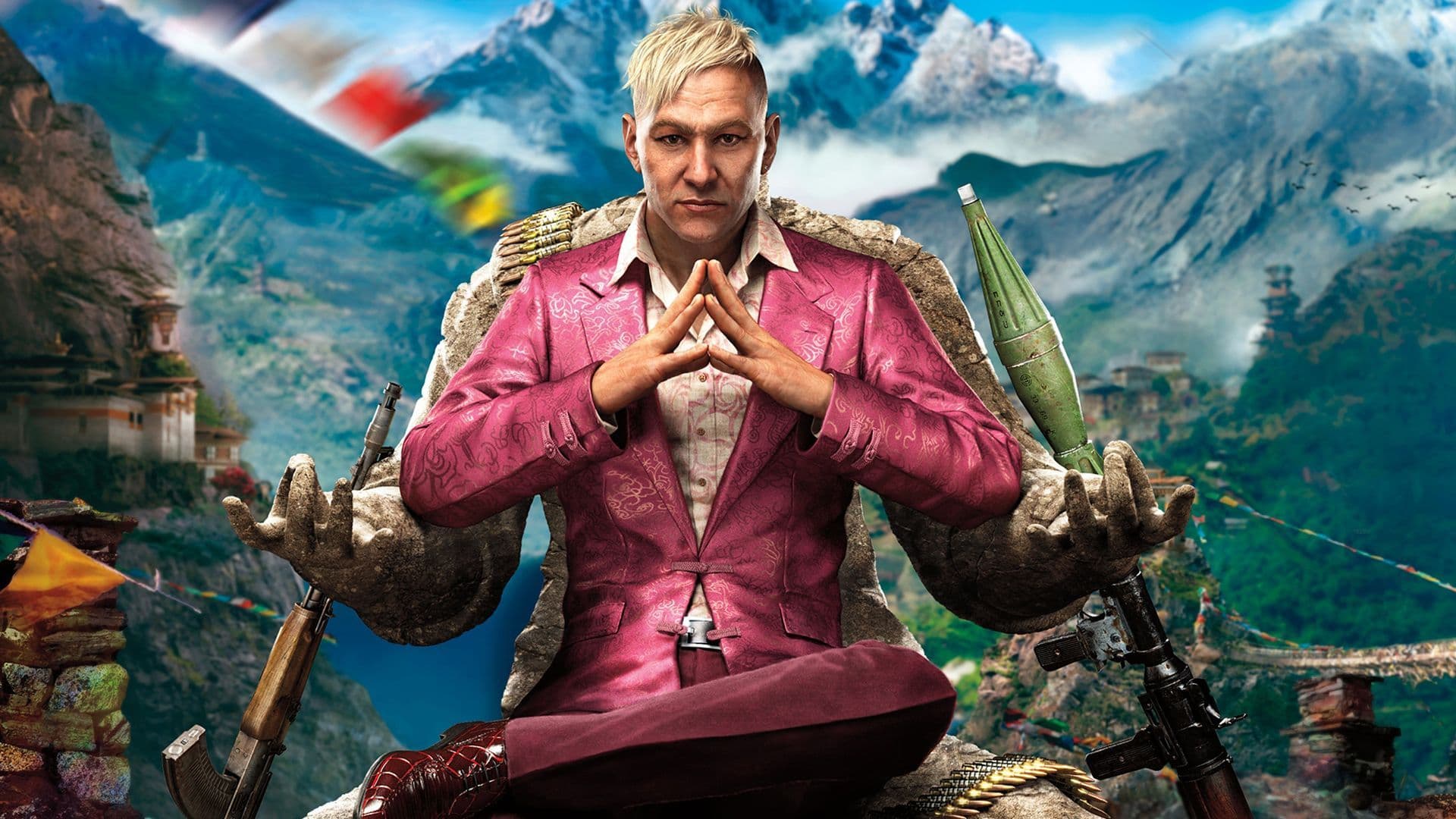
The series has become synonymous with charismatic antagonists and ideological pressure cookers—Vaas Montenegro, Pagan Min, Joseph Seed, and more recently Antón Castillo. People don’t quote Far Cry 3’s “definition of insanity” scene because they were desperate to get back to capturing outposts; they quote it because it’s a character moment that stuck.
Yes, Far Cry is also about systems-driven mayhem: scouting, stealth, improvisation, and the series’ signature “everything is on fire and somehow it’s your fault” sandbox energy. But that doesn’t erase the fact that the franchise repeatedly frames its action with character-driven conflict, performance, and theme.
Hawley isn’t wrong that adapting games is hard. He’s not wrong that what works interactively doesn’t always translate cleanly to passive viewing. But the way he described the problem—reducing game narrative to optional cutscenes stapled onto “real” gameplay—reads like an outdated model of how players engage with story, especially in a franchise that has spent multiple generations leaning into cinematic presentation and memorable character beats.
And it’s not like television has no recent examples of how to approach this. Modern game adaptations have shown there are multiple viable strategies: faithful translation, remixing, expanding side stories, or using the game as a tonal blueprint. The point is: the medium isn’t the obstacle. The approach is.
The FX Far Cry Series: Anthology Ambitions and Original Stories
One of the more interesting parts of Hawley’s pitch is his emphasis on Far Cry as an anthology. He said the structure attracted him because each game is “a totally different story,” and he described a TV approach where each season could be a different scenario about “civilized people thrown into situations where they have to become increasingly uncivilized.”
That’s arguably the most “Far Cry” sentence anyone could write without setting something on fire.
It also suggests Hawley is thinking in themes rather than plot. If the show leans into the franchise’s core idea—ordinary people pushed into extreme environments where morality collapses under pressure—it could absolutely work. In fact, that’s the exact kind of premise TV thrives on: escalating tension, shifting alliances, and characters revealing who they really are when the rules stop applying.
But the controversy here isn’t about whether Hawley can write. It’s about whether his stated understanding of games—and how players experience them—will lead him to sand down what makes Far Cry distinct.
Because Far Cry isn’t just “action in a pretty place.” It’s a franchise that repeatedly uses its setting and villain to interrogate power, propaganda, complicity, and the seductive pull of violence. Even when the execution is messy, the intent is there. If the adaptation treats that as disposable window dressing around “real drama,” it risks becoming just another prestige thriller that happens to share a name with a game series.
The Bigger Picture: Hollywood’s Ongoing “Do They Get It?” Problem
This blow-up taps into a familiar anxiety: when Hollywood adapts games, do the people in charge actually respect the medium?
Fans have been here before. When a creator implies players don’t care about story—or that story is inherently secondary—what gamers hear is: “I’m not taking the source seriously.” That doesn’t automatically doom a project, but it does put it on thin ice early, especially when the adaptation is already choosing not to directly adapt a specific game.
To be clear, original stories aren’t the issue. Some of the most exciting adaptations are the ones that don’t simply recreate a campaign mission-by-mission. The issue is the reasoning. If the creative thesis is “games don’t do drama well,” you’re starting from a defensive posture—like you’re rescuing the material from itself.
And that’s exactly the kind of attitude that tends to produce adaptations that feel embarrassed by their origins.
Hawley hasn’t issued a follow-up clarification as of this writing. That leaves the comments hanging in the air—easy to interpret as dismissive, even if his intent was to talk about structural differences between interactive and linear storytelling.
What Remains Unknown
A lot of key details about the Far Cry TV series still haven’t been confirmed, including:
- Release date or release window for the FX series
- Casting and which characters (if any) will appear
- Setting for the first season and whether it draws inspiration from any specific game
- Episode count and whether the anthology format will be season-to-season or within a season
- How directly Ubisoft is involved in creative decisions beyond licensing
- Whether Hawley will clarify or expand on his comments about games, cutscenes, and drama
For now, the show’s first big headline isn’t a teaser, a cast reveal, or a premise. It’s a credibility fight—sparked by a comment that hit a nerve, and sharpened by a franchise veteran pointing out it doesn’t even line up with how Far Cry actually works.
If Hawley wants gamers to buy into his “dialog with this franchise,” the next step is simple: show that the dialog goes both ways.