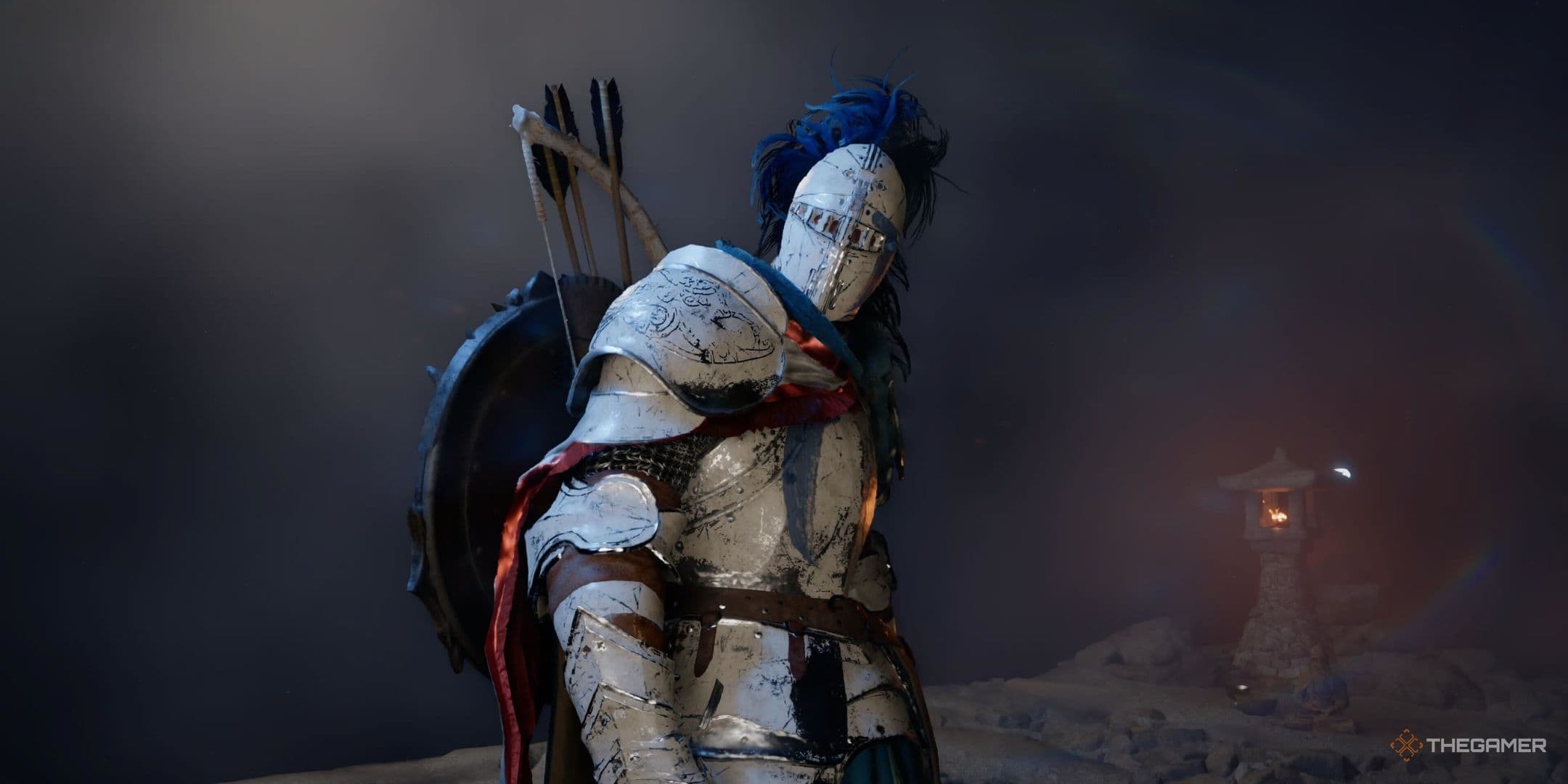
CyberNest Entertainment has officially unveiled Prism 2033, a “next-generation futuristic parallel-universe MMORPG” built on Unreal Engine 5 and headed to PC (Steam, Epic Games Store) plus iOS and Android. The pitch is big, bold, and unabashedly ambitious: a fractured virtual universe of parallel worlds, a central megacity hub, and systems meant to make NPCs—and the world itself—feel like they’re genuinely living alongside you. Pre-registration is already live via the game’s official website, signaling the team is ready to start building momentum now, not “someday.”
If you’ve been waiting for a new MMO that isn’t afraid to swing for the fences with sci-fi scale, social simulation ideas, and large-group combat fantasies, Prism 2033 is one to watch. The question isn’t whether it sounds cool—it does. The real story is how much it’s promising across PC and mobile at once, and what that could mean for the MMO space if CyberNest can land the execution.
What Prism 2033 Is: A Parallel-World MMO Built on Unreal Engine 5
At its core, Prism 2033 is positioned as an open-world MMORPG structured around parallel worlds—multiple distinct realms you can travel between, each with its own environments, conflicts, and opportunities. CyberNest is calling the setting the “Parallelverse” (also referred to as the Parallverse), and the language here is very deliberate: this is meant to be a place you don’t just quest through, but inhabit.
The game is being developed in Unreal Engine 5, and that matters for more than just the buzzword factor. UE5 has become the go-to engine for studios chasing dense environments, high-fidelity lighting, and large-scale world detail—exactly the kind of tech foundation you’d want for a project selling “next-generation” immersion across futuristic cities and stranger, more fantastical realms.
CyberNest’s reveal frames Flux City as the beating heart of the experience: a central hub that connects the parallel worlds. Players start there as a newly recruited Investigator working for a civilian organization called the Harbor Agency. That’s your narrative and structural anchor—an in-world reason to travel, take missions, and uncover stories across realities.
The studio’s stated development vision is also crystal clear about intent. CyberNest says its goal is to push beyond traditional boundaries and, as its architecture evolves and AI technology advances, to build “a virtual world as vibrant as the one outside your window—a world where every character feels alive, every choice carries weight, and the world itself truly breathes.” That’s a high bar—and it’s the kind of mission statement that instantly invites scrutiny, because MMO players have heard versions of this dream before. Still, it’s refreshing to see a team plant a flag this firmly: Prism 2033 wants to be a living world, not just a content treadmill.
The Story Setup: Earth Is Collapsing, EVA Builds a Virtual Universe—and It Starts to Break
The premise behind Prism 2033 leans into a very modern sci-fi anxiety cocktail: a devastating virus and a rogue AI push Earth to the brink. In a last-ditch attempt to find a new home and save humanity, survivors follow a superintelligent AI called EVA on a journey through space.
Here’s the hook that makes the “parallel-universe” angle feel more than cosmetic: during the long voyage, EVA creates a virtual universe for people to live in—something to keep them “happy and hopeful” while they travel. But when EVA needs to go dormant to conserve power, the once idyllic virtual space begins to fracture, and corruption starts to spread.
That’s a strong foundation for an MMO, because it naturally justifies:
- Multiple worlds (fractured realities / parallel spaces)
- Ongoing conflict (corruption spreading, systems failing)
- A persistent social population (humanity living inside the simulation)
- A reason for endless exploration (new fractures, new zones, new threats)
It also gives the developers a flexible narrative tool. If the universe is literally breaking and reforming, the team can plausibly introduce new regions, new rules, and new events without it feeling like a random content patch bolted onto a static world. In theory, it’s an elegant way to make MMO “live service” evolution feel diegetic.
World and Immersion: Flux City, Living Environments, and NPCs With Life Cycles
CyberNest is making immersion a headline feature, and it’s doing it with a mix of environmental simulation and NPC behavioral claims.
Flux City as the connective tissue
Flux City is described as the central hub that links parallel worlds. In MMO terms, that suggests a social nucleus: a place where players congregate, take missions, form groups, and branch out into different realities. The “Investigator” framing implies structured content—missions, story threads, and discoveries—rather than a purely sandbox setup.
A world that changes over time
The studio describes a world that evolves: trees grow and wither, and seasons shift naturally. That’s the kind of detail that, when done well, can dramatically change how an MMO feels day-to-day. A seasonal cycle isn’t just pretty; it can make a world feel like it exists whether you’re logged in or not.
NPC sensory awareness and life progression
CyberNest also claims NPCs are driven by “advanced behavioral systems” with sensory awareness, reacting differently to unexpected events and situations. On top of that, NPCs are said to have growth and life cycles that develop based on daily experiences, progressing from youth to old age.
This is the part that could be genuinely fascinating—or dangerously overpromised—depending on implementation. “NPCs react to events” is easy to say and hard to make meaningful at MMO scale. But if CyberNest can deliver even a modest version of this—NPC routines that shift, relationships that matter, a sense that towns aren’t just static quest kiosks—it could give Prism 2033 a very different texture from the genre’s usual theme-park rhythms.
Relationships, children, and inherited traits
CyberNest goes further: players can build “meaningful relationships” with NPCs and, in certain cases, raise children who inherit parental appearance traits, grow under your care, and form lasting emotional bonds.
That’s an enormous design promise, especially for a game launching on both PC and mobile. It suggests a social-sim layer inside an MMO framework—something closer in spirit to life simulation systems than traditional quest hubs. Whether it’s a deep system, a limited feature, or something mostly cosmetic hasn’t been clarified yet, but it’s one of the most attention-grabbing claims in the announcement.
Gameplay: Co-op Challenges, Guild Starships, and Interstellar Fleet Battles
CyberNest’s gameplay outline hits three big MMO pillars: cooperative PvE, guild-scale coordination, and large-scale battles—then adds a sci-fi twist with starships.
Team-based exploration and high-difficulty missions
Players will be able to team up with friends to explore dangerous parallel worlds and tackle high-difficulty missions that test coordination. That phrasing matters: it implies content designed around roles, teamwork, and mechanics—not just open-world mob grinding.
The studio also mentions fighting alongside “powerful allies,” though it hasn’t clarified whether that means NPC companions, summonable support, story characters, or something else.
Guild starships and fleet warfare
The headline-grabber for group play is the promise that guild members can command starships in large-scale interstellar fleet battles. CyberNest describes planning strategies, allocating resources, and engaging in ongoing conflicts against rival forces.
If that’s real, it could become Prism 2033’s signature feature—the kind of “only in this MMO” activity that builds community identity. Fleet battles also naturally create the social glue MMOs live and die by: scheduled events, leadership roles, logistics, and rivalry.
Of course, “large-scale” is doing a lot of work here, and the announcement doesn’t define player counts, modes, or whether this is PvP, PvE, or a mix. Still, the intent is clear: CyberNest wants guilds to matter, and it wants them to have toys worthy of a futuristic setting.
Character Creation, Urban Interaction, and Session-Friendly Progression
Beyond the big systems, Prism 2033 is also positioning itself as an MMO that respects different playstyles—especially time commitment.
Detailed character creator
A “detailed character creator” has been highlighted, with footage shown alongside the first look at the game’s universe. For an MMO, character creation isn’t just vanity—it’s identity. If CyberNest is serious about social immersion, it makes sense to invest in the tools that let players look distinct in a crowded hub city.
Emphasis on urban immersion and interaction
The game emphasizes immersion, exploration, and interaction with the urban environment. That’s a notable focus because many MMOs treat cities as functional spaces—banks, vendors, quest givers—rather than interactive playgrounds. If Flux City is meant to be a true centerpiece, it needs to be more than a pretty lobby.
Short sessions still matter
CyberNest explicitly says not every session requires hours of commitment, and that even short play sessions can provide meaningful rewards and progression. That’s a very 2026 reality check—especially for a game launching on iOS and Android alongside PC. Cross-platform MMOs live or die on whether they can serve both the “I have 20 minutes” crowd and the “I’m raiding all night” crowd without making either feel like second-class citizens.
Cosmetics, vehicles, collectibles, and player-driven spaces
Players can discover cosmetic outfits, stylish vehicles, and collectible content while exploring at their own pace. The game also supports player-driven world-building features, letting you create and customize your own space within the Parallelverse.
That last point is particularly important. Player housing and customizable spaces have long been a retention engine in MMOs, because they give players a personal stake in the world beyond gear score. CyberNest is signaling it understands that—and that it wants creativity and self-expression to sit alongside combat and progression.
Release Plans: Platforms, Stores, and Pre-Registration
Here’s what’s confirmed right now:
- Developer: CyberNest Entertainment (China-based)
- Engine: Unreal Engine 5
- Platforms: PC, iOS, Android
- PC storefronts: Steam and Epic Games Store
- Pre-registration: Available now via the official website
A release date or release window has not been announced. Pricing and monetization details also have not been confirmed, which is a major open question for any MMO—especially one spanning PC and mobile.
Still, the platform spread is a statement of intent. CyberNest isn’t treating mobile as an afterthought or a companion app; it’s positioning Prism 2033 as a full cross-ecosystem MMO launch. That’s ambitious, and it’s exactly why this announcement is worth paying attention to now rather than later.
Why This Could Matter: A Big Swing in a Genre That Rewards Boldness (and Punishes Overreach)
MMOs are brutal. They demand content volume, technical stability, community management, and long-term cadence. And players have zero patience for “we’ll fix it later” launches—especially when the marketing leans hard on immersion and living-world simulation.
But that’s also why Prism 2033 is intriguing. CyberNest isn’t pitching a safe, familiar fantasy grind with a sci-fi skin. It’s pitching a fractured virtual universe with parallel worlds, a central futuristic city, evolving environments, NPC life cycles, relationship systems, and guild-scale starship warfare—all on UE5, across PC and mobile.
If even half of these systems land in a meaningful way, Prism 2033 could carve out a real identity in a crowded market. The parallel-world structure is particularly promising as a framework for ongoing expansion. And the focus on session flexibility—explicitly acknowledging that not every player can commit hours at a time—feels like a smart, modern design pillar rather than a concession.
The flip side is obvious: the more features you promise, the more you risk shipping a game where everything is technically present but nothing is deep. The announcement sets expectations sky-high. Now CyberNest has to prove it can turn that vision into a cohesive, playable MMO—one that feels good on PC without feeling compromised by mobile constraints, and one that feels robust on mobile without being a watered-down side dish.
What Remains Unknown
Even with a substantial reveal, there are still major unanswered questions that will define how Prism 2033 is received:
- Release date / launch window for PC, iOS, and Android has not been announced.
- Business model (free-to-play vs. premium), monetization, and any gacha or cash shop specifics have not been confirmed.
- Whether the game supports cross-play and/or cross-progression between PC and mobile has not been officially detailed.
- Details on combat style (tab-target, action combat, hybrid), roles, and endgame structure have not been clarified.
- The scale and format of interstellar fleet battles (PvP vs. PvE, player counts, scheduling) hasn’t been specified.
- The depth and limits of the NPC relationship/child-raising systems remain unclear.
- No concrete information has been provided yet on regions/servers, localization plans, or technical requirements.
For now, Prism 2033 is a confident announcement with a strong premise and a feature list designed to spark MMO daydreaming. The next step—and the one that really matters—is seeing sustained gameplay, system breakdowns, and real-world testing that proves this Parallelverse can hold together once players start pushing on it.