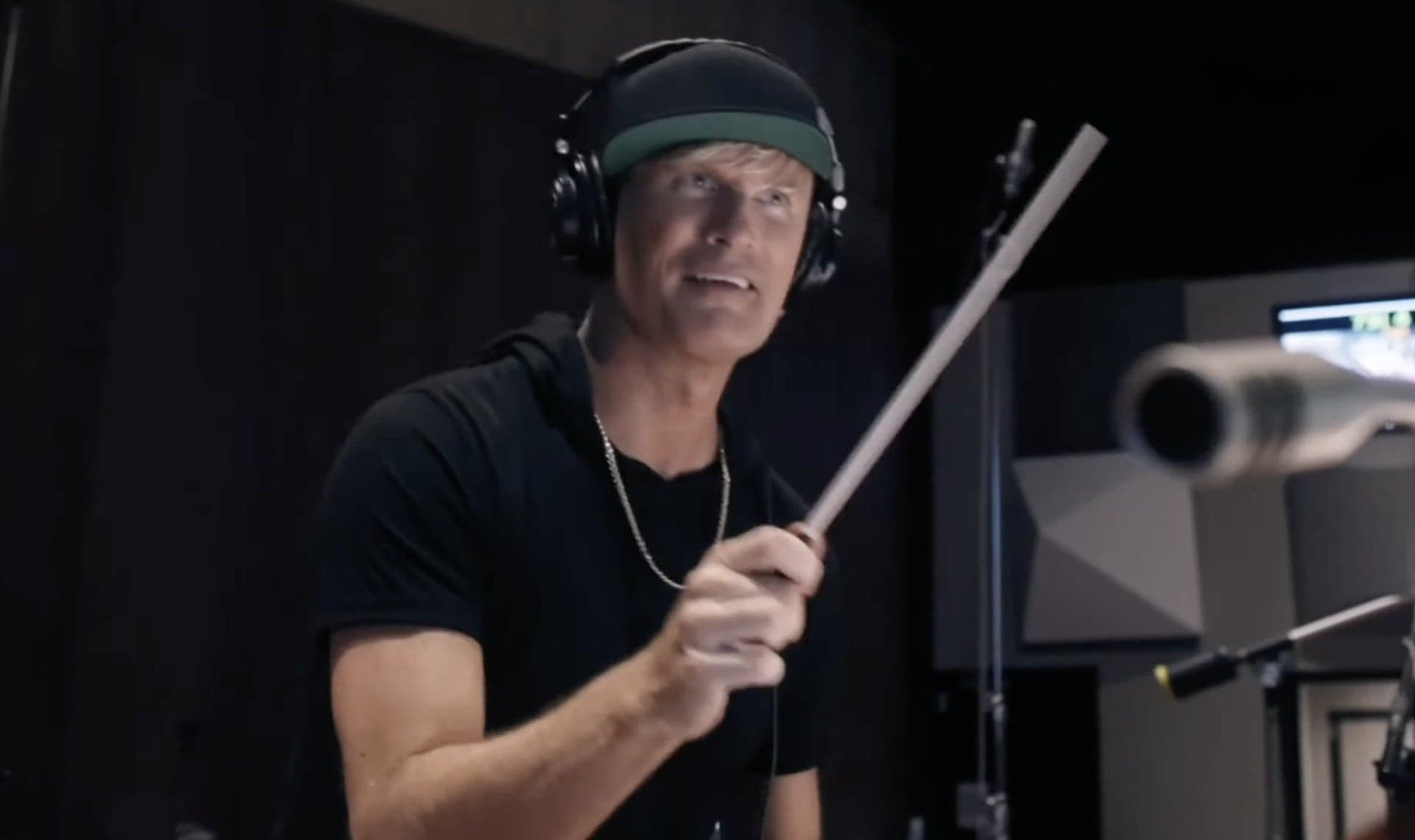
The story behind The Super Mario Galaxy Movie’s biggest secret weapon—its music—just got a lot more intense. Composer Brian Tyler revealed he wrote a significant portion of the film’s score while hospitalized after suffering a double brain hemorrhage, keeping it from the production because he “didn’t want to let anyone down.” It’s a jaw-dropping detail that reframes the sequel’s soundtrack as not just fan-pleasing, but hard-won.
And it’s landing at the perfect time: the film is already exploding at the box office, with an estimated $372.5 million globally in five days, instantly putting it among the top ten highest-grossing video game movies ever—before it’s even had a full week in theaters.
The Hospital Reveal: Brian Tyler’s Quiet, Brutal Commitment
Tyler’s comments came in an interview with Men’s Journal, where he explained that the people making the movie had no idea he was composing while in the hospital.
“I was writing this music when I was actually in the hospital because I didn’t want to let anyone down. They didn’t know. I didn’t tell them. I wrote a lot of the main themes from there.”
That’s not a “tight deadline” anecdote. That’s a composer staring down a life-altering medical emergency and still choosing to deliver the emotional backbone of a major animated blockbuster.
The timeline detail is equally striking: Tyler said the hemorrhage happened while he was working on Nuremburg, and he continued writing Mario Galaxy Movie music from his hospital bed. Exactly how long he was hospitalized, what his recovery looked like, and how the schedule was managed hasn’t been publicly detailed—but the core fact is clear: much of the score’s thematic identity was built under extreme circumstances.
Why the Score Matters So Much in This Sequel
If you saw the first Mario movie and walked out thinking the licensed pop needle-drops did too much of the heavy lifting, you’re not alone. One of the most notable creative shifts in The Super Mario Galaxy Movie is that it pulls back on licensed tracks and leans harder into Mario-forward orchestration—the kind of sweeping, starry-eyed musical language that made the Super Mario Galaxy games feel “bigger” than the average platformer.
That’s where Tyler’s work has been drawing attention: the sequel’s score is packed with game references and original pieces designed to match Galaxy’s interstellar tone. It’s not just wallpaper—it’s the connective tissue that sells wonder, scale, and nostalgia in a movie that’s unapologetically built to trigger recognition.
A track breakdown circulating among fans highlights how the score plays like a love letter to Nintendo history, including moments that blend Super Mario Galaxy themes with Star Fox music when Fox McCloud appears. One sequence even includes a quick musical nod tied to Pikmin.
That kind of musical fan service is easy to dismiss as “Easter egg bait” until you realize how hard it is to do well. Referencing iconic themes without turning the score into a chaotic medley takes taste, restraint, and a real understanding of why those melodies mattered in the first place.
Tyler and Koji Kondo: Trust, Collaboration, and Nintendo’s Musical DNA
Tyler also spoke about his relationship with legendary Nintendo composer Koji Kondo, describing a level of trust that seems to have grown out of the first film’s production. According to Tyler, Kondo largely gave him room to experiment, occasionally flagging places where a specific reference might fit.
Tyler described sending over big lists of ideas and getting enthusiastic approval—essentially being told to go wild—while still having Nintendo’s musical guardians occasionally steer the ship toward the most meaningful callbacks.
He also shared a personal career highlight: when Kondo was inducted into The Academy of Interactive Arts & Sciences Hall of Fame at the 27th DICE Awards in Las Vegas, Kondo chose Tyler as the person to present and “tell the story” of his life and career on stage. That’s not a casual professional connection—that’s a stamp of respect from one of the most important composers in gaming history.
It’s also a reminder that Nintendo treats its music as sacred text. The fact that Tyler is being trusted to play in that sandbox—especially on a sequel that’s leaning harder into game-accurate musical identity—tells you how seriously this production is taking the soundtrack as part of the brand.
Box Office Warp Speed: $372.5 Million in Five Days
While the music story is the human headline, the business headline is just as loud: The Super Mario Galaxy Movie is already a monster hit.
The film has an estimated $372.5 million global gross in its first five days, including:
- $190.1 million domestic over the five-day Easter frame (with $130.9 million from the three-day weekend)
- $182.4 million overseas from 80 markets
- $372.5 million globally (estimated)
That opening makes it the biggest opener of 2026 so far, and it’s being positioned as the fifth-biggest opening ever for an animated film, and the fourth-biggest for a Hollywood release. It’s also described as Universal’s fifth-biggest opening of all time.
And here’s the part that really underlines how unstoppable Mario is as a theatrical brand: in a single opening stretch, The Super Mario Galaxy Movie has already surpassed the total box office runs of several other video game adaptations, including:
- Sonic the Hedgehog ($320.9 million)
- Five Nights at Freddy’s ($297.1 million)
- Pokémon: The First Movie ($172.7 million)
It’s also already among the top ten highest-grossing video game movies ever, with projections suggesting it could climb even higher—potentially pushing toward the upper tier where films like Detective Pikachu ($433.3 million), Rampage ($428 million), Uncharted ($407.1 million), and Sonic the Hedgehog 2 ($405.4 million) sit.
The only real ceiling question is whether it can chase the kind of historic run posted by 2023’s The Super Mario Bros. Movie, which finished at $1.3 billion. Early comparisons suggest Galaxy is a little behind its predecessor’s pace (the original had a $204 million five-day domestic debut), but it’s still operating at “event movie” scale.
Critics, meanwhile, appear to be split. The film is cited as sitting at 42% on Rotten Tomatoes, while its Audience Score is 89%—a familiar pattern for big, family-focused game adaptations where the target audience simply doesn’t care about the same things reviewers do.
The Merch Machine Keeps Rolling: Uniqlo’s Mario Galaxy Movie Collection Is Live
If you needed another sign that Nintendo and its partners are treating this sequel like a full-on cultural moment, Uniqlo has already launched a Super Mario Galaxy Movie clothing range.
The lineup includes:
- Four adult graphic tees (sizes XS–3XL) priced at £19.90 / $29.90
- Four kids tees (ages 3–13) priced at £9.90 / $19.90
The designs include a Yoshi print, Captain Toad merch, and a kids’ Question Block shirt with coins popping out of the pocket. It’s not high fashion, but it is exactly what Uniqlo does best: accessible, officially licensed fanwear timed to a major release window.
Why This Story Hits Harder Than Typical “Behind-the-Scenes” Trivia
Hollywood is full of “we worked really hard” anecdotes. This isn’t that.
A composer suffering a double brain hemorrhage and still delivering “main themes” in secret because he didn’t want to disappoint the team is the kind of revelation that forces you to listen differently. Suddenly, the score isn’t just a technical achievement or a nostalgia delivery system—it’s a document of resilience.
It also highlights something that’s easy to forget when we talk about video game movies like they’re content products on a conveyor belt: the best parts still come from individuals making very human choices under pressure. In this case, the choice was to keep writing—quietly, privately, and at enormous personal cost.
And if The Super Mario Galaxy Movie ends up being remembered for anything long-term, I’d argue the music has a real shot at being near the top of that list—especially because it’s doing what game fans actually wanted: embracing Nintendo’s musical identity instead of drowning it in playlist energy.
What Remains Unknown
- How long Brian Tyler was hospitalized and how his recovery overlapped with the film’s production schedule.
- Whether Tyler’s medical emergency caused any official scoring delays or required additional composers/arrangers (no such details have been confirmed).
- The full extent of Koji Kondo’s hands-on involvement beyond Tyler’s description of feedback and trust.
- How high The Super Mario Galaxy Movie will ultimately climb on the all-time list of highest-grossing video game adaptations, and whether it can approach the original film’s $1.3 billion benchmark.