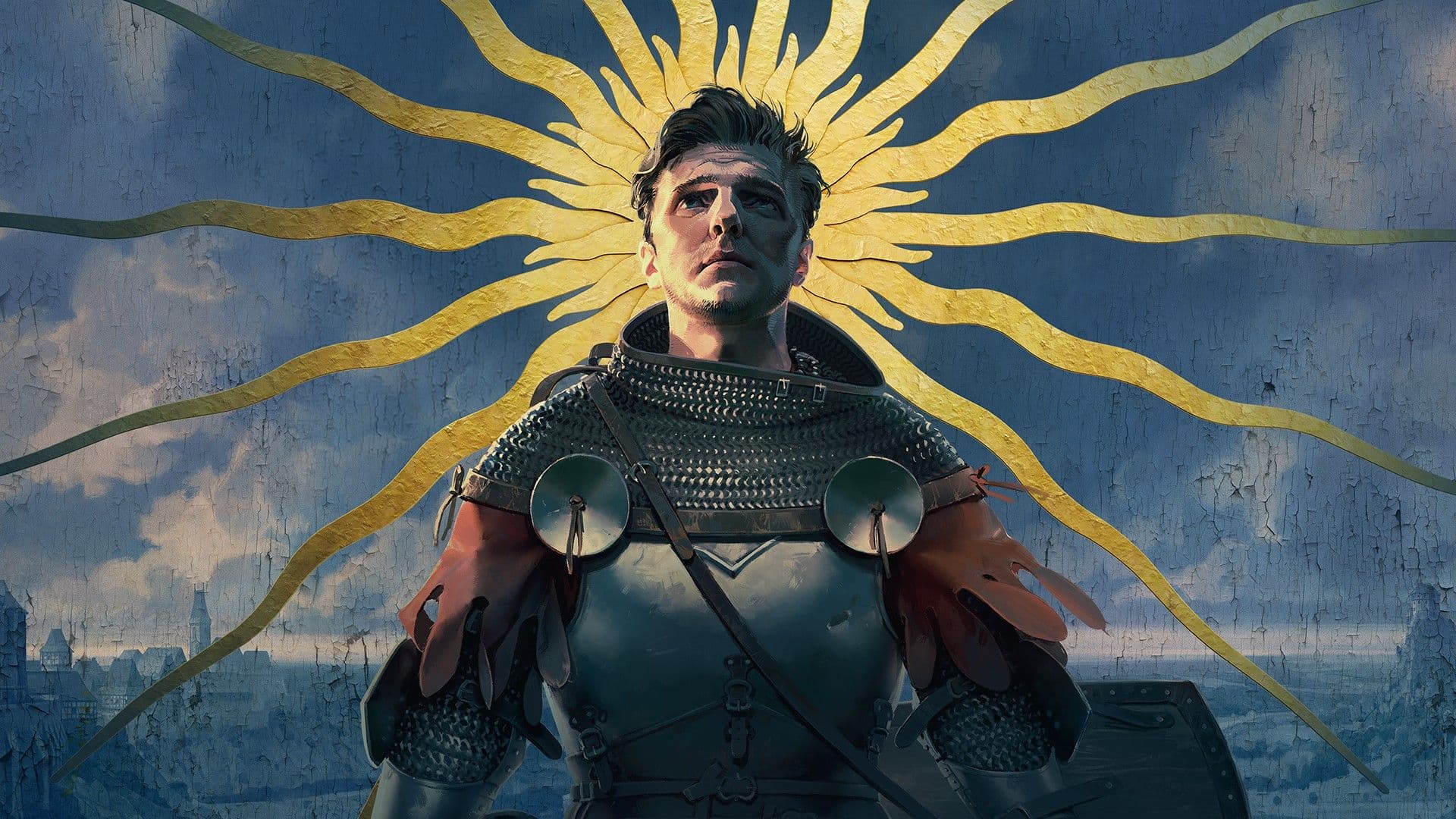
A former Kingdom Come: Deliverance 2 translator and editor says he was abruptly let go by Warhorse Studios and told his role would become “obsolete” because the studio plans to use “AI for all translations going forward.” The claim, posted publicly on Reddit by Max Hejtmánek (also identified as “Max H”), has ignited a fresh firestorm around generative AI in game development—this time not as a vague “tool,” but as an alleged one-to-one replacement for a human job.
Warhorse hasn’t issued a public statement as of March 28, 2026, but the allegation is already spreading fast because it hits the industry’s rawest nerve: cost-cutting, layoffs, and the creeping normalization of AI in roles that directly shape a game’s voice.
What Happened: The Claim, the Meeting, and “AI for All Translations”
The heart of the story is a Reddit post on the r/kingdomcome subreddit from Max Hejtmánek, who says he worked at Warhorse Studios from July 2022 until March 2026 as a Czech-to-English translator and editor. Hejtmánek claims that on March 27, 2026, he was invited to a meeting “with no forewarning” and told that, beginning in April 2026, his position would become “obsolete.”
The reason, he says, was explicitly financial and operational: an effort to “make the company more effective” and “save finances,” with Warhorse allegedly moving to “AI for all translations going forward.”
That phrasing matters. This isn’t a claim about AI being used for internal drafts, placeholder text, or experimentation. It’s an allegation of a studio-wide shift in localization strategy—one that would replace human translation work across the board.
Hejtmánek also says the topic of AI translation had come up “frequently” in the past, and that he was “always strongly and vocally against” it. He describes the decision as a shock anyway, adding that he “naively thought” his work was valued enough that he wouldn’t be at immediate risk.
He’s also careful to draw a line around what he will and won’t do next. He says he won’t break his NDA, isn’t looking to start legal issues, and isn’t asking for his job back—but he also says he won’t stay quiet about what happened.
Who Is Max Hejtmánek, and What Did He Work On?
Hejtmánek describes his role as broader than a narrow “translator” label might suggest. In his post, he says he worked on dialogue, quest logs, item names, and marketing material for Kingdom Come: Deliverance 2 and its DLCs. The implication is that his work touched both the game’s narrative texture and the practical clarity that makes an RPG readable and playable.
That’s not a minor contribution—especially for a game like Kingdom Come: Deliverance 2, where tone, historical flavor, and character voice are a huge part of the appeal. Localization in a narrative-heavy RPG isn’t just swapping words; it’s maintaining intent, rhythm, humor, and characterization while keeping the UI and quest logic unambiguous. When it’s done well, you don’t notice it. When it’s done poorly, it’s the first thing players meme into the ground.
Hejtmánek also suggests he still “did in fact have work to do” at the time he was made redundant, implying he may have been actively working on additional content or another project at Warhorse. The specifics of what that work was have not been confirmed.
Verification, LinkedIn Clues, and What’s Still Unproven
This story is moving quickly, but it’s important to separate what’s been publicly corroborated from what remains an allegation.
Several reports note that moderators on the Kingdom Come subreddit say they verified Hejtmánek’s identity. Additionally, his LinkedIn reportedly indicates he worked at Warhorse Studios from July 2022 to March 2026. That supports the claim that he was employed at the studio in a localization capacity.
However, identity verification is not the same thing as verifying the core allegation: that Warhorse is replacing translation staff with AI, or that it intends to use AI for “all translations going forward.” As of today, there’s been no public evidence released beyond Hejtmánek’s account of what he was told in that meeting.
And crucially, Warhorse Studios has not publicly commented on the claim. Publisher outreach has been reported, but no response has been published at the time of writing.
So where does that leave us? With a claim from a named former employee whose employment appears to have been corroborated by community moderators and LinkedIn history—but without an official statement confirming or denying the alleged AI localization pivot.
Why This One Hits Hard: Localization Is Writing, Not Just “Translation”
There’s a reason this particular allegation is detonating online. Translation is one of the easiest creative jobs for executives to misunderstand—and one of the hardest for players to appreciate until it’s gone.
Studios often talk about localization like it’s a mechanical step: convert Czech to English, ship it, done. But in practice, localization is part of the writing pipeline. It’s editorial. It’s consistency. It’s lore continuity. It’s making sure a quest objective doesn’t accidentally become ambiguous, or that a character’s voice doesn’t flatten into generic fantasy mush.
If a studio truly moves to AI for “all translations,” the risk isn’t just a few awkward lines. It’s systemic: item descriptions that lose specificity, quest logs that become confusing, dialogue that loses subtext, and marketing copy that reads like it was generated in a vacuum. Even if AI output is “good enough” in isolation, RPGs are about accumulation—thousands of lines, repeated terms, evolving context, and the kind of continuity that requires a human to remember what the game means, not just what it says.
And that’s before you even get to the human cost. Hejtmánek frames his firing as a direct consequence of a cost-saving decision. Whether or not Warhorse confirms it, the allegation reflects a fear that’s spreading across the industry: AI isn’t just assisting; it’s displacing.
The Broader Context: AI Backlash, Cost Cutting, and a Studio Culture Signal
This claim lands in a moment where AI is already a live wire across game development. Developers are increasingly asked to accept AI as inevitable—sometimes framed as “efficiency,” sometimes as “innovation,” often as a budget pressure valve.
Hejtmánek’s post also explicitly calls out the environmental impact of AI, and he frames his decision to speak publicly as a way to inform players “what’s going on… behind closed doors.”
There’s also a relevant bit of context around Warhorse leadership: co-founder Daniel Vávra has recently posted in support of Nvidia’s DLSS 5 AI technology, writing, “This is just a little uncanny beginning. No way haters will stop this.” That doesn’t prove Warhorse is replacing localization with AI—but it does signal a leadership posture that’s more receptive to AI than many players (and developers) are comfortable with right now.
In other words: even if Warhorse ultimately disputes the specifics of Hejtmánek’s claim, the studio is not operating in a vacuum. Public sentiment around AI in games is already volatile, and leadership comments that read as dismissive of criticism can pour gasoline on any controversy—especially one involving an alleged layoff.
Kingdom Come: Deliverance 2’s Reputation Makes This Even Riskier
Kingdom Come: Deliverance 2 launched in February 2025 and received significant acclaim, including nominations at The Game Awards 2025 for Best Narrative, Game of the Year, and Best Role Playing Game. That matters because it raises the stakes: this isn’t a struggling project cutting corners to survive. This is a high-profile RPG whose writing and immersion are central to its brand.
When a game earns a reputation for narrative quality, players start to treat the writing pipeline as sacred. Localization is part of that pipeline. If fans believe a studio is replacing human translators with AI—especially after a successful release—it can read less like “we’re experimenting” and more like “we’re cashing out.”
And yes, players will connect the dots to future content. Hejtmánek says he worked on DLCs as well. If Warhorse is actively producing expansions or new projects, the fear isn’t hypothetical: fans will worry that upcoming English text will be the first place quality slips.
Hejtmánek’s Message to Fans: Don’t Harass Devs, Don’t Review Bomb
One of the most striking parts of Hejtmánek’s post is that he explicitly asks the community not to turn this into a mob action.
He says he doesn’t want fans to harass Warhorse employees or review-bomb Warhorse games on Steam. His stated goal is awareness—making players “more informed” about how AI adoption can affect workers in games and other industries.
That’s a smart—and frankly responsible—ask, because controversies like this can spiral into collateral damage fast. Individual developers who had nothing to do with a management decision can become targets, and review bombing often muddies the waters more than it clarifies them.
At the same time, it’s hard to ignore the tension: he’s asking for restraint while also describing a decision that, if accurate, will feel like a betrayal to the very audience he’s addressing. That’s the tightrope of modern game labor disputes—especially when AI is involved.
What This Could Mean for Warhorse Studios (If the Claim Holds)
Until Warhorse comments, we’re in a “wait and see” phase. But if Hejtmánek’s account is accurate, the implications are enormous:
- Quality risk: AI translation can be passable for straightforward text, but RPG localization is a high-context editorial job. A studio-wide AI shift would be a gamble with the game’s voice.
- Talent pipeline damage: Localization and editorial roles are often long-term institutional memory positions. Losing them can create compounding errors over time—especially in ongoing DLC or sequels.
- Reputation hit: Players who love Kingdom Come: Deliverance 2 for its writing will take this personally. Even the perception of AI replacing writers/translators can trigger backlash.
- Industry precedent: If a prominent studio can replace a translator and weather the storm, other studios will notice. If it backfires, they’ll notice that too.
And there’s a final layer: trust. Localization is invisible labor until it isn’t. If fans start to believe the studio doesn’t value that labor, it can sour the relationship between developer and community in a way that’s hard to repair.
What Remains Unknown
- Whether Warhorse Studios will confirm, deny, or clarify the claim that it plans to use “AI for all translations going forward.”
- Whether the alleged AI shift applies only to Czech-to-English work or to all languages/localization.
- Whether other localization staff were affected, and how large Warhorse’s localization team is (Hejtmánek claims one other in-house localizer remains “for now,” but that has not been independently confirmed).
- What AI tools or workflow would be used (model, vendor, human review process, quality standards)—no details have been confirmed.
- Whether this impacts upcoming Kingdom Come: Deliverance 2 DLC or any unannounced Warhorse projects.
Warhorse’s next move matters. A clear statement—especially one that explains localization plans, human oversight, and quality control—could either defuse this or confirm players’ worst assumptions. Until then, the industry is watching, because this is exactly the kind of “small” operational decision that can become a defining line in the sand for how games are made in the AI era.