Nintendo may be tapping the brakes on Nintendo Switch 2 production in the US after a holiday season that didn’t live up to internal expectations. Multiple reports point to a 33% cut in planned output this quarter—a meaningful shift for a platform holder that typically wants momentum, not caution, in a new console’s first year. If true, it’s a loud signal that Switch 2’s early “record launch” narrative has collided with a tougher reality: sustaining demand in the US is proving harder than Nintendo planned.
What’s Being Reported: A 6M-to-4M Production Trim (and It Could Run Into April)
The core claim is straightforward: Nintendo is reportedly reducing its planned Switch 2 output for the quarter from six million units to four million, which is effectively a one-third cut. The reduced production volume is also expected to continue into April, suggesting this isn’t a one-week correction—it’s a deliberate adjustment in the near-term pipeline.
The reporting frames this as a response to slower consumer demand in the US following the console’s first holiday period. And crucially, sources say this isn’t being driven by the usual manufacturing boogeymen—rising component costs, memory chip shortages, or other supply-side constraints. The implication is that Nintendo can make the units; it’s choosing not to, because it doesn’t want excess inventory sitting around.
Nintendo has not publicly confirmed the production change, and it reportedly did not respond to a request for comment.
The US Problem: Holiday Sales Missed, and the Software Story Looks Uneven
Here’s the part that matters for anyone watching Switch 2’s trajectory: the US appears to be the pressure point.
One report claims Switch 2 US sales were down 35% versus what the original Switch achieved in 2017, and that November 2025 was the worst November for US hardware sales since 1995. That’s a brutal context for any console—especially one that launched into a market where consumers are increasingly selective about big-ticket hardware upgrades.
The other major thread is software. The holiday tentpole that was expected to do heavy lifting—Metroid Prime 4: Beyond—reportedly sold under 1 million copies in December, which was said to be well below Nintendo’s expectations. Whether you love Metroid or not, that kind of underperformance matters because Nintendo’s modern hardware playbook is simple: big exclusives move systems, and systems create a flywheel for everything else.
And yet, the story isn’t all doom.
Pokémon Pokopia Is a Hit—But Not (Yet) a Production-Saver
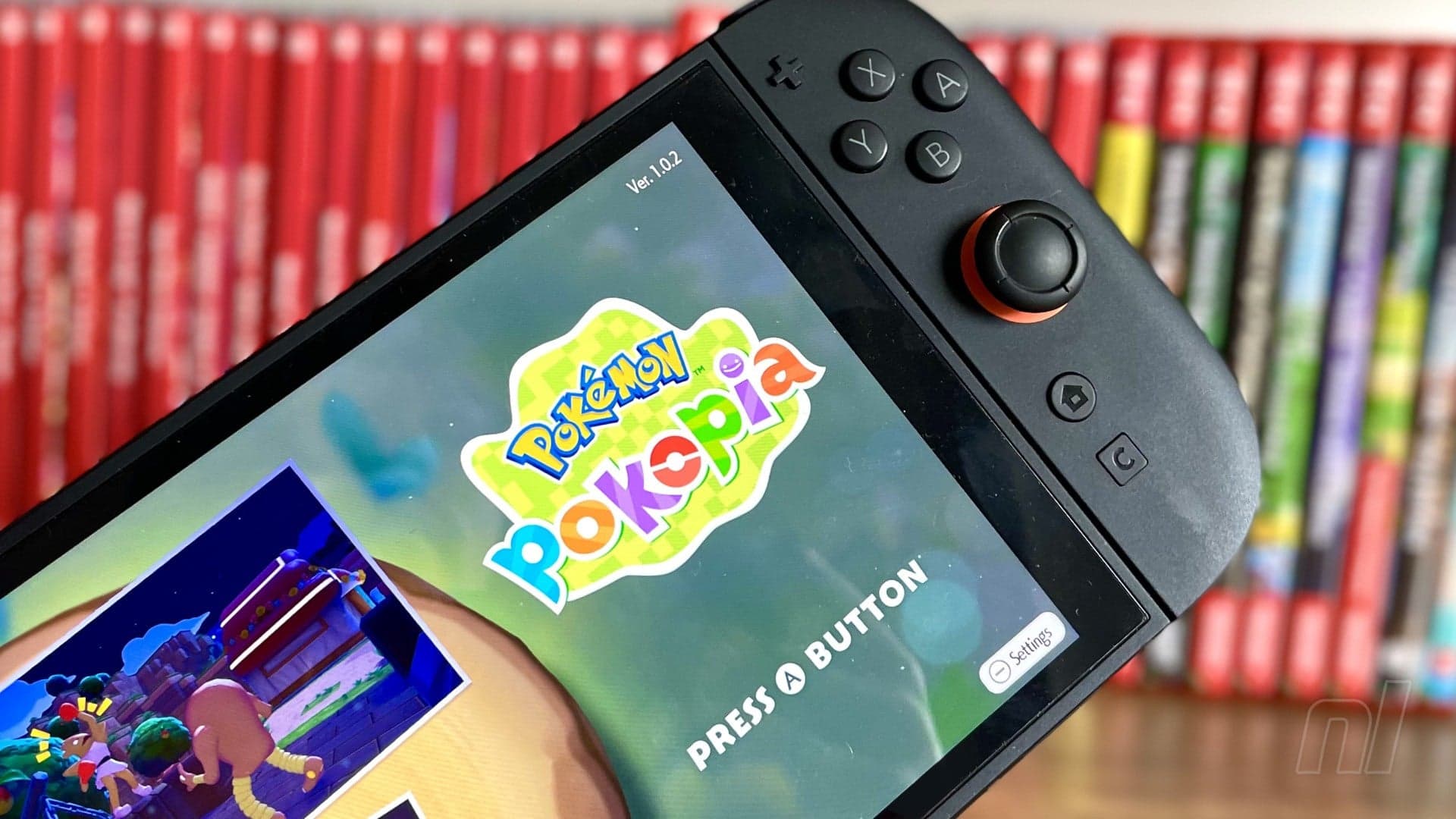
Nintendo did get a jolt from Pokémon Pokopia, a Switch 2 exclusive that reportedly sold over 2 million copies in four days (with another figure cited as 2.2 million in its first four days). That’s the kind of breakout that can change a console’s narrative fast—especially if it has legs beyond launch week.
But the key detail: despite Pokopia’s early success, the reported production cut is said to be staying in place for now. The thinking, per the reporting, is that it’s too soon to assume one hit can reverse the broader demand trend, and Nintendo is waiting to see whether Pokopia—and other upcoming releases—have enough staying power to justify ramping output back up.
That’s a very Nintendo kind of conservatism: don’t overreact to a spike, don’t flood the channel, and don’t manufacture optimism you can’t sell.
The Bigger Picture: Strong Japan Demand, a 19M Forecast, and Investor Whiplash
While the US is reportedly softening, Switch 2 demand is described as strong in Japan, and that matters because Nintendo’s home market can stabilize a lot of turbulence elsewhere.
Nintendo’s current full-year sales forecast for Switch 2 is still 19 million units, and the reporting suggests the US production reduction shouldn’t necessarily force a downgrade to that fiscal-year projection—at least not yet. There’s also a notable data point: by November, Switch 2 had reportedly reached 10.36 million units sold globally, and earlier in its life it reportedly broke US launch records with over 1.1 million units sold at launch.
So how do you reconcile “record-breaking start” with “production cut”?
You reconcile it by acknowledging that launches are about hype and early adopters, while holidays are about the mainstream. If the mainstream doesn’t bite at the expected rate—because of price, competing entertainment spending, a thin must-play lineup, or just a market that’s tired—then the smartest move is to stop pretending the launch curve will automatically continue.
Stock Reaction Shows How Sensitive This Story Is
Investors clearly care. Nintendo’s share price reportedly fell as much as 6.3% on the production-cut news cycle, then earlier rose 10.5% after Pokopia’s launch. That’s not just market noise—it’s a reflection of how much Switch 2’s early cadence is being treated as a referendum on Nintendo’s near-term growth.
One strategist, Amir Anvarzadeh of Asymmetric Advisors, was quoted calling the first-year holiday shortfall “awful news,” and pointing to a “poor” software line-up “at least until most recently,” while noting Pokémon as a source of hope.
Why Nintendo Cutting Production Isn’t Automatically “Bad News” (But It’s Not Great Either)
Let’s be clear: a production cut in year one is not the headline Nintendo wants. The first holiday season is supposed to be the victory lap—the moment the console graduates from “hot new thing” to “default gift.” If demand is soft enough that Nintendo is trimming output by a third, that’s a real warning light.
But it’s also not the same thing as a collapse.
A production adjustment can be a disciplined move to avoid channel stuffing and discount spirals. Overproducing hardware that doesn’t sell quickly forces retailers to demand promotions, which trains consumers to wait for price drops, which then punishes attach rate and third-party confidence. Nintendo has been through enough hardware cycles to know that protecting pricing power is half the battle.
In other words: this move reads like Nintendo choosing control over bravado.
The Competing Explanations: Demand vs. Supply vs. Macro Chaos
Different angles in the reporting paint different macro backdrops.
- One line is firm that the cut is demand-driven, not caused by component price increases or shortages.
- Another notes broader economic and geopolitical factors that can complicate manufacturing—AI-driven component demand, tariff uncertainty, and conflict-related instability—while still centering the idea that demand is flagging in the US.
The important takeaway is that, whichever macro headwinds exist, the reported decision is being framed primarily as a consumer demand issue in the US market.
What Could Turn This Around: Exclusives, Third-Party Support, and Nintendo’s Next Readout
If you’re looking for the pivot point, it’s games—because it’s always games.
The slate being discussed includes:
- The Duskbloods (a Switch 2 exclusive from FromSoftware, with no date mentioned in the reporting)
- Yoshi and the Mysterious Book
- A “slew” of third-party releases (no specific titles confirmed in the reporting)
And then there’s the near-term reality: Nintendo’s next official sales update is expected in May, when the fiscal-year numbers land and the industry can stop arguing from rumor and start arguing from receipts. That’s when we’ll get a clearer view of two critical metrics:
- How Switch 2 performed at the end of its first fiscal year with a full holiday season in the books.
- Whether Pokémon Pokopia is a one-month phenomenon or a genuine system-selling “killer app.”
What Remains Unknown
- Nintendo’s official confirmation: Nintendo has not publicly confirmed any production cut or provided its own explanation.
- Whether the cut is US-only in practice: The reporting emphasizes the US, but it’s not fully clear how Nintendo is reallocating manufacturing across regions (if at all).
- How long the reduced output will last beyond April: April is mentioned as a continuation point, but there’s no confirmed timeline after that.
- The precise drivers behind US demand softness: Price sensitivity, competing platforms, and the perceived strength of the exclusive lineup are all plausible contributors, but no official breakdown has been provided.
- Whether upcoming exclusives will change the plan: Sources suggest Nintendo is waiting to see if Pokopia and other titles have staying power before increasing output again.
Nintendo Switch 2 launched on June 5, 2025 with an MSRP of $449.99, and it’s already proven it can explode out of the gate. Now comes the harder part: staying power in the US market. If Nintendo really is cutting planned output by a third, it’s not panic—it’s a recalibration. But it’s also a reminder that even Nintendo can’t coast on launch hype forever.