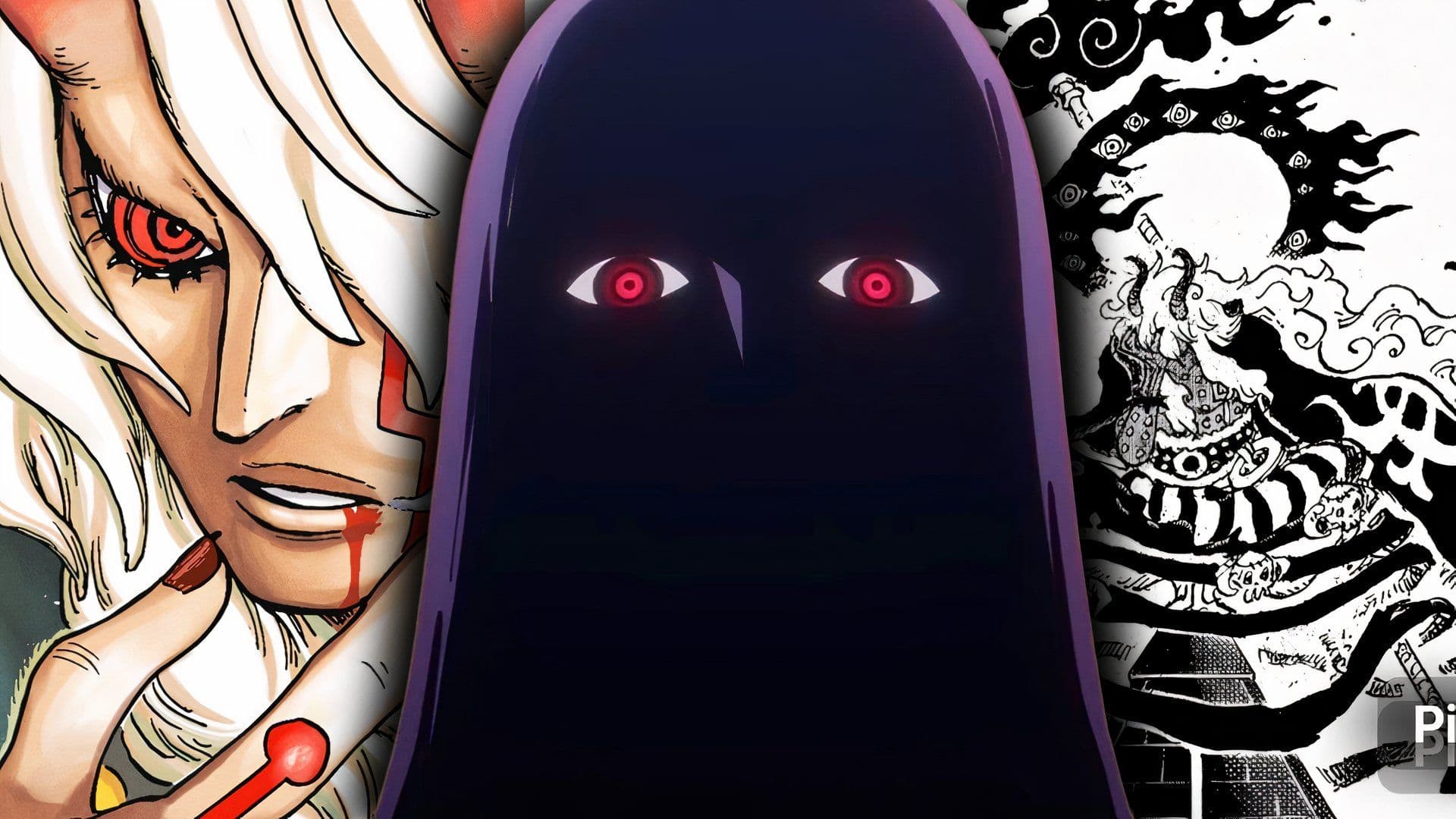
After eight years of silhouette teases, One Piece has finally pulled the trigger: Saint Nerona Imu’s face is revealed in Chapter 1179, alongside a clearer look at their transformed “devil” form and the name of their Devil Fruit. It’s the kind of long-brewing payoff that instantly re-frames the Elbaph arc from “another Final Saga island” into a flashing neon sign that Eiichiro Oda is steering this story straight toward its final collision.
And yes—this is one of those rare moments where the reveal isn’t just fanservice. It’s narrative gasoline. Imu isn’t looming in the distance anymore; they’ve descended into the “lower world,” bleeding, transforming, and putting their mythology on the page in a way that practically dares Luffy to answer.
What Happened in Chapter 1179 (and Why It’s a Big Deal)
Imu’s full reveal lands at the end of Chapter 1179, with Oda saving the face shot for the final panel—classic One Piece pacing when a mystery is about to become a weapon. The setup matters: Imu had previously been acting through Gunko, one of the Holy Knights, via a “Covenant” that allows possession. But that indirect approach wasn’t enough to stop what’s happening in Elbaph—specifically the combined threat of Luffy’s Nika and Loki’s Nidhöggr.
That escalation is the key. Imu doesn’t just send power anymore; Imu arrives. For the first time in a generation, the sovereign of the world leaves Mary Geoise and steps onto the battlefield, tipping the balance back toward the World Government at the exact moment the Straw Hats and Giants seemed to be stabilizing the crisis.
The chapter also reportedly spends significant time on the Five Elders pleading with Imu not to leave the castle, citing an unspecified risk—and then, when Imu does arrive in Elbaph, we see the immediate consequence: Imu kneels and spits blood upon landfall. That single image is doing a lot of work. It suggests the secrecy of Pangea Castle may not be just arrogance or distance—it may be necessity.
And if you’ve been waiting for the series to stop circling the “final villain” question? This is Oda planting a flag.
Imu’s Face, True Form Details, and the “Devil” Imagery
The face reveal itself is already set up to be debated for weeks, because Oda threads the needle between clarity and ambiguity. Imu’s facial features are described as unusual for One Piece, with a look that reads as both masculine and feminine—delicate eyes, long lashes, and other traits that keep Imu’s gender unconfirmed even after the reveal.
Visually, though, Oda gives readers plenty to chew on:
- White hair that falls down one side of Imu’s face
- Tanned skin, which is noted as reminiscent of the Lunarian look
- A transformed silhouette featuring giant black wings and a pointed tail
- Horns, which immediately intensify the “devil” read of the character
- Concentric circles in Imu’s pupils, which fans are already comparing to other iconic manga imagery
That last point is important because it shows how Oda designs for conversation. The face reveal isn’t just “here’s what they look like.” It’s “here are ten details that imply lineage, power mechanics, symbolism, and maybe even the rules of the world.”
There’s also a wonderfully unsettling environmental effect tied to Imu’s arrival: trees and houses become “possessed,” forming wicked smiles and even singing a song to herald the sovereign’s descent. It’s creepy, theatrical, and—crucially—mirrors the tonal weaponization of silliness that defines Luffy’s Nika abilities. Oda is making the thematic contrast loud: Nika’s cartoonish freedom versus Imu’s occult corruption.
Imu’s Devil Fruit Name and Powers: “Akuma no Mi” as a Statement
The biggest power-related headline is that Chapter 1179 reveals the name of Imu’s Devil Fruit: Akuma no Mi, translated as “Devil’s Fruit.” That’s not just a cool title—it’s a lore grenade. One Piece has been dangling the “devil of the sea” concept since the beginning, and now the likely final antagonist is wielding something that reads like the root of the entire system.
There’s also a fascinating language detail: in the Japanese version, “Devil” is written in katakana, while the “devil” in “Devil Fruit” is typically written in kanji. Katakana often signals foreign origin or emphasis, and the implication here is deliciously on-brand for Oda: Imu isn’t just “a devil” in the series’ internal mythology—Imu may be “the Devil” in a more Western folkloric sense, reinforced by the horns, tail, possession, and occult-like imagery.
As for what Imu can actually do, the story has already shown several frightening capabilities associated with Imu’s power set:
- Possession via a Covenant bestowed on faithful servants (used on Gunko)
- The ability to forge Contracts with loyal followers like the Five Elders and Holy Knights
- The ability to turn enemies into slave puppets through contracts
- Magic circles and overtly occult visual language
- A grimoire that can be used to summon weapons—one example given is a shotgun that blew off Brogy’s arm earlier in the arc
- A transformation that includes wings, horns, and tail
- Environmental corruption/possession effects on arrival
There’s also discussion around awakening imagery: cloud-like rings around the neck have been associated with awakened Devil Fruits (Luffy’s Gear 5 has a white cloud; Lucci and Kaku gained black rings; the Elders have black rings). Imu is described as having a ring around the neck as well—one with multiple eyes—suggesting awakened power is in play, though the full scope of what that awakening does has not been fully revealed.
What’s clear is that Oda is positioning Imu’s power as something that doesn’t fit neatly into the standard Devil Fruit taxonomy. Whether that means it’s literally beyond the usual categories or simply presented that way for mythic weight is still part of the mystery—but the intent is unmistakable: this is the “final boss” toolkit.
Why Elbaph Suddenly Feels Like the Series’ Turning Point
Elbaph was always going to be important—fans have been waiting for it for ages—but the arc’s recent developments are stacking into something bigger than “a great island adventure.”
For one, the Elbaph arc has been packed with major lore and historical revelations, including the God Valley Incident and the backstory of Rocks D. Xebec, plus the arc’s heavy focus on King Harald and his fate. The arc also reportedly includes new lore drops like the Harley Texts and new details about the Warrior God.
For another, the arc has escalated into a battlefield where the biggest mythic forces are colliding. Loki—described as the “Accursed Prince”—uses his transformation via the Dragon-Dragon Fruit, Model: Nidhöggr, plus his weapon Ragnir, to shut down Holy Knights who were attempting to kidnap giant children. That’s already a high-stakes conflict with massive symbolic weight.
But the moment Imu chooses to descend personally, Elbaph stops being “an arc” and becomes “a front.” It’s the sovereign of the world stepping into the mud because the rebellion is no longer containable from the throne.
And that blood-on-arrival detail? That’s the kind of limitation that makes a villain more terrifying, not less. If Imu is weakened outside Mary Geoise—by illness, curse, or lingering consequences from the war with Joy Boy 800 years ago—then every second Imu spends in Elbaph is likely to be decisive, brutal, and efficient. The story is telling us: Imu didn’t come here to posture. Imu came here to end things.
The Fan Dissection Has Already Begun (Height, Eyes, and Symbolism)
Oda didn’t just reveal a face—he revealed a puzzle. Fans are already tearing into the details, and a few threads are especially loud:
- Imu’s height: based on comparisons to Aurust Castle proportions, some fans speculate Imu could be as tall as Loki, who is massive even by giant standards. (This is fan inference, not confirmed.)
- Imu’s eyes: the concentric circles are drawing comparisons to the Rinnegan from Naruto, with some fans suggesting it could be a nod to Masashi Kishimoto. (Again: speculation, but the visual comparison is real.)
- Imu’s overall “devil” design: horns and tail plus possession and occult motifs are pushing the reading that Imu is “the devil” of the setting in a literalized, Western-folklore sense.
Meanwhile, the face itself is doing what Oda wanted it to do: it keeps the character’s identity slippery even as the mask is removed. The reveal answers the “what do they look like?” question, but it keeps the “what are they, exactly?” question alive.
Release Timing: When the Next Chapter Drops
The next chapter, One Piece Chapter 1180, is scheduled to be available to read on Manga Plus on April 19, 2026. The series is also noted as skipping a week, which means the fandom has an extra-long window to spiral over Imu’s design, the Devil’s Fruit naming bombshell, and the implications of that blood-spitting weakness.
Two weeks is an eternity in One Piece discourse—especially when the final panel just put the ultimate villain’s face on the board.
What Remains Unknown
Even with a face reveal and a Devil Fruit name, Oda is still holding back the real answers. The biggest open questions now:
- Imu’s gender remains unconfirmed, despite the face reveal.
- The exact nature of the “unspecified risk” that made the Five Elders beg Imu not to leave Mary Geoise hasn’t been explained.
- Why Imu bleeds upon arriving in Elbaph—illness, curse, environmental weakness, or something else—has not been confirmed.
- The full scope of the Akuma no Mi / “Devil’s Fruit” powers, including what its awakening truly does, is still not fully revealed.
- Whether Imu’s horns are natural, lineage-based, or purely part of transformation remains unclear.
- Imu’s potential connections to major races (including implications tied to Lunarians and possibly Ancient Giants) are still theory-space until the manga confirms them.
If you’ve been waiting for One Piece to stop teasing and start cashing checks, this is one of those rare chapters that feels like a down payment on the finale. Imu is no longer a shadow on a throne. Imu is here—bleeding, transforming, and bringing the “Devil” to Elbaph.