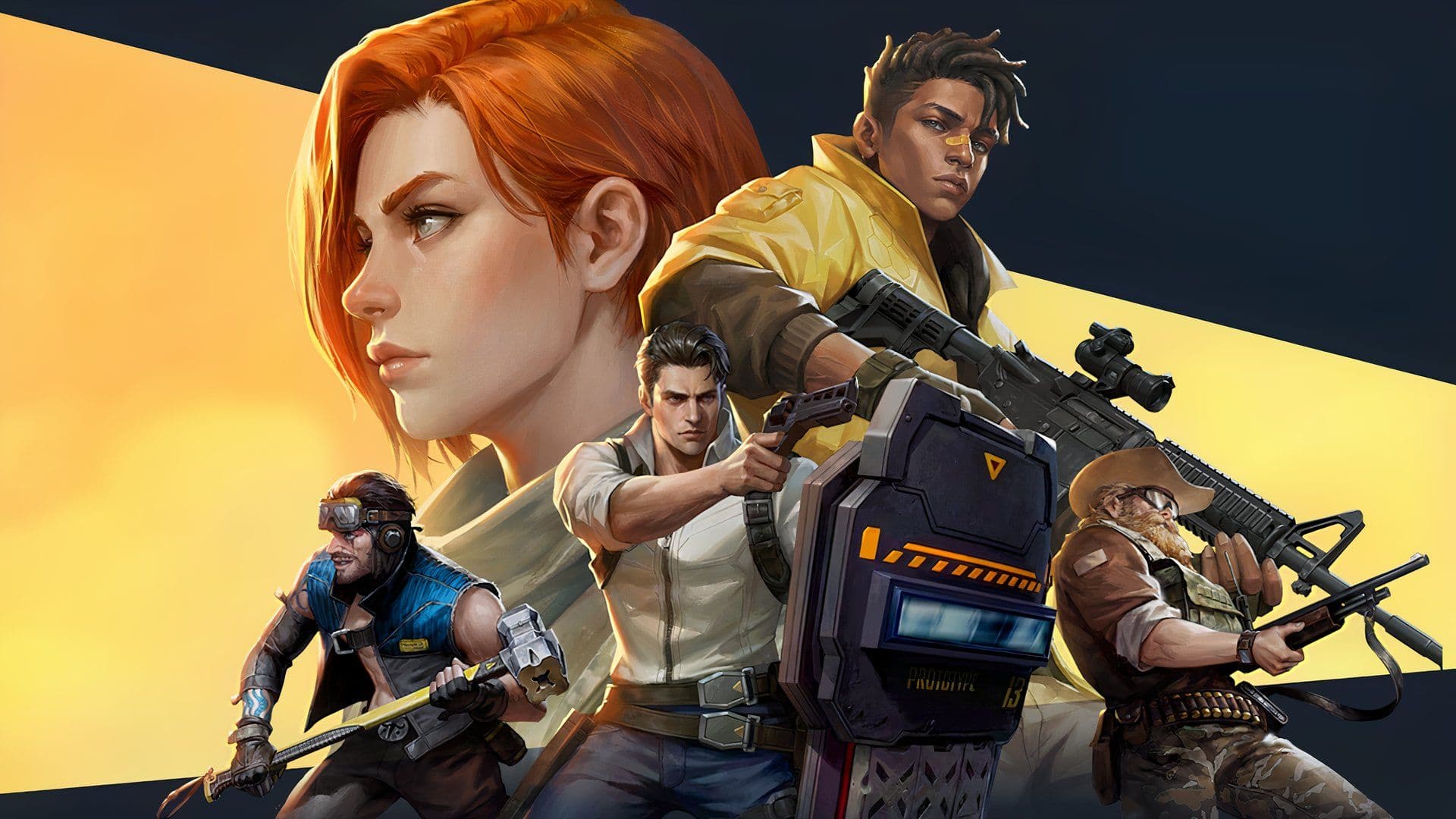
PUBG: Blindspot—Krafton’s free-to-play, top-down 5v5 tactical shooter spin-off—will go dark on Monday, March 30, 2026, bringing its Early Access run to an abrupt end after less than two months on Steam. Developer ARC Team says it can’t “sustainably provide the level of experience” it aimed for, and the numbers tell a brutal story: low concurrency, long queues, and a multiplayer game that simply couldn’t keep the lights on. If you were even vaguely curious, this weekend is effectively your last chance to see what Krafton was trying to build.
What’s shutting down, when, and who’s behind it
Let’s get the hard facts out first, because the timeline is merciless.
PUBG: Blindspot launched in Early Access on Steam in early February (reported as Feb. 4 in some materials and Feb. 5 in others), and it’s now scheduled to end service on Monday, March 30. The shutdown time has been communicated in multiple time zones: 10am UK (with 11am CET and 3am PDT also cited), and another listing places the end at 5 a.m. EDT on March 30. Either way, the takeaway is the same: once Monday hits, the experiment is over.
The game was developed by ARC Team under the broader PUBG umbrella, with Krafton (owner of PUBG Studios/PUBG Corporation) attached as the key corporate force behind the project. And importantly, this wasn’t a paid boxed product getting delisted quietly—Blindspot is free-to-play, built to live or die on population, matchmaking health, and momentum.
ARC Team’s message, posted under the name Sequoia Yang, doesn’t mince words about why it’s ending. The team says it explored “multiple ways to improve the experience and move the game forward,” but ultimately concluded it was “no longer able to sustainably provide the level of experience we set out to deliver through Early Access.” That phrase—sustainably provide—is the tell. Live-service shooters don’t just need to be good; they need to be busy.
And Blindspot wasn’t.
The player-count cliff: why a tactical multiplayer game can’t survive on fumes
A tactical 5v5 shooter lives and dies by matchmaking. If queues are long, players leave. When players leave, queues get longer. It’s the most vicious feedback loop in multiplayer, and Blindspot appears to have been trapped in it almost immediately.
At launch, the game reportedly hit just over 3,000 concurrent players on Steam, with an all-time peak cited at 3,251. That’s not nothing for a new Early Access release—but it’s also not remotely enough to guarantee stability for a team-based competitive game that needs consistent matchmaking across regions and skill bands.
From there, the decline was steep. Near the end, reported snapshots put the active population in the low hundreds: 151 players at one point, with a 24-hour peak of 184 cited elsewhere. Those are catastrophic numbers for a game whose core promise is structured, tactical team combat. You can’t sell “tight coordination” and “high lethality” when half the match is waiting for the lobby to fill.
Players noticed, and the complaints were predictable: long wait times for matches became one of the most common criticisms in Steam user reviews. That’s the kind of problem that no amount of balance tweaking can fix if the audience isn’t there.
What makes this sting a little more is that Steam reviews were trending “Mostly Positive” in the game’s final stretch, suggesting the people who did stick around weren’t universally dunking on it. There’s a version of this story where Blindspot becomes a niche cult favorite that grows slowly over time.
But “slow growth” is a luxury most live-service projects don’t get anymore—especially not in the hyper-competitive shooter market, where players have endless alternatives and limited patience.
What PUBG: Blindspot was trying to be (and why it didn’t land)
PUBG: Blindspot was never trying to be “PUBG but smaller.” It was trying to be PUBG as a tactical, top-down 5v5—a very different pitch from PUBG: Battlegrounds, which still pulls hundreds of thousands of concurrent players regularly.
The core mode described across coverage is a two-team, five-versus-five format in tight maps with destructible elements, where one side attempts to plant and activate a bomb while the other tries to stop them or eliminate the team. If that sounds familiar, that’s because it’s deliberately playing in the same conceptual space as Rainbow Six Siege—and multiple impressions explicitly drew that comparison.
Blindspot also leaned into a defining mechanical hook: vision and sightlines. The idea is that if you can’t see an enemy—through a window, a doorway angle, a sliver of corridor—they can effectively vanish from your awareness. Vision is shared between teammates, pushing squads toward coordinated clears, crossfires, and information play rather than lone-wolf heroics. In other words, it aimed to make teamwork non-negotiable, not optional.
On paper, that’s a strong identity. In practice, impressions were mixed. Some players praised it as “tactical” and “something different,” and some questioned why Krafton didn’t market it harder. But other hands-on reactions were far less forgiving, describing the game as sluggish, with unmemorable art direction and character design, and a PUBG connection that didn’t materialize in meaningful ways.
That last point matters more than it sounds. If you’re going to slap the PUBG name on a spin-off—especially one that’s radically different in camera perspective and match structure—you need one of two things:
- A clear, compelling bridge to the brand fantasy people already love, or
- A new identity so strong it doesn’t need the bridge.
Blindspot seemed stuck between those poles. It had the little “PUBG” badge and the association, but for many players it didn’t feel like it meaningfully used the PUBG universe. And if it’s going to be compared to Siege-style tactical shooters, it’s entering a knife fight with genre giants that already have years of content, esports ecosystems, and entrenched communities.
Worse, in 2026, shooters don’t get graded on potential. They get graded on whether your friends are online right now.
A familiar live-service autopsy—fast shutdowns, faster lessons
The most striking thing about this shutdown is the speed. Depending on how you count the days and which launch date you use, Blindspot lasted roughly 53–54 days in Early Access before the plug was pulled. That’s not a “we’ll sunset it over time” timeline. That’s a triage decision.
And it’s happening in a climate where live-service shooters have become notorious for short lifespans. Blindspot is being discussed in the same breath as other recent high-profile collapses, because the industry has trained players to assume the worst: if a multiplayer game doesn’t explode immediately, it might not survive long enough to find its footing.
ARC Team’s public tone is grateful and measured, emphasizing that player feedback will inform future work and that the team intends to regroup. Yang called Blindspot “a bold attempt to explore new possibilities within the top-down tactical shooter space” and thanked those who supported the direction: “To everyone who believed in the game and supported its direction, we are truly grateful.”
That’s the human side of this story, and it’s the part that gets lost when we talk only about concurrency charts. A shutdown this fast doesn’t just end a product—it interrupts a team’s creative momentum and, for the players who did show up, it erases a game they were actively learning.
It also reinforces a harsh reality: Early Access is not a safety net if your matchmaking collapses. You can patch balance, improve onboarding, refine netcode, and iterate on maps—but you can’t patch population. Without enough people, the experience degrades, and once the experience degrades, the population drops further.
That’s the spiral Blindspot couldn’t escape.
What Remains Unknown
Even with the shutdown announcement and the quoted statement from ARC Team, there are still meaningful unanswered questions:
- Will PUBG: Blindspot be delisted permanently everywhere, or could it return in another form? It’s being described as shutting down “forever,” but no official plan for revival has been announced.
- What happens to ARC Team next inside Krafton’s structure? The team says it will regroup and hopes to return with new experiences, but no project has been confirmed.
- Will there be any offline mode, private matches, or preservation plan? No such option has been announced; the messaging focuses on ending Early Access service and shutting down servers.
- Will Krafton share a more detailed postmortem (retention, monetization, marketing, regional performance)? Nothing beyond the sustainability/experience statement has been provided publicly.
- Exact shutdown timing across regions and daylight savings conversions. Multiple time-zone callouts have been shared (including 10am UK and 5 a.m. EDT), but players should rely on the official Steam notice for the final word.
PUBG has survived by evolving, but PUBG: Blindspot is a reminder that even the biggest shooter brands can’t brute-force a new live-service hit into existence. If you wanted to see Krafton’s top-down tactical swing for yourself, the clock is ticking—and on Monday, it hits zero.