
Sony has started rolling out a new PS5 system software update that broadly enables an upgraded version of PSSR (PlayStation Spectral Super Resolution) on PlayStation 5 Pro, with a first wave of major games officially updated to take advantage of it. The pitch is simple but meaningful: more precise image reconstruction, improved motion stability, and cleaner fine detail—the exact stuff that tends to shimmer, crawl, or fall apart when upscaling gets pushed too hard.
And yes, one of the biggest late additions is the one PS5 Pro owners have been side-eyeing for a while: Cyberpunk 2077 is now confirmed to be getting PS5 Pro support via an upgraded PSSR patch “in the coming weeks,” despite prior statements that it wasn’t planned.
What Upgraded PSSR Actually Does (and Why PS5 Pro Owners Should Care)
PSSR is Sony’s AI upscaling tech for PS5 Pro—an image reconstruction library that analyzes each frame pixel by pixel and then upscales the output to deliver a higher-detail image. The new upgraded version, now integrated into the latest PS5 system software update, is positioned as a step forward in the areas that matter most in real gameplay: clarity in fine detail, image stability, and motion handling.
Sony’s Sid Shuman (Senior Director, SIE Content Communications) sums up the practical benefits like this: “With this latest evolution, image reconstruction is more precise, motion stability is improved, and developers have greater flexibility to balance performance and fidelity on PS5 Pro.”
That “flexibility” line is the quiet killer feature. Upscaling isn’t just about making a still screenshot look crisp—it’s about giving teams more headroom to target stable performance modes while keeping the image from turning into a shimmering mess when the camera moves. If you’ve ever noticed flicker on hair, foliage, thin geometry, or high-frequency textures, you already understand why this update matters.
Sony also notes the upgraded PSSR’s algorithm and neural network stem from Project Amethyst, its partnership with AMD—and adds that these advancements are expected to show up in a future AMD FSR update as well.
The First Wave: 11 Games Officially Updated for Upgraded PSSR
Sony’s rollout highlights eleven games that are explicitly built to take advantage of the upgraded PSSR as the system software update goes live. Those games are:
- Silent Hill f
- Silent Hill 2 (2024)
- Dragon Age: The Veilguard
- Control
- Alan Wake 2
- Senua’s Saga: Hellblade II
- Final Fantasy VII Rebirth
- Rise of the Ronin
- Nioh 3
- Monster Hunter Wilds
- Dragon’s Dogma 2
It’s a strong spread across genres—horror, RPGs, action, and big visual showpieces—exactly the kind of lineup you’d pick if you wanted to demonstrate that this isn’t a niche tweak. These are games where image reconstruction artifacts are easy to spot, and where stability in motion can make the difference between “technically impressive” and “actually pleasant to play.”
A key point: Sony says you can also try the upgraded PSSR with any game in your library by enabling it in the Screen and Video settings via an “Enhance PSSR Image Quality” toggle—though results will vary by title, and you can disable it if you see unexpected visual effects.
Developers Get Specific: Hair, Grass, Particles, and Temporal Stability
The most convincing part of this announcement isn’t Sony’s marketing language—it’s the developer commentary describing exactly what improves.
Final Fantasy VII Rebirth: Cleaner Hair, Less Flicker
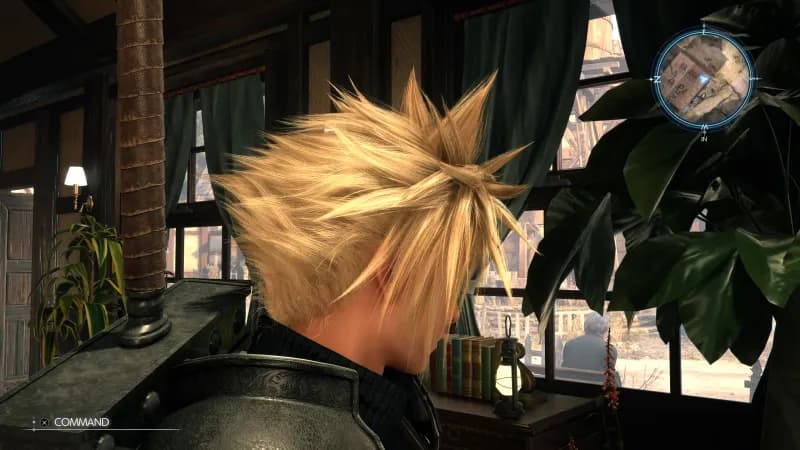
Naoki Hamaguchi, Director of Final Fantasy VII Rebirth, says that compared to the original PSSR, “fine details such as character’s hair are naturally restored,” and that image processing is “more stable due to less flickering and afterimage feeling.”
That’s not a throwaway example. Hair is a classic upscaling torture test—thin strands, subpixel detail, constant motion. If the upgraded PSSR is genuinely improving hair reconstruction and reducing afterimage artifacts, that’s a real-world win you’ll notice in normal play, not just in paused comparisons.
Silent Hill f: “Even Smoother,” Better Grass and Shadows
Konami’s Silent Hill f production team calls out “an even smoother gameplay experience than before,” with fine details like “swaying blades of grass” and “shadows cast across the ground” rendered with greater clarity—deepening immersion in its fog-shrouded 1960s Japan setting.
That’s exactly where unstable reconstruction can ruin atmosphere: foliage shimmer, shadow crawl, and noisy motion in foggy scenes. Horror games live and die on image coherence.
Remedy: Better Motion Clarity Without Sacrificing Stability
Tatu Aalto, Graphics Technical Director at Remedy, says the upgraded PSSR “improves image upscaling quality and stability,” enabling “efficient stochastic sampling without sacrificing image stability.” He also notes it “responds quickly to visibility changes… keeping motion clear while improving temporal stability,” with Control and especially Alan Wake 2 benefiting in “better, more stable image quality.”
Remedy’s games are packed with effects, lighting complexity, and motion-heavy scenes—prime territory for temporal instability. If Remedy is praising visibility-change response and temporal stability, that’s a direct nod to reduced ghosting, shimmer, and reconstruction lag.
Ninja Theory: Particle Effects Get a Noticeable Lift
Dom Matthews, Studio Head at Ninja Theory, says the studio was impressed by “the quality of particle effects with this latest update,” helping bring key moments to life through enhanced visuals in Senua’s Saga: Hellblade II.
Particles are another classic pain point for reconstruction—fast-moving, semi-transparent, and often layered. Better particle handling can make effects look less noisy and less prone to breakup during motion.
BioWare: Better Image Quality While Keeping Stable Frame Rates
Maciej Kurowski, BioWare Studio Technical Director, says Dragon Age: The Veilguard sees a “meaningful improvement in image quality” while “still maintaining stable framerates in Fidelity and Performance modes.”
That’s the ideal scenario: improved reconstruction without paying for it in performance. Sony’s whole PS5 Pro pitch hinges on these kinds of tradeoffs becoming less painful.
Koei Tecmo: Sharper Natural Edges, Fast Action Still Holds Together
Kohei Shibata, Producer of Nioh 3, says the update allows the team to show the open field’s features—especially “edges of natural objects such as trees, plants and flowers”—“even sharper than before,” while maintaining high-definition details during fast-paced action scenes.
Fast action is where temporal solutions often fall apart. If Koei Tecmo is comfortable emphasizing both foliage edges and high-speed combat clarity, that suggests the upgraded PSSR is doing real work in motion, not just in static detail.
Rollout Timing, System Update Details, and What’s Next
Sony says the upgraded PSSR is “fully integrated” with the latest PS5 system software update, which begins rolling out in phases starting March 16 at 10:00 PM PT (which corresponds to March 17 at 1:00 AM ET). The update is expected to reach all users over the coming days, and Sony notes you can manually check for it via system settings.
There’s also a notable timeline split between games:
Available with the system update / first-wave official support
The 11 titles listed above are positioned as the initial set taking advantage of the upgraded PSSR as the update rolls out.
Launching with upgraded PSSR
- Crimson Desert is confirmed to launch with upgraded PSSR support on March 19.
Coming via patches “in the coming weeks”
- Assassin’s Creed Shadows
- Cyberpunk 2077
That last one is the headline-grabber. Cyberpunk 2077 getting PS5 Pro support is a genuine reversal from earlier messaging, and it’s arriving specifically in the context of the upgraded PSSR rollout. Sony’s language around the patch points to “improvements in clarity and image stability,” but how CD Projekt RED will implement the feature—modes, targets, and exact visual changes—has not been detailed yet.
Cyberpunk 2077 Finally Joins the PS5 Pro Party — and That’s a Big Deal
The PS5 Pro conversation has had an awkward undercurrent since launch: some of the most visually demanding, most-discussed games weren’t always eager to commit to bespoke Pro support. So seeing Cyberpunk 2077 now confirmed for an upgraded PSSR patch is more than a bullet point—it’s a signal.
It suggests Sony’s upgraded PSSR isn’t just a marginal revision; it’s compelling enough that major teams are willing to revisit plans. And for players, it’s the kind of update that can meaningfully change the feel of a game you already know well—especially in a title where dense city detail, neon lighting, and motion-heavy scenes can expose every weakness in reconstruction.
Sony hasn’t attached a firm patch date beyond “coming weeks,” and there’s no official breakdown yet of what modes will change. But the direction is clear: PS5 Pro’s visual stack is still evolving, and Sony wants this to be the new baseline for “Pro-enhanced” releases going forward.
What Remains Unknown
- Exact patch dates for Cyberpunk 2077 and Assassin’s Creed Shadows beyond “in the coming weeks.”
- Specific performance targets (resolution/framerate/mode changes) for each upgraded PSSR implementation; Sony and partners have focused on qualitative improvements rather than hard numbers.
- Whether additional major titles will be added to the official upgraded PSSR list shortly after this first wave (Sony indicates “more games supported soon,” but hasn’t named more beyond the ones already highlighted).
- How consistently the “Enhance PSSR Image Quality” toggle improves games that aren’t officially updated—Sony says results vary and unexpected effects are possible.
Sony’s message is loud and clear: upgraded PSSR is no longer a tech demo reserved for a single showcase title. It’s becoming the standard PS5 Pro visual upgrade path—starting today, and expanding fast.


