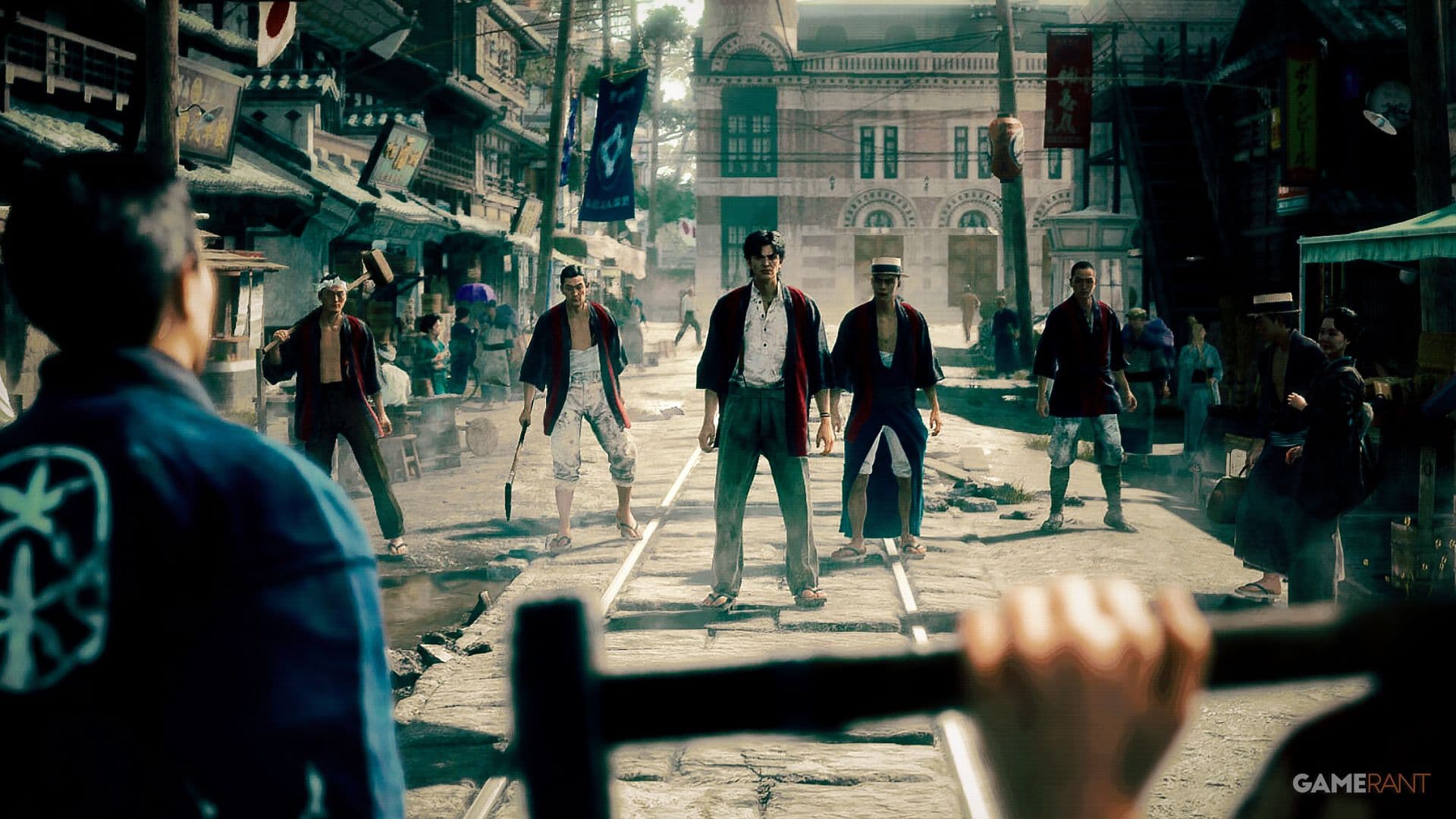
Ryu Ga Gotoku Studio’s next big swing, Stranger Than Heaven, just got a new trailer at the March 26 Xbox Partner Preview — and it finally puts real numbers on the game’s ambition: five explorable cities across five distinct eras (1915, 1929, 1943, 1951, and 1965). It’s a massive scope jump for the studio, and the footage is also fanning the flames that this is, in practice, a Yakuza/Like a Dragon universe story even if the title never says so outright.
What We Know So Far: Five Eras, Five Cities, One Long Crime Saga
Stranger Than Heaven was first revealed as Project Century at The Game Awards 2024, then officially renamed during Summer Game Fest in June 2025. Since then, RGG has been consistent about the pitch: a cinematic crime drama stretching across decades — but it’s been cagey about specifics.
This week’s “Five Eras” trailer finally locks in the time periods the story will meaningfully cover:
- 1915
- 1929
- 1943
- 1951
- 1965
The trailer also confirms the structure that matters just as much as the dates: five Japanese cities, each tied to those eras. Two of them are immediately familiar to longtime fans: Kamurocho and Sotenbori both appear in the new footage.
That’s a big deal, because RGG previously only hinted the game would span three distinct eras. Going from three to five doesn’t just sound bigger on a bullet list—it implies a heavier lift in art direction, world-building, and systems design. Different decades aren’t just different coats of paint; they’re different street layouts, different signage, different vehicles, different fashion, different social rules, different music, and (if RGG is doing this right) different kinds of crime.
And RGG is very explicitly framing it as a rare historical tourism flex. Executive producer Masayoshi Yokoyama said: “As you can imagine, five cities and five eras is a massive undertaking. We're putting a tremendous amount of care into bringing to life these times and places we feel are rarely explored in games. It’s truly a unique experience you can’t get anywhere else.”
The Yakuza Connection Is Getting Harder to Deny
RGG has repeatedly refused to confirm whether Stranger Than Heaven is set in the studio’s ever-expanding Yakuza / Like a Dragon universe. But the new trailer is doing that thing where you “don’t confirm” something while also putting the evidence right in the camera lens.
The most obvious tell is Kamurocho, the fictional Tokyo district (based on Kabukicho) that’s basically the beating heart of the franchise. The trailer also flashes a landmark that’s instantly recognizable to series fans: the red gate to Kamurocho.
Then there’s the timeline. The game’s latest era is 1965, which places it tantalizingly close to the period just before the Tojo Clan becomes the dominant force it is in the mainline series. The Tojo Clan’s rise has long been implied to occur around the late 1960s/early 1970s, but the lore has never pinned it down with a clean “this is the year” stamp. A story that ends (or climaxes) in 1965 is, frankly, a perfect runway for an origin-adjacent crime epic.
None of that is official confirmation. But if you’ve played enough RGG games, you know the studio loves building mythologies across time—sometimes loudly, sometimes with a wink. Right now, Stranger Than Heaven feels less like “a totally separate thing” and more like “a new pillar that can support the old cathedral.”
Combat, Activities, and Vibes: RGG Is Bringing the Toys (and the Jazz)
The trailer doesn’t just sell scale—it sells familiarity. Stranger Than Heaven looks mechanically aligned with modern Like a Dragon entries in the ways that matter moment-to-moment: scrappy brawls, one-versus-many encounters, and that signature RGG rhythm where fights feel staged like brutal street theater.
The footage highlights:
- Weapons used in combat
- Grappling
- Environmental interactions (contextual actions that turn the world into a toolset)
Yokoyama also teased that what we’ve seen is only a fraction of what’s coming: “This is an all-new level of combat design from us, and what you saw is just the tip of the iceberg with much more to be revealed soon.”
And yes, the “RGG lifestyle layer” appears alive and well. The trailer includes elements fans will recognize—like restaurant visits, smoking mechanics, and mini-games. One mini-game shown looks like arm wrestling, which would be a very RGG way to add a new obsession to the pile.
The audio identity is also coming into focus. The game appears to feature a largely original soundtrack that draws heavily from Japanese jazz across multiple eras, which is an inspired match for a crime drama that’s literally time-hopping through the 20th century. RGG soundtracks are already masters of mood whiplash; leaning into period jazz could give this one a distinct identity even when it’s sharing DNA with Yakuza.
The trailer also hints at celebrity cameos, and it “seems to” confirm Snoop Dogg’s involvement—something RGG had teased back in December 2024. (Exactly what form that involvement takes hasn’t been fully detailed yet.)
Finally, the trailer continues to spotlight Mako Daito, a mysterious figure who appears across multiple eras and is shown visibly aging. He’s expected to be the main protagonist, though a story spanning roughly 50 years naturally raises the possibility of multiple playable characters or shifting perspectives. RGG hasn’t confirmed how protagonist duties will be handled across the timeline.
Release Plans, Platforms, and the Next Big Reveal Date
Here’s what’s officially on the calendar: May 6 will bring a dedicated presentation, “Xbox Presents: A Special Look at Stranger Than Heaven,” promising a deeper dive into the world, story, characters, and mechanics.
The announced times are:
- PDT: May 6, 4pm
- EDT: May 6, 7pm
- BST: May 7, 12am
- CEST: May 7, 1am
- JST: May 7, 8am
- AEST: May 7, 9am
As for platforms, Stranger Than Heaven is confirmed for the Xbox ecosystem, including:
- Xbox Series X|S
- Xbox on PC
- Xbox Cloud
- Xbox Game Pass / Game Pass Ultimate (day one)
A PlayStation release has not been officially confirmed in the information currently available, despite the game being discussed in the context of “all consoles” during the broader Partner Preview chatter. For now, the only concrete platform commitments are the Xbox family and PC via Xbox.
On release timing, the trailer itself only says “coming soon.” No release date. No release window. Nothing more specific than that.
That said, the fact that Microsoft is giving it a dedicated broadcast in early May—and positioning it as a Game Pass headliner—suggests the marketing ramp is accelerating. But until RGG or Sega puts a date on it, any narrower prediction is just vibes.
Why This Matters: RGG Is Chasing Its Biggest Historical Canvas Since Yakuza 5
RGG has always been a studio that builds density rather than raw square mileage. Its worlds feel alive because they’re packed with routines, distractions, and character—then remixed across sequels like a familiar neighborhood that changes as you grow older.
Five cities across five eras is a different kind of flex. It’s not just “more map.” It’s more production realities: period-accurate assets, different cultural textures, and the challenge of making each era feel mechanically meaningful rather than a brief playable postcard.
From a pure “map count” perspective, the five-city promise positions Stranger Than Heaven as the studio’s largest undertaking since Yakuza 5. But the more interesting angle is creative: RGG is trying to bottle what it does best—crime melodrama, street-level intimacy, and absurd side content—and stretch it across half a century of Japanese history.
If it sticks the landing, this could be the studio’s most important new pillar since it reinvented itself with the Like a Dragon branding shift. And if it really is tied to the Yakuza universe, it’s potentially the kind of prequel-adjacent story that can deepen the entire franchise’s mythology without being shackled to any one existing protagonist.
What Remains Unknown
- The full list of the five cities. Only Kamurocho and Sotenbori are clearly identified so far.
- Release date / release window. It’s still only described as “coming soon.”
- PlayStation and other platform releases. Only Xbox platforms (plus Xbox on PC and Xbox Cloud) and Game Pass availability are firmly confirmed right now.
- Whether it’s officially part of the Yakuza/Like a Dragon universe. The hints are loud, but there’s still no explicit confirmation.
- How the protagonist structure works across 1915–1965. Mako Daito is heavily featured, but the game hasn’t confirmed whether he’s the sole playable lead across the entire timeline.
- How the eras are distributed in gameplay. It’s not yet clear if each era is a full-length chapter with substantial exploration, or if some periods are shorter narrative bridges.