When State of Decay 3 first showed up in 2020 with a moody cinematic trailer—snow, isolation, and that now-infamous zombie deer—it looked like Microsoft was teeing up a major next-gen zombie statement for Xbox. Six years later, Undead Labs studio head Philip Holt has finally said the quiet part out loud: at the time of that reveal, there “really wasn’t a game or a game team,” and the project was essentially “in a Word document.”
It’s a rare, blunt admission from a first-party studio—and it explains both the long radio silence and why fans should treat early CGI reveals (especially platform-holder showcase reveals) with extreme skepticism.
What Philip Holt Actually Said (and Why It Matters)
Holt’s comments came during an interview with YouTuber Sunny Games, where he spent nearly an hour discussing State of Decay 3 and helping promote upcoming alpha playtests for the co-op survival game. When the conversation turned to the 2020 announcement trailer, Holt didn’t try to spin it as “early footage” or “aspirational in-engine visuals.” He laughed and laid it out plainly:
- “There really wasn’t a game or a game team when we were working on that trailer.”
- At the time, there were “four or five people” involved.
- “The game was in a Word document.”
- The trailer was “all pre-rendered” and “represented a concept… what might be cool to explore.”
That’s not the usual corporate dance. This is a studio head effectively confirming what players have suspected for years: the 2020 trailer wasn’t a vertical slice, wasn’t gameplay, and wasn’t even a real snapshot of a production-ready project. It was a pitch—a vibe reel.
And that matters because State of Decay isn’t some brand-new IP. It’s a series with a dedicated community that cares deeply about systems: base-building, co-op survival, scavenging loops, and the emergent chaos that makes the franchise sing. When you reveal a sequel with a cinematic that implies new threats and new mechanics, fans will naturally assume those ideas are on the table—especially when the trailer is the only official look for years.
The Zombie Deer Problem: A Trailer Promise That Became a Burden
Let’s talk about the deer, because it’s the perfect symbol of how marketing can accidentally (or conveniently) write checks development never intended to cash.
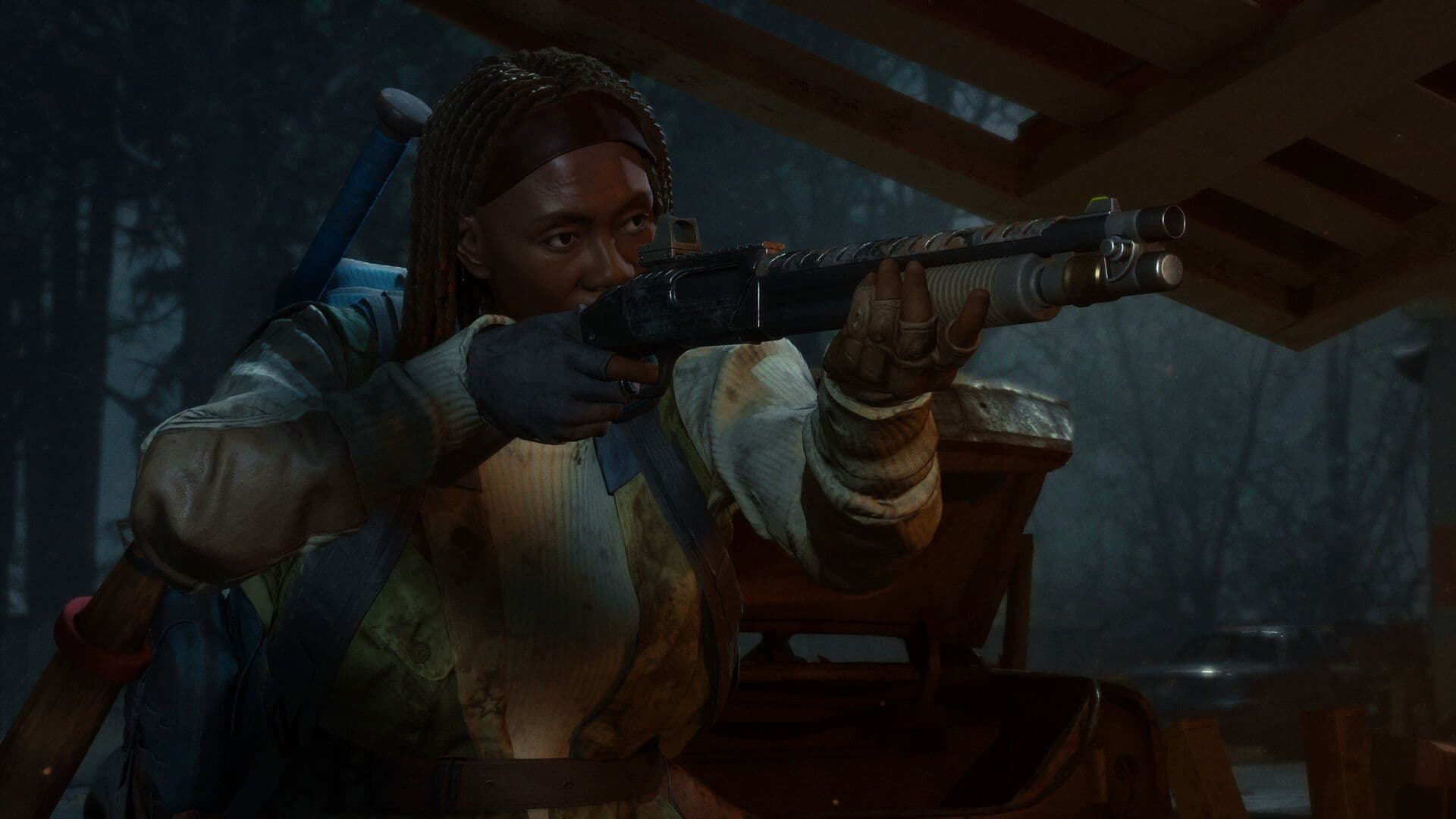
The 2020 trailer showed a survivor aiming down a rifle scope at a zombie deer, and that single image did what cinematic reveals are designed to do: it sparked speculation. Players started connecting dots—infected wildlife, new ecosystem threats, maybe even a more horror-forward tone where nature itself is part of the apocalypse.
Holt has now shut that down completely. Not only did he say the team isn’t doing zombie animals—he emphasized it repeatedly:
- “We’re not doing zombie animals.”
- “No zombie deer. No zombie deer. No zombie deer.”
It’s funny on the surface, but it’s also telling. Holt isn’t just correcting a misconception; he’s trying to reset expectations that the trailer helped create. And that’s the trap of pre-rendered concept trailers: they don’t just tease a game, they define it in the public imagination—sometimes long before the developers have even decided what the game is.
A Familiar Xbox Showcase Pattern — and the Cost of “Concept First” Reveals
This situation didn’t happen in a vacuum. Holt’s comments land in the shadow of earlier reporting from 2022 that claimed Undead Labs wasn’t ready to announce the game in 2020 and that Microsoft pressure played a role in pushing it into the spotlight anyway. Holt’s new remarks don’t explicitly confirm every detail of that reporting, but they undeniably reinforce the core point: the reveal happened before the project had the team and foundation you’d expect from a major first-party sequel.
This is the part that should irritate players—not because studios use CGI trailers (that’s common), but because platform-holder showcases can turn “concept” into “commitment” in the eyes of fans. Once a trailer hits a big stage, it becomes a promise, even if nobody ever said the word “gameplay.”
And when that promise doesn’t match reality, the fallout isn’t just angry Reddit threads. The earlier reporting described internal conflict over what should be in the game, what fans expected based on the trailer, and what management wanted the game to be to satisfy higher-ups. It also described staff turnover. Holt’s admission that the trailer was essentially built before the game existed makes that kind of friction feel less like rumor and more like an inevitable consequence of putting marketing ahead of production.
This is also why you’ve seen more trailers in recent years plastered with disclaimers about whether footage is “in-engine,” “not actual gameplay,” or “representative of the final product.” Players have been burned too many times, and the industry knows it.
What We Know About State of Decay 3 Right Now (Beyond the Trailer)
The good news: State of Decay 3 is no longer just a Word document and a cinematic mood piece.
Undead Labs has announced alpha playtests starting in May 2026, with sign-ups currently available. Holt’s interview was positioned around that push, and the playtests are the first concrete sign in years that the project is moving into a phase where players can actually touch it.
Here’s what’s been specifically mentioned about what participants can expect:
- Base-building
- Four-player co-op
- “Plenty of violence”
Those are core pillars that align with what fans expect from the franchise, and they’re the kind of details that matter more than any cinematic ever could. If Undead Labs wants to rebuild trust after the “basically fake” reveal era, playable systems will do it—not another carefully edited trailer.
A few additional confirmed basics from the game’s official framing in coverage:
- Developer: Undead Labs
- Publisher: Xbox Game Studios
- Engine: Unreal Engine 5
- Genre: survival horror (as categorized in coverage)
- Platforms: It’s described as a Microsoft-exclusive release, and the 2020 reveal positioned it as an Xbox title; it’s also been framed in coverage as an Xbox/PC project.
A final release date still hasn’t been announced.
Why This Reveal Confession Hits Harder Than the Usual “CGI Trailer” Discourse
Most gamers have learned to roll their eyes at cinematic reveals. We’ve all seen the pattern: a flashy pre-render, a logo, a vague window, then years of silence. But Holt’s comments cut deeper because they’re not just “the trailer wasn’t gameplay.” They’re “there wasn’t really a game.”
That’s a different level of honesty—and it exposes a structural issue with modern AAA hype cycles, especially for first-party publishers trying to sell the future of a platform. In 2020, Microsoft was ramping into the Xbox Series X/S era and needed big, exciting names on a slate. State of Decay 3 was a perfect candidate: recognizable brand, passionate community, and a premise that can scale into something huge.
But the cost of that kind of early-stage announcement is paid later—with interest:
- Fans spend years building expectations from a trailer that was never meant to be literal.
- Developers inherit a public “vision” they didn’t actually lock in.
- The studio’s silence becomes suspicious rather than normal.
- Every subsequent update has to fight the ghost of that first impression.
Holt trying to definitively kill the zombie deer idea is a small example of a bigger cleanup job: separating the concept trailer fantasy from the actual game Undead Labs is building now.
What Remains Unknown
Even with alpha playtests on the horizon and Holt’s candid explanation, there are still major unanswered questions about State of Decay 3:
- Release date / launch window: No official date has been confirmed.
- Platforms (final list): It’s framed as a Microsoft-exclusive and tied to Xbox/PC, but full platform specifics and storefront details haven’t been fully clarified in this latest wave of updates.
- Pricing / editions: No pricing has been announced.
- Scope of the alpha: How big it is, what content it includes, and how representative it is of the final game hasn’t been detailed.
- Story and setting details: The 2020 trailer implied certain themes and threats, but the actual narrative direction hasn’t been formally outlined.
- What “persists” from the trailer: Holt says some elements will carry over, but he hasn’t specified which ones beyond confirming zombie animals won’t.
For now, the most important takeaway is simple: State of Decay 3 is finally moving toward something tangible, but the 2020 reveal trailer should be treated as concept art in motion—not a promise of features. And if Undead Labs wants to win the community back, May’s alpha playtests are the first real chance to do it the only way that counts: with a game people can actually play.