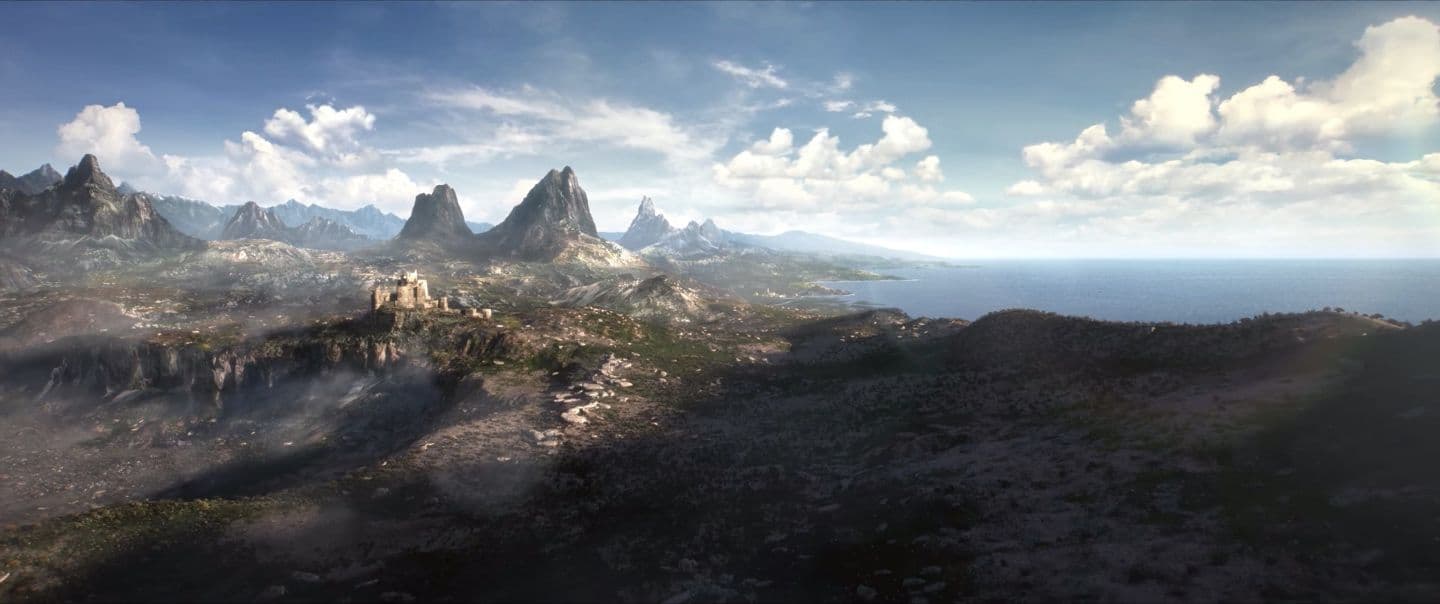
Bethesda Game Studios boss and The Elder Scrolls 6 director Todd Howard has once again been cornered by the question that never dies: where is the next Elder Scrolls? His answer, delivered with the kind of gallows humor only an RPG lifer can muster: “Just pretend we didn’t announce it. Doesn’t exist. No one’s heard a word.” It’s a joke, sure—but it’s also a blunt admission that Bethesda’s 2018 title-card reveal created an expectation machine the studio has been wrestling ever since.
The good news (yes, there is some): Howard also said the bulk of Bethesda Game Studios is now on The Elder Scrolls 6, and that the team is in a “fortunate position” where builds are consistently playable with “new stuff” being added. The bad news: there’s still no release date, no platforms list, no setting confirmation, and no real re-reveal—just more insight into how Bethesda is trying to avoid repeating the same development pain it hit during Starfield.
What Todd Howard Actually Said (and Why It Matters)
Howard’s “pretend it doesn’t exist” line is the kind of quote that detonates across the internet because it hits a nerve. The Elder Scrolls is one of gaming’s defining RPG franchises, and the gap since Skyrim (2011) has become its own meme, its own cultural artifact. Bethesda isn’t just making a sequel; it’s trying to follow a game that’s been re-released, re-modded, re-litigated, and re-played for well over a decade.
In the interview, Howard framed the problem as one of timing and expectations—specifically, how much a player “already knows” before they ever press play. He described his preference as wanting to “compress” the moment you hear about a game to the moment you can actually play it, ideally putting those moments “on top of each other.”
That philosophy is basically the opposite of what happened with The Elder Scrolls 6, which was announced with a teaser back in 2018—years before Bethesda was ready to talk about story, setting, systems, or even what the game is beyond “it’s coming.”
Howard also explained why Bethesda did it anyway. The 2018 era was a perfect storm: Fallout 76 was Bethesda’s first major online multiplayer swing, and Starfield was a brand-new IP. In that context, announcing The Elder Scrolls 6 functioned as reassurance—an explicit signal to long-time fans that a traditional single-player Bethesda RPG wasn’t being abandoned.
And now? Howard sounds like someone who understands the business logic of that decision… while also wishing he could delete it from history.
Bethesda Says Elder Scrolls 6 Is Now the Studio’s Main Focus
Here’s the real crumb that matters: Howard said “the bulk of the studio is on” The Elder Scrolls 6, along with “a lot of our partners,” and that the team has reached a point where it knows, “Hey, this is what we’re doing.”
That’s not a trailer. It’s not a screenshot. It’s not a setting reveal. But it is a meaningful development milestone in Bethesda terms, because Howard also described how the studio ramps up:
- Projects begin with a smaller pre-production team for two to three years to lock down direction.
- Once direction is set, the team expands to execute.
Howard’s comments strongly imply The Elder Scrolls 6 has moved beyond early pre-production and into a phase where most of the studio is actively building the game. That’s a big deal for anyone who’s spent the last few years wondering whether TES6 was still a concept document and a mood board.
Even more telling: Howard said Bethesda is in a “fortunate position” where builds of the game are “really consistently working” and that they’ve had “more days than we’ve ever had where the build is good, there’s new stuff in it, and we can play it.”
That’s the kind of statement developers make when they’re trying to communicate progress without giving away content. It’s not sexy, but it’s real. “Playable builds” doesn’t mean “nearly done,” but it does mean the project is in a more tangible state than the infamous 2018 title card ever suggested.
Bethesda also made it clear it’s still juggling multiple commitments—ongoing work on Fallout 76, The Elder Scrolls Online, and continued support for Starfield—and Howard openly admitted the studio could use “10 times” the number of people to do everything it wants to do. That’s not an excuse so much as a window into the reality of modern AAA: even huge studios are constantly triaging attention, content pipelines, and marketing oxygen.
Creation Engine 3, “More Efficient” Development, and the Starfield Lesson
If you’re hunting for the most actionable hint about what The Elder Scrolls 6 might look like, the strongest thread isn’t a lore tease—it’s tech.
Howard talked about the transition to Creation Engine 3, and—crucially—how it’s being integrated into the development cycle. He contrasted this with Starfield, where Bethesda “struggled… for a number of years” during an engine change because those technical shifts can “pull the rug out from under” the content team. When tools are unstable, content creators stall. When builds break, iteration slows. When iteration slows, everything slips.
Howard’s claim now is that Bethesda has done “a really good job of managing that on this game,” and that the team is seeing more consistent, playable builds as a result.
This is the kind of behind-the-scenes detail that should make Elder Scrolls fans cautiously optimistic—not because it guarantees a release window (it doesn’t), but because it suggests Bethesda is trying to avoid the kind of development turbulence that can turn a big RPG into a multi-year grind of rework and toolchain pain.
He also discussed a broader technical philosophy: Bethesda wants to “cast a wide net” so its games can take advantage of high-end hardware while still scaling down to lower-spec devices. Howard specifically pointed to the rise of handhelds and the idea of lower-powered devices where you might underclock for travel, and said Bethesda wants its games to handle that.
That’s not a platform announcement for The Elder Scrolls 6—and it shouldn’t be read as one—but it does signal that Bethesda is thinking about performance scaling and hardware diversity in a way that matters more than ever in 2026.
RPG Systems: Todd Howard Hints at a “Best of Both Worlds” Approach
Howard also dropped a small but fascinating design nugget while talking about RPG innovation: character builds, and the age-old problem of irreversible mistakes.
He referenced Oblivion and said he doesn’t want players to feel like, “I made a mistake several hours ago and I have no way of correcting it.” He contrasted that with the more open-ended approach seen in Skyrim and Starfield, then posed the question of whether there’s a way to get “the best of both worlds”—allowing players to course-correct while still preserving some scarcity and meaning in build decisions.
This isn’t a confirmed Elder Scrolls 6 feature list. But it’s a rare glimpse into the kind of design tension Bethesda is actively thinking about as it builds its next flagship RPG. If TES6 leans into more flexible respec options (or some hybrid system), it could be a notable shift in how Elder Scrolls handles commitment, identity, and long-term character planning.
And honestly? It’s a debate worth having. Elder Scrolls thrives on roleplay and experimentation, but it also lives and dies on the feeling that your character is yours—not a spreadsheet you constantly optimize. If Bethesda can thread that needle, it could be one of the sequel’s most important quality-of-life wins.
Starfield’s PS5 Port and Bethesda’s Balancing Act
All of this Elder Scrolls talk surfaced in the shadow of Bethesda’s other big headline: Starfield is coming to PlayStation 5 on April 7, alongside new content and improvements. Howard also spoke about how Bethesda has had to balance spotlight time between projects—mentioning how “the end of the Fall was for Fallout” in the context of the Fallout TV show, while Bethesda saved Starfield news for now.
That context matters because it explains why Elder Scrolls fans keep getting jokes instead of trailers. Bethesda isn’t just building one game; it’s managing a portfolio of live games, expansions, platform launches, and brand moments. Howard basically admitted that even when the studio has news, it’s constantly deciding when to talk about what—and who gets the spotlight.
It’s not the answer Elder Scrolls diehards want. But it’s the most honest explanation we’ve gotten in a while for why Bethesda’s communication cadence can feel so lopsided.
What Remains Unknown
Bethesda is talking more, but the big-ticket details are still locked away. Here’s what has not been confirmed:
- Release date or release window for The Elder Scrolls 6
- Platforms (no official list has been announced)
- Setting, story, or title beyond “The Elder Scrolls VI”
- Gameplay footage, screenshots, or a full re-reveal
- Specific RPG system changes (Howard’s character-build comments are conceptual, not a feature confirmation)
For now, the state of play is this: The Elder Scrolls 6 is real, it’s playable in development builds, and most of Bethesda is on it—but Todd Howard would very much like you to stop asking him about the game Bethesda announced eight years ago.
And frankly? That tension—between the studio’s desire to control expectations and the fanbase’s hunger for anything concrete—is going to define every TES6 conversation until Bethesda finally decides it’s time to un-pretend it exists.