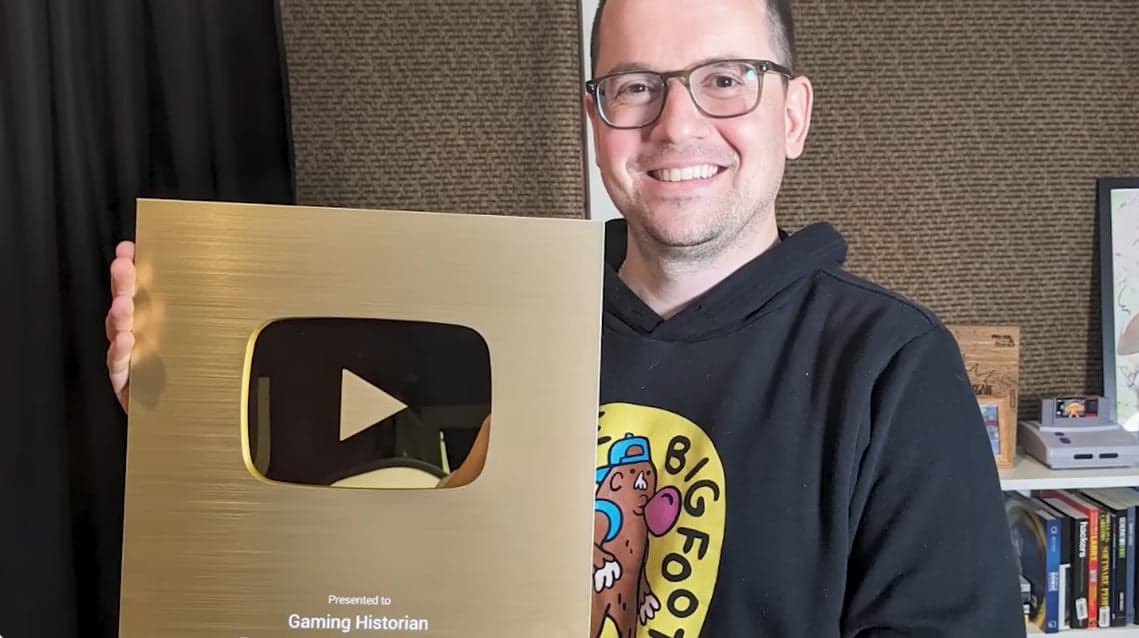
Norman Caruso — the creator behind YouTube’s The Gaming Historian — is stepping away from making new Gaming Historian videos after more than 15 years of meticulous, documentary-style work. In a farewell upload titled “Thanks for Watching,” Caruso says there’s “nothing dramatic” driving the decision, just the kind of burnout that creeps in when your “short” videos require years of research. The sting is real for fans, but the exit comes with a genuinely meaningful parting gift: a large collection of scanned Nintendo legal documents made publicly available via the Internet Archive, with files also provided to the Video Game History Foundation.
This matters because The Gaming Historian wasn’t just another retro channel chasing nostalgia clicks. Caruso helped define what “serious” gaming history could look like on YouTube: primary sources, careful narration, and an obsession with getting details right—at a time when the platform often rewarded speed over rigor.
The Announcement: “I Will No Longer Be Making Gaming Historian Videos”
Caruso’s goodbye is blunt and unambiguous. “Today I’m announcing I will no longer be making Gaming Historian videos,” he says in the farewell recording, adding: “There’s nothing dramatic behind it, I promise.”
The core reason is burnout—specifically the kind that doesn’t fade after a break. Caruso explains that after releasing his The Oregon Trail video in 2024, he felt “tapped out,” struggling to find the energy to start and sustain new projects while also being fair to his personal life. He describes assuming he’d step away for a few months, feel the creative “itch” return, and come back part-time. Instead, that itch never returned.
“I assumed that after a few months I’d get the itch again and make new videos,” Caruso says. “All the while, to my surprise, that itch to make a new video never really came back… My heart just wasn’t in it.”
That line lands like a guillotine if you’ve followed the channel for years, because it’s the quiet truth behind so many creator disappearances: sometimes the passion doesn’t come back, and forcing it only risks poisoning what made the work special in the first place. Caruso explicitly frames the decision as protecting the standards he’s known for—fearing that if he pushed through, the quality would suffer.
Why The Gaming Historian Hit Different (and Why Burnout Makes Sense Here)
Caruso’s channel has built a reputation on deep dives into gaming’s biggest icons—Mario, Tetris, Wolfenstein—as well as wonderfully weird side alleys of the hobby, like oddball peripherals including the infamous Power Glove. Over time, the project evolved from early retro-gaming coverage into something more ambitious: research-heavy episodes that aimed for first-hand sourcing and documentary polish.
That approach is a gift to viewers, but it’s also a brutal production model for a single creator. Caruso points out that maintaining the level of quality and accuracy he expects “even in short videos” can take years of diligent research. That’s the part casual audiences often don’t see: the archival digging, the verification, the scripting, the editing, the constant second-guessing because the internet will absolutely remember if you get one date wrong.
And the broader context matters. The online video landscape has shifted dramatically since Caruso launched the channel in 2008. In the early era, gaming YouTube was often defined by personality-driven “crankery” and comedic outrage. Over the years, gaming history content has exploded into countless niches and formats—from platform-specific deep dives to pop-culture framing to long-form documentary production. Caruso helped push that evolution forward, and now he’s stepping away in a world where the genre he helped legitimize has become a crowded, competitive ecosystem.
There’s a bittersweet poetry to that: The Gaming Historian didn’t get left behind. It helped build the road—and now its creator is choosing to stop walking it.
The Parting Gift: Nintendo vs. Universal Court Documents, Publicly Archived
Caruso isn’t leaving fans with nothing. In his farewell, he reveals he’d been revisiting the famous legal battle between Nintendo and Universal Studios—a case centered on Universal’s claim that Donkey Kong infringed on King Kong. Nintendo ultimately won, and the story has long been part of gaming’s foundational mythology: a young Nintendo of America fighting a media giant and coming out the other side with momentum that helped define its future.
Caruso went further than retelling the well-known version. He visited archives and dug up court documents related to the case, including transcripts, game design bibles, and even doodles from Shigeru Miyamoto. He scanned the materials, and although the video he intended to make is now scrapped, he’s donating those scans to the public.
The documents are being made available through the Internet Archive, and Caruso has also provided the files to the Video Game History Foundation.
That’s not a token goodbye. It’s preservation work—real, tangible, “future researchers can use this” preservation work. In an era when gaming history is constantly threatened by corporate silence, lost media, and the slow decay of physical records, making primary-source material accessible is one of the most valuable things a historian can do.
There’s also a delicious bit of trivia embedded in the archive: Caruso previously showed a court document listing alternate names considered for Donkey Kong during development, including Bill Kong, Kong Holiday, and Kong Chase. (Yes, “Kong Holiday” is the kind of alternate timeline we deserve.)
What Happens Next for Norman Caruso?
Caruso isn’t vanishing from the internet entirely. He’s continuing work on a history podcast he hosts with his wife Kristin, titled “The Old Timey Podcast,” which covers general history rather than strictly video games.
As for the Gaming Historian YouTube channel itself, the existing library isn’t being wiped. The videos will remain available to watch on YouTube, preserving a body of work that many fans treat as a reference shelf as much as entertainment.
One outlet notes Caruso produced 144 videos prior to ending the channel’s run. Either way, the key point is that the archive remains intact—and for a channel built on evergreen topics and careful research, that longevity matters. These aren’t trend-chasing uploads designed to expire in a week. They’re the kind of videos people discover years later and binge like a documentary series.
The Bigger Picture: A Creator Exit That Says Something About the Platform
Caruso’s departure hits because it’s emblematic of a broader reality: YouTube rewards consistency, but craft doesn’t always fit neatly into an algorithmic schedule. When your work is research-intensive and accuracy-driven, the “content treadmill” becomes a grinder.
His story also highlights a tension that’s only gotten sharper: audiences increasingly expect documentary-level production values, but the infrastructure for sustaining that work—time, money, mental health, creative energy—often rests on one person’s shoulders. Caruso tried the “step back and return part-time” approach. It didn’t work, not because he failed, but because the motivation simply didn’t come back.
And yet, he still found a way to end this chapter with integrity: not by forcing a final episode he couldn’t stand behind, but by releasing the raw historical material he’d gathered so others can learn from it.
That’s a historian’s exit, through and through.
What Remains Unknown
A few details haven’t been fully clarified publicly:
- Whether Caruso will ever return for occasional Gaming Historian specials or guest appearances (he frames the decision as no longer making Gaming Historian videos, but doesn’t outline any future exceptions).
- Whether the planned Nintendo vs. Universal video will ever be completed in any form (it’s described as not coming out, with the documents released instead).
- Any long-term plans beyond continuing “The Old Timey Podcast” (no additional projects have been formally announced).
For now, the story is simple—and heavy: one of YouTube gaming history’s defining voices is stepping back, on his own terms, after 15 years. And in a final act of generosity, he’s leaving behind a chunk of gaming’s paper trail for everyone else to study, cite, and build on.