Epic Games is facing a brutal backlash after its recent round of layoffs—more than 1,000 jobs cut—swept up an employee whose family says he’s fighting terminal brain cancer and lost life insurance as a result. After the story spread widely online, Epic CEO Tim Sweeney publicly responded that the company is now in contact with the family and will “solve the insurance” situation. It’s a stark, human-sized gut punch inside an industry already drowning in mass layoffs—and it raises uncomfortable questions about how “standard” corporate offboarding collides with medical catastrophe.
What Happened: A Layoff, a Terminal Diagnosis, and a Public Plea
The employee at the center of this is Mike (Michael) Prinke, who—per his LinkedIn—worked at Epic Games since 2019 as a technical writer and programmer writer. He also held a role as programmer writer manager from May 2024 to November 2025, leading a team responsible for programming resources for Unreal Engine, UEFN, and other Epic products.
On March 28, Prinke’s wife, Jenni Griffin, posted on Facebook that Prinke has been diagnosed with terminal brain cancer. Her post describes a nightmare scenario that will be instantly familiar—and terrifying—to anyone who’s ever relied on employer-provided benefits: the layoff didn’t just cut off income, it cut off life insurance. Griffin wrote that because the condition is now considered a pre-existing condition, Prinke can’t obtain new coverage, and she’s now facing not only the reality of losing her husband, but the financial reality of funeral and burial costs and supporting their family.
That message didn’t stay confined to Facebook. Screenshots circulated across social media, drawing sympathy and anger in equal measure. Eventually, the story reached X, where a post tagging Sweeney gained significant traction—forcing a direct response from the top.
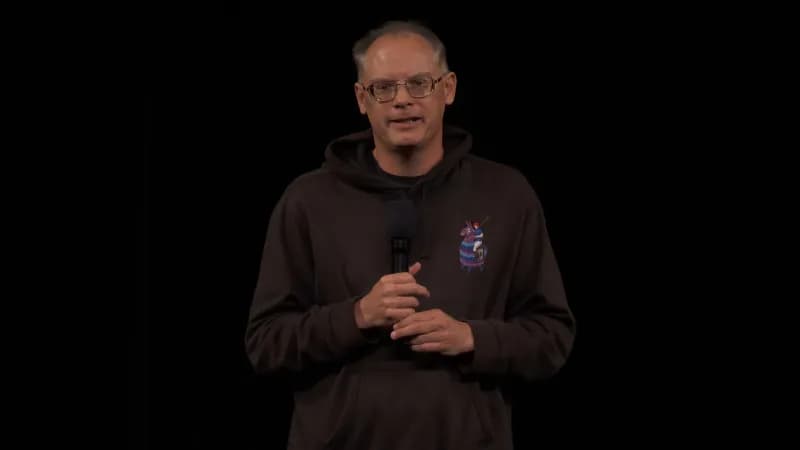
Tim Sweeney Responds: “Epic Is in Contact… and Will Solve the Insurance”
Sweeney replied publicly on X with a statement that’s now become the focal point of the entire controversy:
“Epic is in contact with the family and will solve the insurance for them. There is high confidentiality around medical information and it was not a factor in this layoff decision. Sorry to everyone for not recognizing this terribly painful situation and handling it in advance.”
That response matters for two reasons.
First, it’s an explicit commitment—using plain language—to fix the insurance situation for the family. Not “we’re looking into it,” not “we’re reviewing options,” but “will solve the insurance.”
Second, Sweeney also drew a line around the decision-making process, saying medical information is confidential and “was not a factor” in the layoff decision. That’s a key point because it addresses the most incendiary interpretation of the story: that Epic knowingly targeted a terminally ill employee. Sweeney’s statement rejects that, while still acknowledging the company failed to recognize the situation early enough to prevent additional harm.
Griffin later edited her Facebook post with an update indicating progress: “WE ARE IN TALKS NOW WITH THE APPROPRIATE PEOPLE! WILL UPDATE SOON, LIKELY BY TUESDAY. THANK YOU.”
At the time of writing, no final resolution has been publicly confirmed—only that discussions are happening and Epic has committed to a fix.
The Broader Context: Epic’s 1,000+ Layoffs and the Fortnite Downturn
This incident doesn’t exist in a vacuum. It’s attached to a much larger corporate decision: Epic Games laying off over 1,000 employees.
Sweeney has attributed the cuts to a “downturn in Fortnite engagement” and broader revenue decline, describing a situation where Epic was “spending significantly more than we’re making” and needed major cuts to keep the company funded. He also pointed to “industry-wide challenges,” “tougher cost economics,” and reduced spending across the games business in recent years.
Epic has also outlined what laid-off employees are receiving as part of severance: four months’ salary, additional compensation “based on tenure,” and six months of health care coverage. Sweeney also said Epic would accelerate stock option vesting through January 2027 and extend equity exercise options for up to two years.
But here’s the uncomfortable truth: even when severance and healthcare continuation are offered, the loss of employer-linked benefits can still be catastrophic—especially when life insurance is involved and a family is suddenly forced into the private market while dealing with a terminal diagnosis.
And that’s why this story hit so hard. It isn’t just about one company’s PR crisis. It’s about what happens when the modern games industry’s “cost savings” collide with the reality that benefits in the United States are often welded to employment in ways that can become cruel overnight.
Why This Story Is Exploding: Trust, Corporate Responsibility, and the Human Cost of “Efficiency”
There’s a reason this specific layoff story broke through the usual churn of grim industry news. The games business has been battered by layoffs for years, and audiences have become numb to the numbers. “Hundreds.” “Thousands.” “Restructuring.” “Realignment.” It’s all corporate fog.
But a terminal diagnosis and a family pleading for help cuts through the fog instantly. It forces a moral question that spreadsheets can’t answer: what does a company owe people when it decides to cut them loose—especially when the consequences are not abstract, but immediate and life-altering?
Sweeney’s response is notable because it’s both an apology and an admission of failure: “Sorry… for not recognizing this… and handling it in advance.” That line implicitly acknowledges what many critics are really angry about: not just that the layoff happened, but that Epic’s processes didn’t catch a situation this severe before it became a public crisis.
And to be clear, the outrage isn’t only directed at Epic. It’s also a reflection of an industry where mass layoffs have become normalized—where studios can ship massive hits and still cut staff, and where workers are routinely told to absorb the risk of volatile executive strategy, shifting engagement curves, and ballooning production costs.
Even within Epic, the mood appears strained. Gameplay producer Robby Williams posted that teams remaining at the company will “have to pick up the pieces and try to keep moving forward,” while also acknowledging they can’t fully understand the impacts the layoffs will have on the game for the rest of the year and likely beyond.
That’s the other side of layoffs that rarely gets discussed: the people who remain are often left to carry the emotional and logistical wreckage—while the product roadmap keeps rolling like nothing happened.
What Remains Unknown
A few key details still haven’t been confirmed publicly:
- What “solve the insurance” specifically means in practice (restoring coverage, funding a policy, a direct financial arrangement, or another solution).
- Whether an agreement has been finalized between Epic and Prinke’s family, or what timeline it will follow.
- How Epic will handle similar edge cases going forward, and whether any policy changes will be announced as a result of this incident.
For now, the only clear facts are that the family says the layoff cost them life insurance amid a terminal brain cancer diagnosis, the story spread widely, and Tim Sweeney has publicly stated Epic is in contact and will resolve the insurance issue. In a year already defined by layoffs across the games industry, it’s a brutal reminder that behind every headcount reduction is a real person—and sometimes, a family staring down the worst moment of their lives.