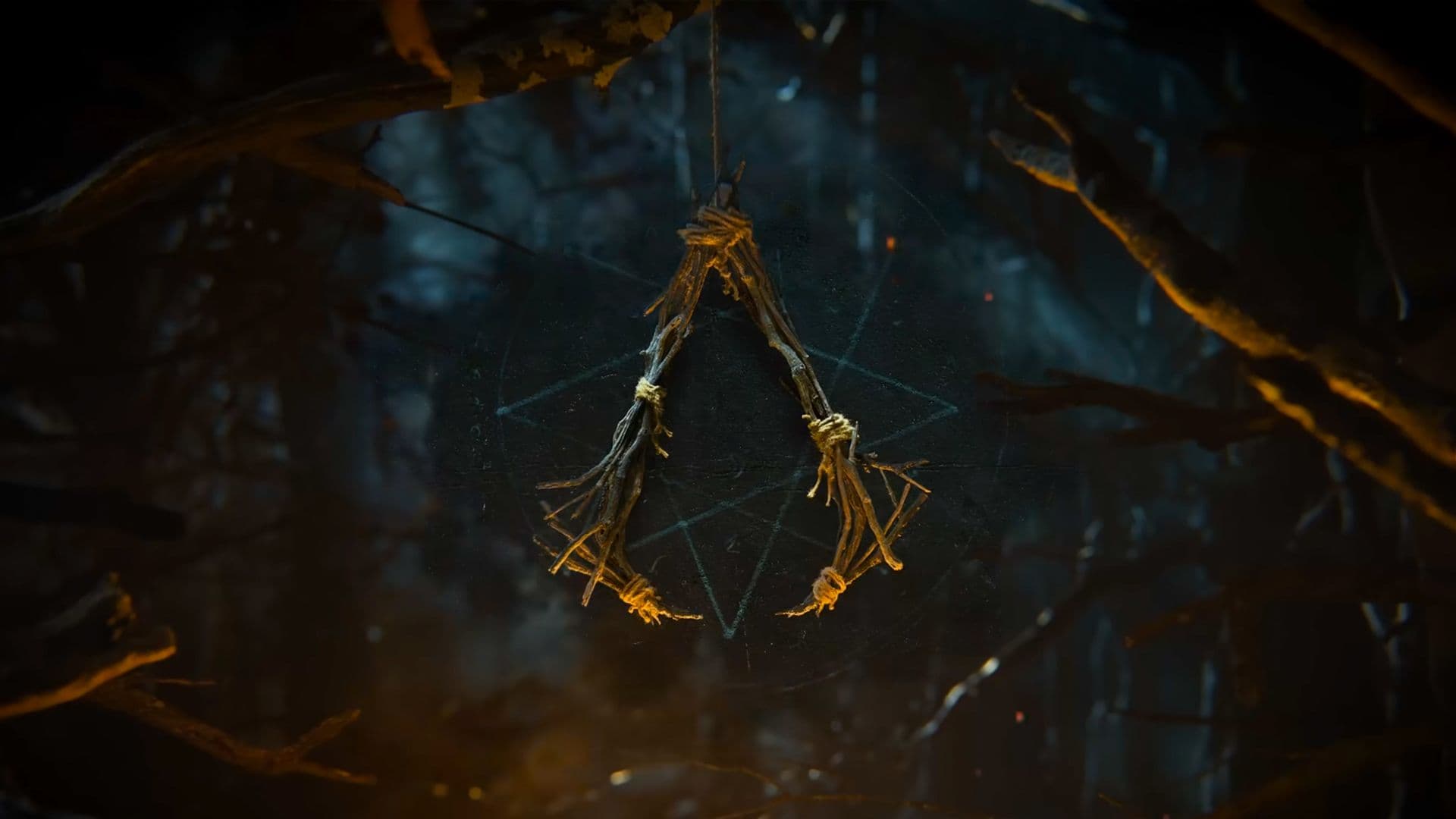
Ubisoft’s already-mysterious Assassin’s Creed Codename Hexe just took another very public hit: game director Benoit Richer has departed the company, only months after the project also lost creative director Clint Hocking. Richer is heading to Servo Games as a game director, framing the move as the start of “a new chapter” at an indie studio built by “industry veterans” with a shared vision.
For a flagship franchise that thrives on confidence and cadence, two high-profile leadership exits in a short span is the kind of turbulence fans can feel—even when the publisher insists development continues with a seasoned team.
A second major leadership exit, and the timing is hard to ignore
The headline here isn’t just that Benoit Richer exits Ubisoft—it’s that Hexe has now lost two top creative leaders in quick succession. Clint Hocking (a long-time Ubisoft name with credits including Splinter Cell, Far Cry 2, and Watch Dogs: Legion) left at the end of February. Now Richer is out as well.
Richer’s departure surfaced via a LinkedIn post announcing his next role: he’s joining Servo Games as a game director. In that post, he described the move as “the beginning of a new chapter,” and characterized Servo as an indie studio of “industry veterans” aligned around a shared vision of “experience creation,” with a “strong complementary skill set.” He also indicated more details are forthcoming.
On Ubisoft’s side, the company previously addressed Hocking’s exit with a public statement that tried to steady the ship: “We sincerely thank [Clint] for his vision, creative contributions, and dedication over the years, and we wish him the very best in his next chapter,” a Ubisoft spokesperson said at the time. “Development on Assassin’s Creed Codename Hexe continues with a seasoned team.”
That message may still be true. But in game development, leadership churn isn’t just a staffing note—it can mean shifts in creative direction, production priorities, internal politics, or simply the reality that big projects are exhausting. Whatever the cause here, Hexe is now carrying the optics of instability at the exact moment it needs momentum.
Who is Benoit Richer, and why his exit matters for Hexe
Richer isn’t a random mid-level departure. He’s a recognizable director with a track record across major productions. He joined Ubisoft in 2017 after directing Batman: Arkham Origins at Warner Bros. Montréal. At Ubisoft, he led the 2018 VR psychological thriller Transference, then became a game director on Assassin’s Creed Valhalla before moving onto Assassin’s Creed Codename Hexe.
That résumé matters because Hexe is widely positioned—officially in tone, if not in specifics—as a departure from the series’ comfort zone. When a project is attempting something “different,” the people steering it are often the glue holding together a risky tonal pivot, a new narrative structure, or experimental gameplay ideas. Losing the game director can mean any number of things behind the scenes: a new leader inherits the vision and executes it, or the vision itself gets re-litigated.
And that’s where the anxiety comes from. Assassin’s Creed is a franchise that can absorb change, but it doesn’t always do so gracefully. The series has reinvented itself multiple times—stealth-action roots, then the RPG era, then a modern live-service platform approach with Assassin’s Creed Infinity as the connective tissue. A darker, more narrative-driven installment could be exactly what the brand needs. But it also requires a steady hand.
Richer’s exit doesn’t automatically mean Hexe is in trouble. It does, however, mean the project has lost another key voice at a time when it still hasn’t been properly introduced to the public.
What we know about Assassin’s Creed Codename Hexe so far
Ubisoft has been extremely guarded about Assassin’s Creed Codename Hexe—and that secrecy is part of why these departures land so loudly. When fans don’t have gameplay, a title, a release window, or a clear creative pitch, leadership changes become the story.
Here’s what’s been said and reported about the project to date:
- It does not yet have an official final name beyond the codename Hexe.
- No official release window has been announced by Ubisoft.
- Jean Guesdon has been positioned in a key oversight role for the franchise as head of content at Vantage Studios. He’s known for work on multiple major entries, including being a co-director on Assassin’s Creed IV: Black Flag.
- Guesdon has teased that Hexe will be “unique, darker, and narrative-driven” compared to previous titles.
- The setting has been described as taking place during the latter stages of the Holy Roman Empire, with reported elements involving horror and witchcraft—a tonal shift for a series that typically leans on historical detail more than overt supernatural storytelling.
- Separate reporting has claimed the game is set in 17th-century Germany during the witch trials, and that players allegedly control a character named Elsa, described as a witch who aligns with the Assassins for reasons that remain unclear.
It’s worth underlining what’s not here: no platform list, no gameplay description from Ubisoft, no confirmed protagonist, no confirmed setting specifics, and no confirmed launch date. There’s a lot of smoke, and still not much fire.
The bigger Ubisoft context: oversight changes and the franchise road map
Richer’s departure doesn’t exist in a vacuum. Hexe has been navigating a shifting leadership landscape around the broader Assassin’s Creed brand.
Hocking’s exit came after Ubisoft brought back Jean Guesdon into a major franchise oversight position. Whether that change in oversight is connected to the departures is unknown, and there haven’t been public indications of internal conflict. Still, when a publisher reshuffles top-level creative authority, it can ripple through projects—especially ones that are early enough in production to still be defining their identity.
Meanwhile, Ubisoft’s near-term Assassin’s Creed slate also shapes expectations. A Black Flag remake is on the horizon, described as Assassin’s Creed Black Flag Resynched, and it’s positioned as Ubisoft’s big Assassin’s Creed release for 2026. (A separate mention indicates a Black Flag remake arriving in July, attributed to Ubisoft Singapore, though broader details around that timing and naming have not been fully clarified in public announcements.)
As for Hexe, it’s been reported as not expected to ship until 2027, with at least one rumor pointing to Holiday 2027. Ubisoft has not confirmed that timing.
This matters because Ubisoft’s strategy appears to be balancing new entries with remakes and spin-offs—potentially pushing the franchise toward a more regular cadence again. If that’s the plan, then Hexe is a key piece of the puzzle: it’s the “new” that has to justify itself next to nostalgia-heavy remakes.
And if Hexe is intended to be a darker, more narrative-forward pivot, it also has to prove that Assassin’s Creed can still surprise people—not just repackage its greatest hits.
Why fans should care: Hexe is supposed to be different, and “different” needs stability
The most interesting thing about Assassin’s Creed Codename Hexe is the promise that it won’t be business as usual. “Unique, darker, and narrative-driven” is the kind of pitch that gets longtime fans leaning in—especially those who miss the series’ tighter focus and moodier atmosphere.
But that kind of tonal swing is also fragile.
A project flirting with horror elements and witchcraft imagery—especially in a historical context like the Holy Roman Empire—has to thread a needle. Go too far into the supernatural and you risk undermining the franchise’s historical-fiction identity. Stay too grounded and you risk disappointing players who want the game to commit to its eerie premise. The sweet spot is hard to hit, and it requires a clear creative north star.
Two leadership exits don’t automatically mean the vision is gone. Ubisoft is a massive organization; teams can and do carry projects forward. But from the outside, it’s difficult not to read this as a sign that Hexe is being re-shaped—either by necessity or by design.
And if Ubisoft wants fans to stay confident, it may need to do what it hasn’t done yet: properly introduce Hexe with a real reveal that communicates tone, scope, and intent. Silence creates a vacuum. Departures fill it.
What Remains Unknown
- Who is replacing Benoit Richer as game director on Assassin’s Creed Codename Hexe (no official announcement has been made).
- Whether Richer’s departure will impact Hexe’s timeline (Ubisoft has not confirmed a release window).
- Hexe’s final title, platforms, and pricing (none have been officially announced).
- How literal the “witchcraft” angle will be—grounded historical paranoia, supernatural horror, or something in between (details have not yet been confirmed).
- Whether the reported protagonist and setting details (including 17th-century Germany, witch trials, and a character named Elsa) are accurate (Ubisoft has not confirmed them).
If Ubisoft wants to stop this story from becoming “Hexe keeps losing directors,” it needs to give the project an identity that’s bigger than its staffing changes. Until then, every departure is going to feel like a warning flare—fair or not.