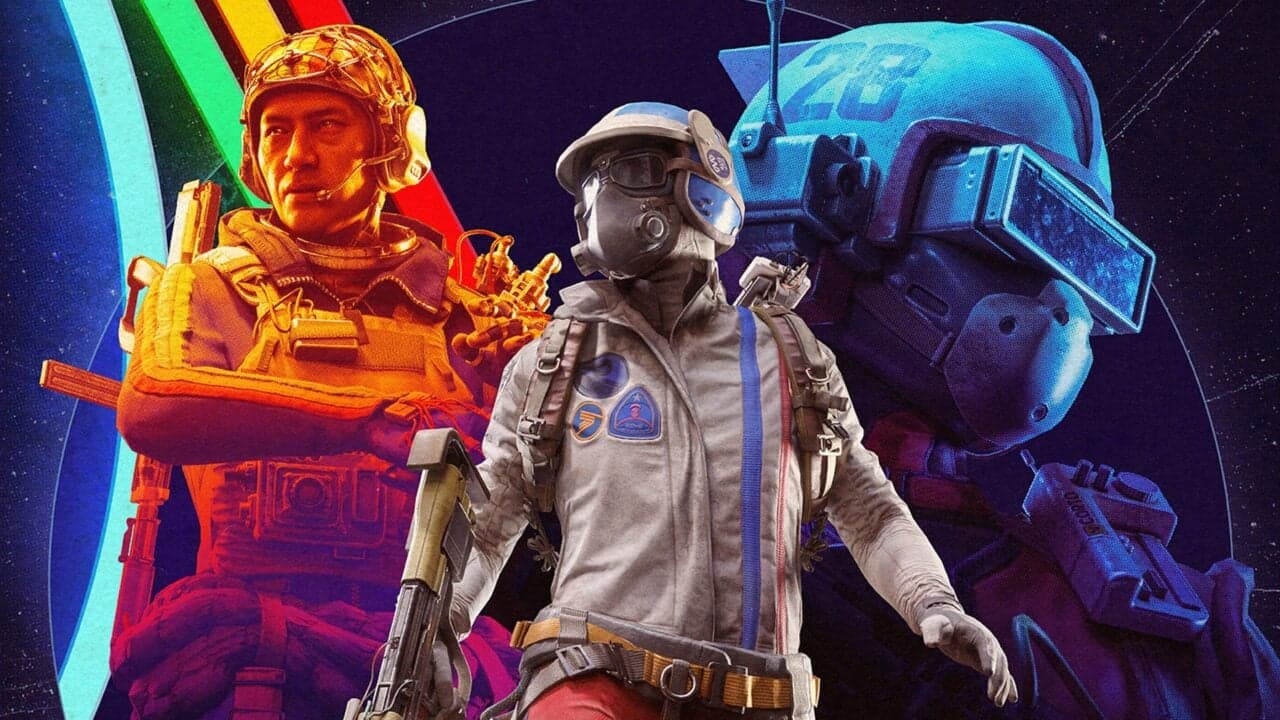
Embark Studios is quietly walking back one of Arc Raiders’ most controversial launch decisions: AI-generated voice lines. Studio head Patrick Söderlund says the team has re-recorded some lines with real actors post-launch, meaning the extraction shooter now contains fewer AI text-to-speech lines than it did at release—and he flat-out admits human performances are simply better.
That matters because Arc Raiders didn’t just arrive to “pretty good” buzz. It landed as a major, widely played live-service hit on PC and consoles when it launched last fall, and it’s stayed popular—especially on Steam. But for a chunk of players, the AI voice work (most notably tied to the game’s ping system) was a stain on an otherwise celebrated release. Now, Embark is trying to prove it heard the backlash, without fully abandoning AI as a development tool.
What Changed: Embark Has Re-Recorded “Some” AI Lines With Real Actors
Söderlund says Embark has re-recorded some of Arc Raiders’ voice lines after launch, replacing AI-generated lines with human-recorded dialogue. The key point isn’t that AI has been eradicated—because it hasn’t. It’s that the balance has shifted: there are now fewer AI voice lines in the game than there were at launch.
And Söderlund isn’t hedging about why. In his words: “There is a quality difference. A real professional actor is better than AI; that’s just how it is.” He frames the gap as obvious—essentially a “you can hear it instantly” problem, not a theoretical debate about the future of pipelines.
That’s a notable tonal change from a studio that’s already been in the AI crosshairs before. Embark’s earlier title The Finals also drew criticism for AI voice usage, and Arc Raiders reignited the argument in a bigger way because the game was (and is) such a high-profile success. When a hit game normalizes a controversial practice, it doesn’t just affect that one title—it sets expectations for the rest of the market.
Why Arc Raiders Used AI Voices in the First Place (and Why Players Hated It)
The AI controversy has always been tied to a specific, very “live-service” problem: content churn.
In Arc Raiders, certain voice lines—particularly those connected to the in-match ping system—were created using an AI text-to-speech model based on recordings from voice actors hired for the game. The logic was efficiency: if Embark adds new items, locations, or callouts over time, AI could generate new ping lines without repeatedly pulling actors back into the booth for every update.
On paper, that’s a tidy production argument. In practice, it collided with two realities:
- Players can hear the difference. Even if the AI lines are “good enough” for functional callouts, they can still sound off—less natural, less expressive, less alive. Söderlund now agrees there’s a clear quality gap.
- The ethics are radioactive. AI voice generation in games is now inseparable from fears about cutting performers out of the process, eroding creative labor, and normalizing synthetic content as a cost-saving default.
That second point is why the backlash lingered even as Arc Raiders racked up praise. This wasn’t just “I don’t like this one line read.” It was “I don’t want this to become standard.”
Söderlund’s comments suggest Embark understands that, at least in part. He says the studio doesn’t want to “replace” performers—and that AI, to Embark, is primarily a tool to help the team work faster and iterate internally.
Embark’s Current Stance: AI as a “Production Tool,” Not a Replacement
Söderlund’s defense is more nuanced than a simple “AI good” or “AI bad.” He describes AI first and foremost as a production tool—a way to prototype quickly, test variations, and figure out what should ultimately be recorded properly.
His example is straightforward: Embark can try many versions of a line internally without booking studio time, and then decide what’s worth recording with actors. That’s a familiar pitch across game development right now: AI for iteration, humans for final.
But Embark isn’t claiming it will never use text-to-speech again. Söderlund acknowledges there are still “select” situations where the studio uses licensed voices through text-to-speech, specifically for lines that are less essential to immersion—and he points to location pings as the main use case.
That distinction—“immersion-critical” versus “utility”—is going to be the battleground for a lot of studios. Because once a developer draws that line, the next question is obvious: who decides what counts as “essential” to immersion in a game built on constant communication, callouts, and moment-to-moment tension?
In an extraction shooter, information delivery is the experience. Pings aren’t just UI—they’re part of the game’s texture, its personality, its social rhythm. If those lines feel synthetic, players notice, and the world feels cheaper.
Actor Pay, Voice Licensing, and the Trust Problem
Söderlund also directly addresses one of the biggest accusations aimed at AI voice work: that it’s a way to dodge fair compensation.
He says Embark pays actors for all time spent in the booth and continues to bring many of them back as the game is updated. For certain limited uses of text-to-speech, he says Embark also pays actors for approval to license their voices for the system—again, framed as a narrow application for non-essential lines.
That’s important context, but it doesn’t automatically solve the trust problem—because the controversy isn’t only about whether someone got paid once. It’s about control, consent, and precedent:
- What exactly does “approval to license” cover?
- How long does that approval last?
- What are the boundaries on future usage as the game evolves?
- And what happens when the industry decides “select usage” is the new normal?
Those details haven’t been fully laid out publicly here, and that’s part of why this topic stays so heated. Players and performers alike have watched too many “limited” tech deployments expand over time.
The Bigger Picture: Arc Raiders Is a Hit, Which Makes This Decision Even More Influential
It’s easy to dismiss AI voice debates as niche industry drama—until it’s attached to a game that’s genuinely huge.
Arc Raiders launched in October 2025 on PC and consoles, and it didn’t just find an audience; it became one of the most-played games around, with strong critical and fan reception. It also earned praise for making the extraction shooter formula feel more accessible and dynamic, leaning into emergent moments through features like proximity chat and even the ability to revive downed opponents.
That’s why this story matters: Arc Raiders isn’t a tech demo. It’s a live, popular, influential game in a genre where other studios are desperate to capture the same lightning.
When a game like this uses AI voices, it risks normalizing the practice. When it starts replacing those AI lines with human performances—and the studio head openly says humans are better—it sends a different signal: that the “AI is inevitable” narrative isn’t as airtight as some executives want it to be.
And yes, that “inevitable” framing has been part of the discourse. Nexon CEO Junghun Lee previously drew controversy by saying, “I think it’s important to assume that every game company is now using AI.” That comment lit a fuse because it implies the debate is already over.
Embark’s move doesn’t end the argument, but it does undercut the idea that studios can’t—or won’t—reverse course when players push back.
What Remains Unknown
- Exactly which voice lines were re-recorded, and how many AI lines remain in Arc Raiders today.
- Whether Embark plans to continue replacing AI voice lines over time, or if this was a one-off cleanup pass.
- The full terms of Embark’s voice licensing approach for text-to-speech (duration, scope, limitations, and future reuse).
- Whether Embark will change its approach in future updates so that new ping lines are recorded by actors rather than generated.
- Any broader policy changes for Embark’s AI usage across projects beyond Söderlund’s general framing of AI as a production tool.
If you’re still playing Arc Raiders, this is one of those moments where the live-service model actually works in players’ favor: the game you have today isn’t the game that launched, and community pressure is clearly shaping what Embark is willing to ship. The real test now is whether “fewer AI lines” becomes “almost none,” or whether this settles into a permanent compromise where AI handles the edges and humans handle the spotlight.