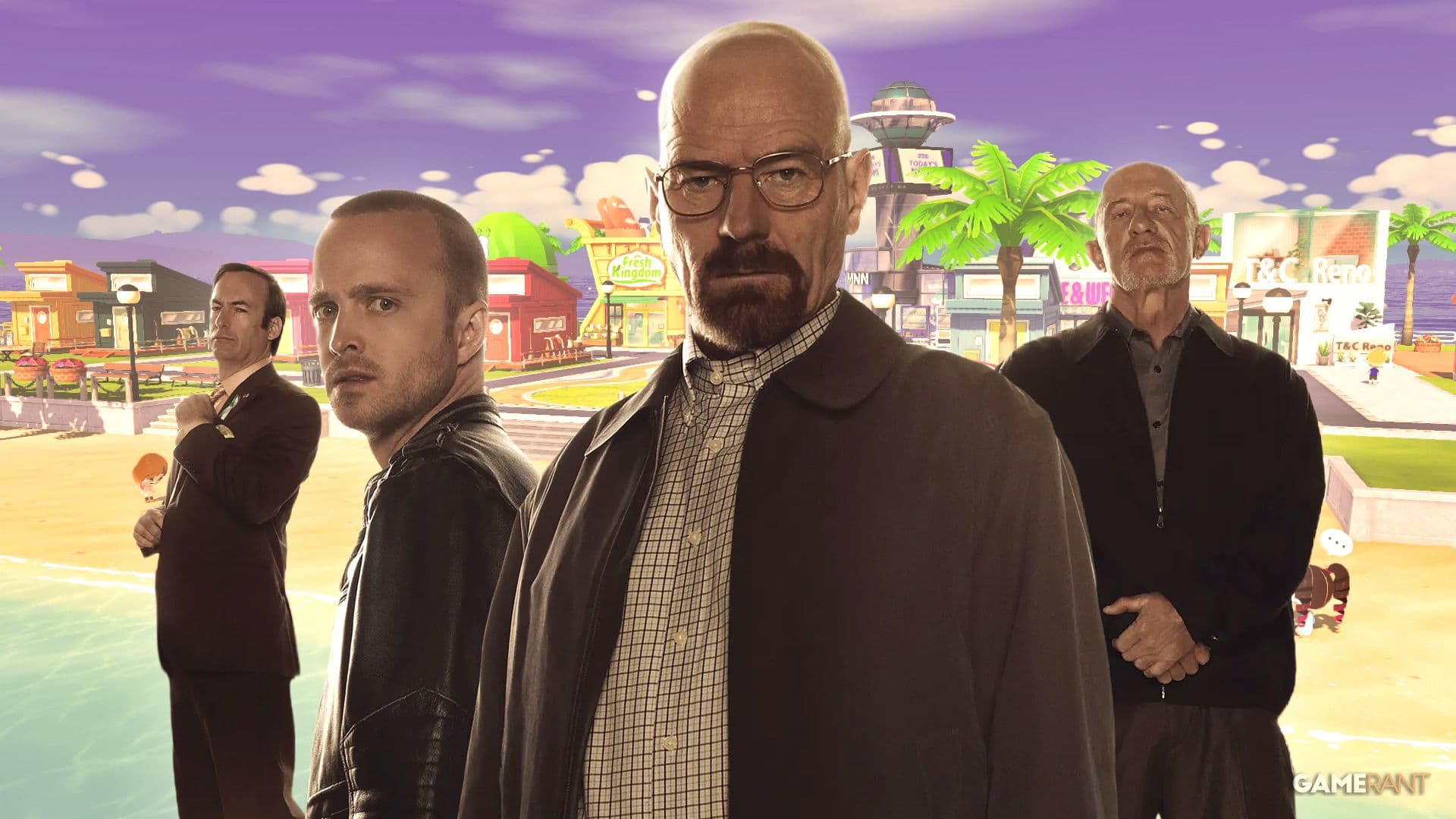
The Tomodachi Life: Living the Dream community has barely had time to unpack its suitcases, and it’s already doing what it does best: turning Nintendo’s wholesome island soap opera into a pop-culture fever dream. One player has recreated a hefty chunk of the Breaking Bad/Better Call Saul universe as Miis—without leaning on the game’s powerful Face Paint tool—and the results are convincing enough to stop scrollers mid-feed.
It’s a perfect snapshot of why Tomodachi Life: Living the Dream matters on Nintendo Switch and Nintendo Switch 2: the game’s character creator is deep, the social simulation is chaotic, and the community’s creativity is moving faster than Nintendo’s own sharing tools.
The Breaking Bad Mii lineup: 16 characters, sharp likenesses, and zero Face Paint
A Reddit user going by randomg0ds shared a set of 16 Miis based on characters across the Breaking Bad universe, and the post quickly caught fire—sitting at 7.3K upvotes at the time it was highlighted. The roster reportedly spans major faces from both shows, including Walter White, Jesse Pinkman, Nacho, and Kim Wexler.
What makes this particular set pop isn’t just “hey, I made Walter White.” It’s that the creator’s Miis apparently nail the actor likeness within the constraints of Nintendo’s Mii style—something that’s harder than it sounds when you’re working with simplified facial geometry and a deliberately toy-like aesthetic.
When asked how they pulled it off, the creator’s advice was refreshingly practical: “the most important thing is proportioning,” and you should focus on which facial feature stands out the most. That’s the real secret sauce of good Mii craft—less about chasing perfect detail, more about capturing the one or two traits your brain uses to instantly recognize a face.
And here’s the kicker: they didn’t use Face Paint at all. In Tomodachi Life: Living the Dream, Face Paint is essentially the “break glass in case of emergency” option—letting you draw details that aren’t available in the standard parts list. Skipping it is a self-imposed challenge, and it’s also a flex: it says the base editor is strong enough to do serious work if you understand shapes, spacing, and silhouette.
There is one heartbreakingly modern footnote, though. The creator said they no longer have the Breaking Bad Miis, because they had to delete them while working within the free demo, which only allows three Miis at a time. That limitation is doing exactly what demos are designed to do—tease the full experience—but it also means some of the community’s best work is currently ephemeral unless creators rebuild it in the full game.
Why this hits now: Living the Dream is built for “franchise islands,” and fans are sprinting
Nintendo launched Tomodachi Life: Living the Dream on April 16, 2026, marking the first Tomodachi Life title in over a decade. It was first announced in March 2025, and it arrived with the kind of pent-up demand you only see when a cult-favorite series goes quiet for years.
The premise is classic Tomodachi: you create Miis, drop them onto an island, and watch them form friendships, start fights, fall in love, and generally behave like unpredictable little sitcom gremlins. The big difference this time is scale and tooling. The full game allows up to 70 Miis on your island, which is a huge deal for anyone who wants to do more than a handful of jokes.
That 70-Mii cap is the quiet reason recreations like the Breaking Bad cast are taking off. With that much room, you’re not just making “Walter and Jesse.” You’re building a whole interconnected reality-TV ecosystem—complete with rivalries, romances, and whatever bizarre news broadcasts your island decides to generate.
And if you want proof that this isn’t a one-off, the community has already delivered another major “no Face Paint” stunt: a different player recreated every starter Pokémon from the mainline games—30 total, spanning from Bulbasaur/Squirtle/Charmander all the way to Browt, Pombon, and Gecqua, the newly revealed starters for the upcoming Pokémon Winds and Waves. That creator also did it without Face Paint, relying on head shapes, hairstyles, and even non-human skin colors to sell the illusion.
The Pokémon project also underlines something important about the editor: even with extensive options, there are still constraints. The creator noted that some designs didn’t come through exactly as intended—citing cases like Popplio and Oshawott, where the game doesn’t allow nose color changes without Face Paint. In other words: Face Paint isn’t just a toy; it’s sometimes the only way to cross the finish line.
So when someone pulls off recognizably accurate likenesses without it—whether that’s Walter White or a water otter Pokémon—it’s a sign the base system is doing real work.
Sharing is the problem Nintendo created—and the community is already routing around it
Here’s the tension at the heart of Tomodachi Life: Living the Dream right now: it’s a social simulation that practically begs to be shared, but Nintendo has made sharing harder than it should be.
Players have run into restrictions around posting screenshots and videos directly, and there’s a sense that this is connected to the game having virtually no profanity filter. That’s a very Nintendo problem to have: the game is built around user-generated text and chaotic interactions, and Nintendo doesn’t want to be responsible for what people do with it.
The result is predictable. Fans are already building tools and workarounds.
One fan-made site, TomodachiShare, allows users to submit pictures of Mii creations along with details on how to recreate them. It’s being used in exactly the way you’d expect: as a grassroots library of designs, including pixel-by-pixel approximations via Face Paint screenshots for characters that would otherwise be impossible to communicate cleanly.
Another tool, Tomo Board, lets players upload pictures of their Miis and connect them on a relationship flowchart—an “evidence board” view of island drama. The game does include a way to check relationship standings (through the resident list and a button prompt), but the fan tool is about visibility: seeing the entire web at once, like you’re producing your own reality show.
And if you just want to get clean media off your console, there are manual methods: transferring screenshots and video via USB-C to a computer or using a microSD card reader. It’s more friction than most players want in 2026, but it works—and it’s already part of the community’s day-one survival kit.
This matters for creations like the Breaking Bad cast because the value of these Miis isn’t just that they exist on one person’s island. The value is that they spread—people copy the settings, remix the designs, and build entire themed islands. Nintendo’s restrictions slow that down, but they’re not stopping it.
Nintendo is leaning into the meme side too—meet Hugh Morris, the jester icon
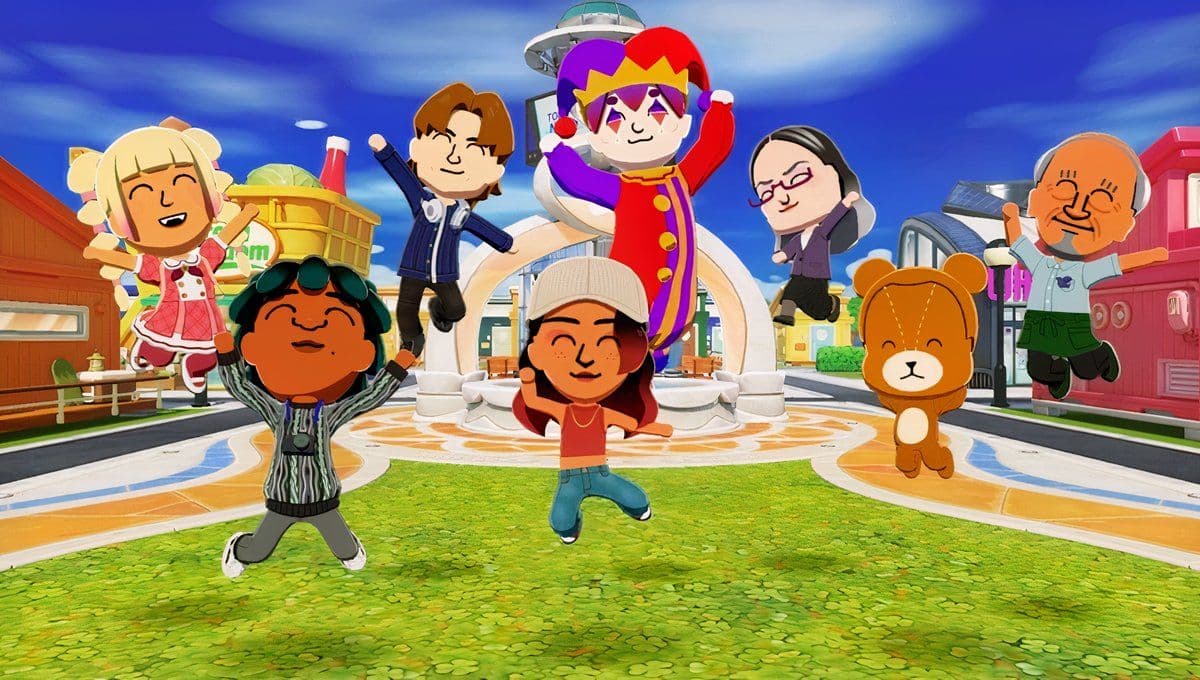
While fans are busy importing pop culture into the game, Nintendo is also pushing its own internal celebrity: Hugh Morris, an original character who has become an unofficial mascot for Tomodachi Life: Living the Dream.
Nintendo’s social media team posted an official video guide showing the exact parts needed to create Hugh Morris’ face and the slider settings to match his voice. The tutorial is short—about 10 seconds—but it’s very “Nintendo knows what it’s doing” energy: the company sees what the community latched onto and is feeding it.
The guide also doubles as a nudge toward the new Face Paint feature, since Face Paint is needed to create Hugh Morris’ under-eye makeup. Interestingly, the tutorial doesn’t specify what personality type Hugh should have—though fans have tried to infer it based on in-game details like his house wallpaper. Tomodachi Life: Living the Dream includes 16 personality archetypes, and they can be further tweaked with Little Quirks.
That personality layer is a big deal, because it’s what turns a good-looking Mii into a good character on your island. You’re not just sculpting Walter White’s head—you’re dropping him into a system where he’ll form bonds, develop crushes, get rejected, get depressed, and potentially spiral into the kind of sitcom nonsense that only Tomodachi can generate.
And yes, romance is as messy as ever. Pairing Miis romantically is described as random and hard to fully control; the best way to encourage relationships is simply to make Miis interact a lot and hope the dice roll your way. Miis may ask your approval when they develop a crush, and you can discourage them if they’re chasing the “wrong” target.
Confessions can also go sideways: other Miis can crash a confession scene, and the target might choose one of the interlopers instead. If a Mii gets rejected, they can become depressed, and you’ll need to cheer them up—one fast method is giving them a travel ticket, purchased from the wishing fountain for one wish each (with that option unlocking after you’ve spent 10 wishes total).
That’s the engine that turns a set of accurate Breaking Bad Miis into something more than a gallery post. Put Walter, Jesse, Kim, and Nacho on the same island and you’re not just recreating a cast—you’re unleashing them into a machine designed to generate drama.
What Remains Unknown
Even with the post’s popularity, a few key details haven’t been fully pinned down publicly:
- Whether randomg0ds plans to recreate and repost the Breaking Bad Miis in the full version (they said they deleted them due to demo limits).
- The exact step-by-step settings for each character (no full build guide has been confirmed in the reporting).
- Whether Nintendo will adjust sharing restrictions post-launch, or if the community will remain reliant on manual transfers and fan-made hubs.
- How robust Nintendo’s planned support is for community sharing beyond local connection sharing (a method exists, but it requires both players to be on the same local connection with the game running).
For now, the headline is simple: Tomodachi Life: Living the Dream is out, the community is already operating at full power, and someone just proved you can drop the entire Breaking Bad vibe onto a Nintendo island—no Face Paint required. That’s the kind of beautiful, cursed creativity this series was built for.