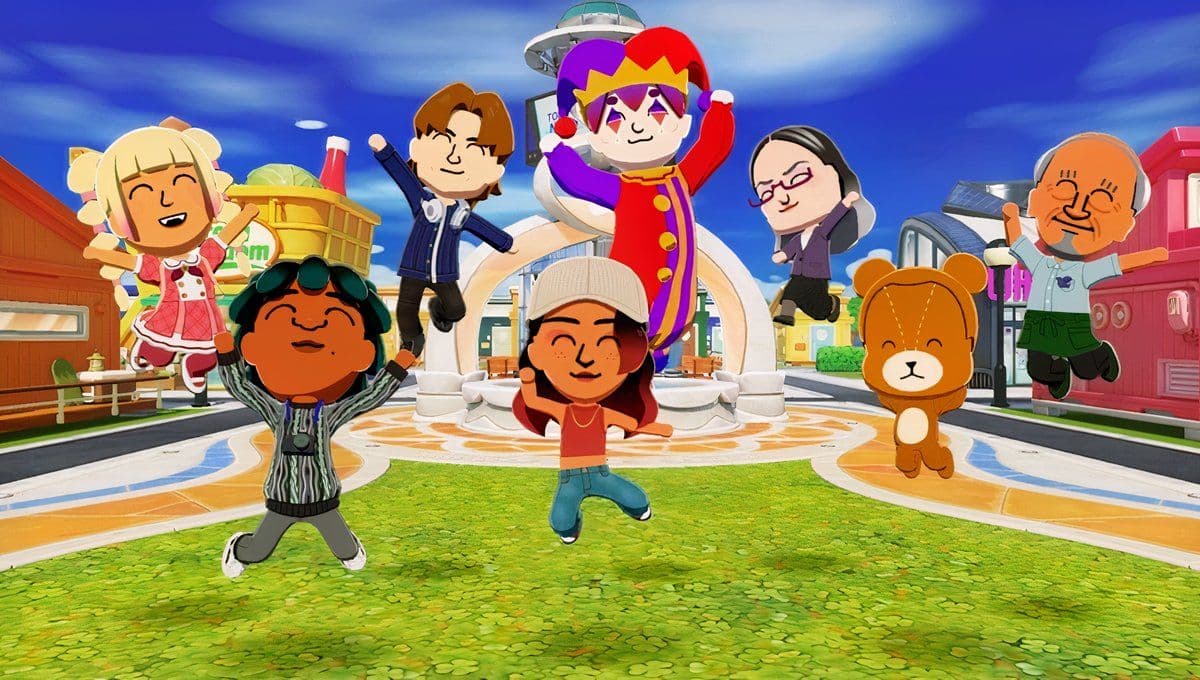
Nintendo’s long-awaited return to its wonderfully unhinged social sim is almost here. Tomodachi Life: Living the Dream launches on Nintendo Switch on April 16, 2026, with a midnight Eastern digital release that effectively turns April 15 into “launch night” for much of North America. And yes—this is the same game where the developers openly admitted they were obsessed with getting Mii farts to sound “just right,” which tells you everything you need to know about the tone Nintendo is chasing.
Below is the exact release timing, what’s confirmed about physical editions and preloads, and why this entry feels like more than just a nostalgia play.
Global release time: when you can start playing
Nintendo is rolling out Tomodachi Life: Living the Dream digitally at 12:00am ET on April 16, 2026. That’s a single synchronized launch time that translates across regions as follows:
- PDT (Los Angeles): 9:00pm, April 15
- CST (Mexico City): 11:00pm, April 15
- EDT (New York): 12:00am, April 16
- BRT (São Paulo): 1:00am, April 16
- BST (London): 5:00am, April 16
- CEST (Warsaw): 6:00am, April 16
- CST (Beijing): 12:00pm, April 16
- KST (Seoul): 1:00pm, April 16
- JST (Tokyo): 1:00pm, April 16
- AEST (Sydney): 2:00pm, April 16
- NZST (Auckland): 4:00pm, April 16
So if you’re on the US West Coast, the practical answer to “when does it release?” is: the evening of April 15.
Digital, physical, preorders, and the demo: what’s available at launch
A few key points are already locked in:
- Digital release: Available via the Nintendo eShop at the times listed above.
- Physical edition: Nintendo is also launching a cartridge version alongside the digital release. Regional stock may vary, and some retailers may offer bonuses (things like keychains, stickers, or in-game codes have been floated as examples), but specific retailer packs and regions haven’t been universally confirmed.
- Preorders: Preorders are live on the eShop and at participating retailers for boxed copies.
- Preload: eShop preorders can preload so the game is ready the moment it unlocks.
- Free demo: A free demo is available that lets players experiment with character creation and start customizing Miis ahead of launch. It’s been suggested that progress “can often be carried over,” but Nintendo hasn’t been quoted here with a hard, universal guarantee for every element—so treat carryover specifics as something to verify in official messaging or in-game prompts.
Switch 2 support: is there a separate version?
Here’s what’s been stated clearly: Tomodachi Life: Living the Dream is launching as a Nintendo Switch (Switch 1) title on April 16.
There is no separate Switch 2 edition confirmed. However, it’s also been stated that Switch 2 owners can play it via backwards compatibility with the same copy—no special upgrade purchase required.
One wrinkle: discussion around the game has referenced the increased power of the Nintendo Switch 2 in the context of development talk, but that doesn’t equal a confirmed “Switch 2 enhanced” SKU or feature set. As of now, the clean consumer-facing takeaway remains: buy the Switch version, play it on Switch or Switch 2.
Why this launch matters: nine years of ideas, and a UGC backbone
This isn’t just Nintendo dusting off a cult favorite because the internet kept asking nicely. The team has been unusually candid about how long this project has been cooking—and what they spent that time on.
Director Ryutaro Takahashi has described the game as having “nine years’ worth of ideas” inside it, and has said development began around 2017, after things settled down on Miitomo. That timeline alone frames Living the Dream as a slow-burn internal passion project rather than a quick sequel built to fill a release gap.
The real headline, though, is how central user-generated content is to the entire design. The developers have said they spent six or seven years building out the game’s UGC tools—an eye-popping amount of time for systems that, on paper, might sound like “just” creation features. But in a Tomodachi Life game, creation is the game. The comedy, the chaos, the emotional attachment—none of it lands if the tools don’t let players express themselves fast and freely.
To prove the point, the team even used the system internally to recreate their own workspace. They built a custom island called Development HQ Island, and Takahashi explained that with the creator tools, “each desk is a Mii character’s home.” That’s not just a cute anecdote—it’s a signal that Nintendo wants players to treat the island like a living diorama where every object can become a punchline or a story hook.
And it goes further than furniture.
Takahashi also confirmed players can create pets and give them to Miis, and the team famously made Pikmin as pets during development—specifically a Red Pikmin—with Miis even taking them for walks. That’s the kind of cross-series Nintendo weirdness that feels obvious in hindsight, but only works if the creation suite is robust enough to support it.
Yes, the fart discourse is real—and it tells you what kind of sequel this is
If you needed proof that Tomodachi Life: Living the Dream understands the assignment, Nintendo’s own developer interview delivered it in the most Tomodachi way possible: a serious, multi-person discussion about whether Miis should be able to fart.
Takahashi admitted there was “a big debate among the team about whether Mii should be able to… break wind.” Some developers found it hilarious; others thought it was “a bit vulgar.” The compromise is extremely on-brand: farting exists as an optional “Little Quirk”—a minor personality trait you can assign to a Mii. If it’s not your vibe, you can ignore it entirely.
Then the team went deep on execution. Sound director Toru Minegishi said, “We really obsessed over getting the sound just right,” and programming director Takaomi Ueno added, “We did so many retakes.” Minegishi even mentioned getting feedback that some takes were “a bit too realistic.” Meanwhile, art director Daisuke Kageyama said the visuals went through wild iterations too—at one point, the fart effect looked “like an explosion going off.”
This is juvenile, sure. It’s also revealing. Nintendo didn’t treat the humor as throwaway. They treated it like craft. That’s exactly what fans want from Tomodachi: a game that commits to the bit so hard it loops back around into brilliance.
And it’s not just a random feature—Nintendo’s reveal trailer reportedly opens with a Mii relaxing on the beach and letting one rip, which makes the whole “we did retakes” saga feel even more deliberate. The fart isn’t a gag tucked away in a menu. It’s a mission statement.
Miis almost changed dramatically—Nintendo pulled back for the right reasons
One of the most important creative calls here has nothing to do with toilet humor: Nintendo considered making the Miis look more realistic, then backed away.
Takahashi explained the team wanted to make Mii visuals more appealing for modern hardware, but after adding new elements, something felt “off.” Kageyama articulated the real heart of the issue: in Tomodachi Life, Miis aren’t just avatars. Players pour affection into them like they’re little digital roommates, and that emotional connection is tied to the classic look.
Kageyama said the team decided against changing defining features—like facial features and limb shapes—and instead focused on “brushing up” the style so it wouldn’t feel outdated with higher resolution graphics. That’s the correct call, full stop. The entire point of Tomodachi is that your weird little Mii approximations of friends, family, and pop culture icons can coexist in the same space without uncanny-valley whiplash.
If you’ve ever tried to recreate a beloved Mii and found that one tiny change makes them feel like a stranger, you already understand why this matters.
The family stuff, the chaos stuff, and the “observe the island” philosophy
Nintendo has also talked about playtesting with families, innovating on Mii design without losing identity, and how the music came together—details that reinforce a consistent design goal: players should enjoy the game simply by observing the Mii characters.
That line matters because it’s the secret sauce of Tomodachi. You’re not min-maxing a farm or optimizing a town layout for profit. You’re watching a soap opera of tiny weirdos generate stories you’d never script yourself.
And the UGC focus supports that “observer” fantasy. If you can build the island, customize items, create pets, and shape personalities through quirks, then the island becomes a stage—and the Miis become actors who still surprise you.
Even the “dragging and dropping Miis” detail fits that ethos. It started as a debug feature, then stuck because the team got attached to the control. But Nintendo also emphasized that Miis remain independent: placing two Miis together doesn’t guarantee they’ll get along. You can nudge the chaos, but you can’t fully command it. That’s Tomodachi in a nutshell.
What Remains Unknown
Even with launch hours nailed down, there are still a few practical questions Nintendo hasn’t fully clarified in public, at least not in the details currently circulating:
- Pricing for Tomodachi Life: Living the Dream hasn’t been confirmed here.
- Whether there are special/deluxe editions (and what they include) remains unclear; retailer bonuses have been mentioned as possibilities, but specifics vary and haven’t been universally detailed.
- The exact scope of demo progress carryover hasn’t been definitively spelled out in the information at hand.
- Any concrete list of Switch 2-specific enhancements (resolution, frame rate, load times) has not been confirmed as a formal feature set or separate version.
For now, the big answer is simple: Tomodachi Life: Living the Dream releases April 16, 2026, unlocking at 12:00am ET—and if Nintendo’s own dev stories are any indication, this sequel isn’t just back. It’s back with years of pent-up weirdness, polished tools, and an almost alarming commitment to comedic detail.