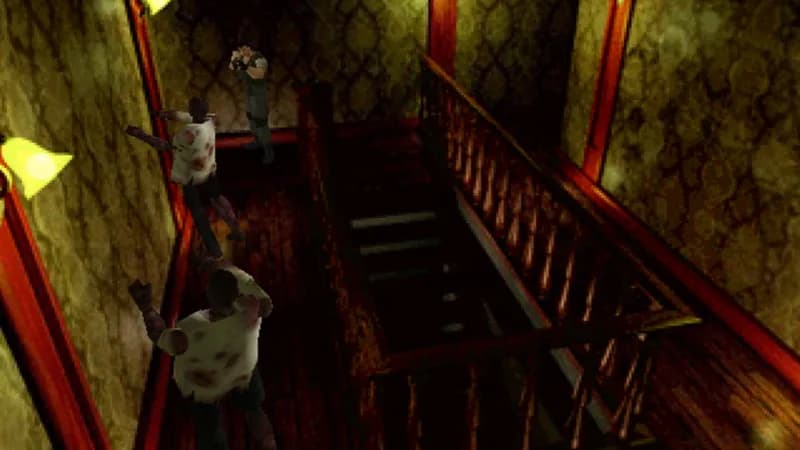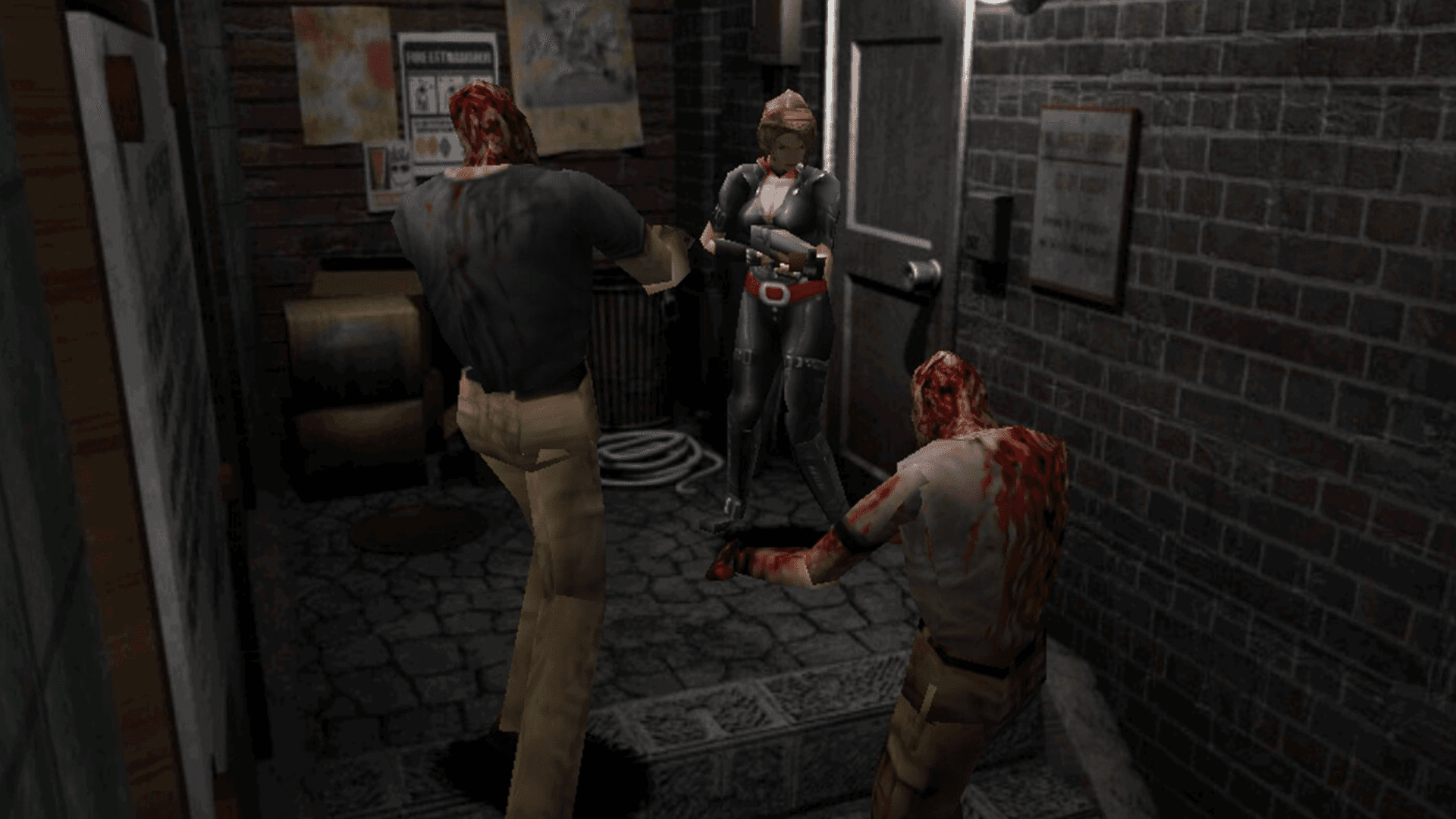
Capcom has quietly released the original versions of Resident Evil, Resident Evil 2, and Resident Evil 3: Nemesis on Steam, giving PC players a straightforward way to buy and run the genre-defining classics on Valve’s platform for the first time. Even better: they’ve launched with a steep discount, making this one of the most accessible moments ever to revisit the fixed-camera roots of survival horror—tank controls, door-loading screens, and all.
And it’s not just Raccoon City getting resurrected. Capcom also dropped Breath of Fire IV on Steam in the same wave, turning what looked like a random catalog refresh into a genuinely exciting preservation win.
The Big Deal: The Original PS1 Resident Evil Trilogy Is Now on Steam
Let’s be clear about what just happened: these aren’t the modern remakes, remasters, or reinterpretations that have dominated the last decade of Resident Evil discourse. This is the original, classic-era trilogy—the versions that defined survival horror’s language: fixed camera angles, pre-rendered backgrounds, limited saves, puzzle-box level design, and that unmistakable late-’90s Capcom pacing where dread is built as much by what you don’t have as what you do.
Capcom has released:
- Resident Evil (original version)
- Resident Evil 2 (original version)
- Resident Evil 3: Nemesis (original version)
All three are available now on Steam.
What makes this especially notable is that these releases follow an earlier period where the games were available on GOG—and now they’ve finally crossed over to the biggest storefront on PC. For a series currently riding high on modern hits and anniversary momentum, this is Capcom doing something fans have begged for in one form or another: making the foundational texts easy to buy, install, and play on modern machines.
Yes, the remakes of Resident Evil 2 (2019) and Resident Evil 3 (2020) are already on Steam, and the Resident Evil remake lineage has been well represented on PC for years. But the “untouched” originals have been a different story—often trapped behind old discs, compatibility headaches, or platform availability quirks. This drop changes that overnight.
Pricing, Discounts, and Who Built These Steam Versions
Capcom didn’t just toss these up at full price and call it a day. Each title is currently available at a launch discount price of $4.99, and will later cost $9.99.
That’s not a token sale—that’s Capcom practically daring you to finally experience the classics the way they were, warts and all, for less than the price of a fast-food combo.
There’s also an important technical footnote: these Steam releases are co-developed by Capcom and GOG. That’s a meaningful detail because it suggests these aren’t bare-minimum uploads; they’re releases built on the same modernized PC groundwork that helped bring these games back to storefronts in the first place.
Quality-of-life upgrades (without rewriting history)
Each game includes a list of quality-of-life features aimed at modern PC usability—things like improved rendering, new display options, and stability fixes—while still preserving the original experience.
Across the trilogy, the upgrades include items such as:
- Improved DirectX renderer
- New rendering/display options like Windowed Mode, Vertical Synchronization, Gamma Correction, Integer Scaling, and more
- Improvements to cutscene timing and playback tools (varies by title)
- Better task switching and cleaner exiting behavior (varies by title)
- Localization bundles (with different language counts per game)
Notably:
- Resident Evil includes four localizations (English, German, French, Japanese).
- Resident Evil 2 includes six localizations (English, German, French, Italian, Spanish, Japanese).
- Resident Evil 3: Nemesis includes six localizations (English, German, French, Italian, Spanish, Japanese).
These are the kinds of improvements that matter because they remove the “PC archaeology” barrier. You’re still playing classic Resident Evil, but you’re not fighting your operating system to do it.
Extra modes enabled and included
Two specific content notes jump out for fans who care about completeness:
- Resident Evil 2 has 4th Survivor and Tofu modes enabled from the very beginning.
- Resident Evil 3: Nemesis includes Mercenaries Mode.
That’s the good stuff—especially for players who want to sample the classic side content without jumping through old unlock hoops.
Early Steam Numbers: RE2 Leads the Pack
It didn’t take long for players to swarm these releases, and early concurrent player peaks show a clear frontrunner.
At least so far:
- Resident Evil 2 hit a concurrent peak of 577 players.
- Resident Evil 3: Nemesis followed closely with a peak of 559.
- Resident Evil trailed behind the other two.
That ordering makes sense in 2026. The original Resident Evil 2 is the nostalgic sweet spot for a lot of fans: Leon and Claire’s dual campaigns, the Raccoon City police station as one of gaming’s all-time great “pressure cooker” spaces, and a structure that still feels clever even after decades of imitators.
Meanwhile, the original Resident Evil has the toughest modern sell—not because it’s not important (it’s the cornerstone), but because so many players already own and replay the 2002 remake and its later re-releases. For a lot of people, that remake is their definitive Spencer Mansion.
But here’s the thing: the original trilogy isn’t competing with the remakes. It’s complementing them. The remakes are reinterpretations—often brilliant ones—but they’re not museum-grade replacements for the design philosophies that shaped the genre.
Breath of Fire IV Also Arrived on Steam — Yes, Really
In the same surprise batch, Capcom also released Breath of Fire IV on Steam.
Like the Resident Evil trilogy, Breath of Fire IV is available at a $4.99 launch discount, later rising to $9.99, and it’s also a co-developed Capcom and GOG Steam release.
For longtime JRPG fans, this is a big preservation moment. Breath of Fire IV has a reputation as a cult classic, and its arrival alongside Resident Evil reads like Capcom testing the waters for deeper catalog revivals on Steam—especially for titles with dedicated fanbases that have been underserved in the modern PC era.
The Steam version’s listed quality-of-life work includes:
- Improved DirectX renderer and new rendering options (Windowed Mode, V-Sync, Gamma, Integer Scaling, Anti-Aliasing, and more)
- Improved audio engine (including restored missing environmental sounds and audio configuration)
- Improved keyboard and mouse support
- Fixes for crashes and scripting issues
- General stability improvements like issue-free task switching
If you’re the kind of player who’s been begging publishers to stop letting their late-’90s/early-2000s libraries rot, this is exactly the kind of drop you want to see—quiet, practical, and priced to move.
Why This Matters Right Now: Resident Evil Is in a Moment
This Steam release doesn’t exist in a vacuum. Resident Evil is currently enjoying a very loud, very visible surge—powered by modern releases and a broader cultural spotlight.
On the game side, the franchise’s newest mainline entry, Resident Evil Requiem, released on February 27, 2026 for PlayStation 5, PC, and Xbox Series X|S. That release has helped push the series back into the center of the horror conversation, and it’s also sparked plenty of fan chatter—down to microscopic details like a small Leon Kennedy gesture that some players interpreted as him handling a wedding ring, fueling speculation about his off-screen life.
On the broader media side, there’s also a new live-action Resident Evil movie reboot on the way. It’s set to hit theaters on September 18, 2026, directed and co-written by Zach Cregger (known for Barbarian and Weapons). Cregger has openly acknowledged that fans may “crucify” him if his reboot deviates from franchise lore, while also describing the kind of survival-against-an-annihilating-world energy he wants to capture.
All of that adds up to a franchise that’s not just selling well—it’s being actively debated, reinterpreted, and re-litigated in public. In that environment, putting the original trilogy on Steam is more than a convenience. It’s Capcom giving the audience a way to go back to the source and see what the series was before it became a multigenerational blockbuster with remakes, perspective shifts, and transmedia reboots.
And honestly? That’s healthy. Horror is a genre that thrives on lineage. You can trace design DNA from the Spencer Mansion to modern indie hits, and from Resident Evil 2’s scenario structure to countless campaign-based survival games. Making these classics easy to buy is how you keep the genre’s history alive.
Playing the Originals in 2026: What You’re Actually Signing Up For
Let’s not sugarcoat it: these games are classics, but they are also products of their time.
You’re getting:
- Tank controls (love them or hate them)
- Fixed camera angles that can be cinematic and disorienting
- Old-school inventory pressure that forces real decision-making
- Load screens that are iconic… and frequent
But you’re also getting something modern horror often struggles to replicate: restraint. The original trilogy is built around vulnerability, limited information, and spaces that feel hostile because you can’t fully control them. The camera isn’t just a technical limitation—it’s part of the fear machine.
And with these Steam releases adding modern rendering options and stability improvements, the friction is less about “will this run?” and more about “can I adapt to the design language?” That’s exactly where it should be.
What Remains Unknown
A few key details still haven’t been clearly confirmed in public-facing announcements:
- Whether Capcom plans to bring more classic Resident Evil titles (like Code: Veronica or other legacy PC releases) to Steam in a similar fashion.
- Whether there are any bundle deals planned beyond the current per-game launch discounts.
- How long the $4.99 launch discount will last for each title on Steam.
- Whether these Steam releases will receive further patches or updates beyond the listed quality-of-life improvements.
For now, the headline is simple: the original Resident Evil trilogy is finally on Steam, officially, affordably, and with modern PC-friendly tweaks. If you care about survival horror history—or you just want to see where Raccoon City’s legend really began—this is the easiest recommendation Capcom has served up in years.