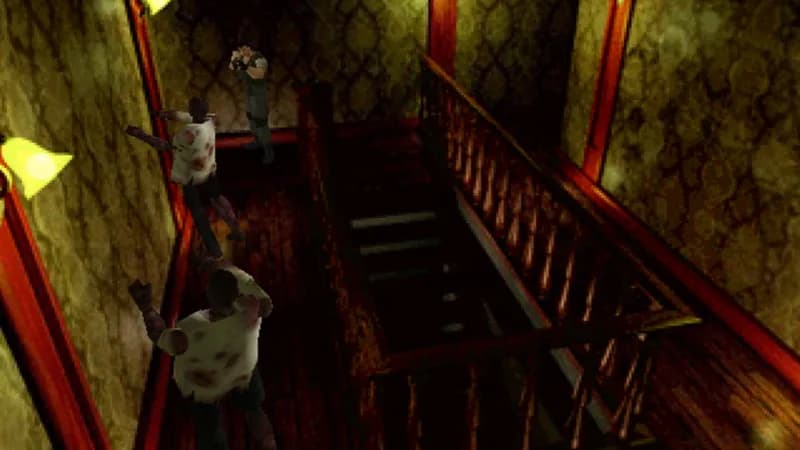
Capcom has officially brought the original Resident Evil trilogy—Resident Evil (1996), Resident Evil 2 (1998), and Resident Evil 3: Nemesis (1999)—to Steam, and it didn’t stop there: Breath of Fire IV is also now available on Valve’s storefront. It’s a huge nostalgia play timed to Resident Evil’s 30th anniversary, but there’s an immediate sticking point: these Steam releases ship with Enigma Protector DRM, and players are already raising alarms about compatibility—especially on Steam Deck.
If you’ve been begging for legit, convenient access to the PS1-era classics in a modern PC library, this is the biggest “finally” moment Capcom has delivered in years. If you’re sensitive to DRM (or you play on Deck/Linux), it’s also a frustrating reminder that Capcom can’t resist complicating a victory lap.
What’s Actually Released on Steam (and What These Versions Are)
As of April 2, Capcom has added the first three mainline Resident Evil games to Steam:
- Resident Evil
- Resident Evil 2
- Resident Evil 3: Nemesis
And as a genuinely welcome bonus, Capcom has also released Breath of Fire IV (the 2000 RPG) on Steam at the same time.
Capcom is positioning this as part of the franchise’s 30th anniversary celebration. The key point for purists: these are essentially the classic-era games as you remember them—Capcom describes quality-of-life enhancements aimed at supporting modern operating systems and current controllers, but the changes are described only broadly. In other words, don’t go in expecting a remake-style overhaul or modernized presentation; the appeal here is the original experience, made easier to run on today’s PCs.
Breath of Fire IV landing on Steam is arguably just as big a deal as the zombie trio. It’s a beloved RPG that, until now, hadn’t been ported to any modern platform in North America. For fans of Capcom’s deeper catalog, this is the kind of archival release that actually matters—because it’s not just another repackage of something already readily available on current systems.
Pricing, Launch Discount, and the Sale Window
Capcom is keeping the pricing simple:
- Each game is $9.99 normally
- Each is currently 50% off at $4.99 as a launch discount
There’s also a clear end date for at least the Resident Evil trilogy’s discount: the $4.99 price is available until April 15.
At that price, the value proposition is obvious—especially for anyone who wants to own these classics in a single Steam library. Four historically significant games for the cost of a couple of coffees is the kind of impulse buy that Steam is built on.
But the discount is also doing a lot of heavy lifting, because Capcom’s DRM decision has turned what should’ve been a universally celebrated drop into a debate about which storefront offers the “better” version.
The DRM Controversy: Enigma Protector, Steam Deck Reports, and Why Players Are Mad
Here’s the catch: all four titles on Steam list Enigma Protector DRM.
That matters because Enigma has already developed a reputation among PC players as the kind of anti-tamper layer that can create headaches—performance issues, compatibility problems, and general “why is this here?” frustration. And this time, the complaints are immediate: players report that Enigma appears to have broken performance on Steam Deck, with some Steam users saying the games won’t run on Steam Deck at all.
What makes this especially hard to defend is the context. These releases are described as essentially the same “tidied-up” versions that have been available on GOG—where they’ve been sold DRM-free. GOG has also committed to maintaining DRM-free availability for these titles as part of its Preservation Program, which only sharpens the contrast: one storefront offers long-term preservation-minded builds, the other offers a discounted launch price… with DRM baggage attached.
Capcom’s recent history is also part of why the reaction is so heated. The company has been criticized for applying Enigma to other releases, including Dino Crisis 1 and 2, and it only recently reversed course after backlash tied to Resident Evil 4. That’s why this move feels less like a one-off misstep and more like a pattern—one that repeatedly turns paying customers into involuntary beta testers for anti-piracy tech.
To be clear, not everyone expects catastrophic performance problems here. These are older games, and on modern PCs they may run fine for many players. But the Steam Deck angle is the flashpoint: if a DRM layer blocks play on one of the most popular PC gaming devices on the planet, that’s not a theoretical concern—it’s a practical dealbreaker.
And it’s hard not to call this what it is: Capcom taking a slam-dunk preservation-and-access win and adding an avoidable asterisk.
Why This Release Still Matters (Even With the Asterisk)
Even with the DRM controversy, this is a meaningful moment for Capcom’s back catalog on PC.
The original Resident Evil trilogy isn’t just “old games.” It’s the foundation of modern survival horror: fixed camera tension, resource starvation, puzzle-box level design, and that uniquely PS1-era atmosphere where the limitations are the vibe. The remakes are excellent in their own right, but they’re different beasts—more modern, more fluid, more action-forward in places. The originals “hit different,” and there’s a reason fans still chase that specific flavor of dread.
And then there’s Breath of Fire IV, which feels like Capcom quietly tossing RPG fans a bone after years of neglect. The Breath of Fire series has been dormant for a long time, and seeing BoF IV re-emerge on a major storefront is the kind of move that can reignite interest—if Capcom keeps going.
Steam availability also matters for discoverability. Plenty of players live inside Valve’s ecosystem; they want their library, playtime tracking, controller profiles, and installs managed in one place. For those players, “it’s on GOG” isn’t the same as “it’s on Steam.” This release expands access—full stop.
But Capcom is also inviting a very simple consumer comparison: do you want the cheaper Steam versions right now, or do you want DRM-free builds elsewhere? That’s not a debate Capcom needed to create, and it’s one that will likely dominate the conversation until Capcom clarifies its stance—or changes course.
What Remains Unknown
A few key details haven’t been fully clarified yet:
- Specifics of the “quality-of-life enhancements.” Capcom has broadly referenced improvements for modern operating systems and controllers, but the exact changes haven’t been detailed.
- Whether Capcom will adjust or remove Enigma Protector DRM for these Steam releases in response to backlash, as it has done in at least one recent case.
- The full scope of Steam Deck/Linux compatibility. Reports from users indicate serious issues, but Capcom hasn’t issued a detailed technical statement here.
- Whether more classic Capcom titles are coming to Steam in a similar fashion. This drop is significant, but no broader roadmap has been confirmed.
Capcom has done the hard part—getting these classics onto Steam at a price that makes them irresistible. Now it needs to do the smart part: make sure the versions it’s selling on the biggest PC storefront actually feel like the definitive way to play, not the discounted option you buy despite the compromises.