Donkey Kong Bananza didn’t just give Nintendo’s big ape a modern 3D platforming glow-up—it may also be quietly seeding ideas for whatever Nintendo EPD builds next. At GDC 2026, producer Kenta Motokura suggested that concepts from Bananza could act as “future hints” for the studio’s next project, echoing how Super Mario Odyssey fed into Bananza’s development. But he also made one thing crystal clear: Nintendo isn’t chasing a house style or a formula—the standard is whatever feels fresh to players.
That matters because Bananza has quickly become synonymous with Switch 2-era ambition: sandbox-like spaces, heavy environmental destruction, and a willingness to get weird with character abilities. If those ingredients are now part of EPD’s creative toolbox, Nintendo’s next big game could be more unpredictable than the usual “here comes the next sequel” cycle.
The Big Quote: Bananza Ideas Could Become “Future Hints” for What’s Next
Motokura’s comments draw a straight line between Nintendo’s last major 3D Mario and Donkey Kong’s new direction. Speaking to GamesRadar at GDC 2026, he described a familiar internal pattern—one project’s experiments becoming the next project’s foundation.
“Probably, we’ll see the same sort of phenomenon as we did when going from Super Mario Odyssey to Donkey Kong Bananza, where there were some ideas and development that acted as hints for the future development of Donkey Kong Bananza,” Motokura said. “I do expect that will be the case where some ideas from Donkey Kong Bananza provide future hints for our next project, as well.”
This is the kind of quote that Nintendo fans will immediately latch onto, because it’s both tantalizing and carefully noncommittal. Motokura isn’t teasing a specific sequel, a specific franchise, or even a specific platform. He’s describing a development culture—one where mechanics, tech, and design lessons migrate forward.
And if you’ve been watching Nintendo EPD for the last decade, that tracks. The studio’s biggest games often feel like they’re in conversation with each other: not clones, but evolutions, with shared design DNA that gets remixed into something new.
Why “Freshness” Is the Real Standard (and Why That’s Nintendo’s Secret Weapon)
Here’s the part that should temper expectations of a direct Donkey Kong Bananza 2 that simply “does more of the same.” Motokura framed Nintendo’s internal bar not as consistency, but novelty—the feeling of newness.
“As far as ‘what is the standard,’ I think the standard is really what will feel fresh to a player in a new title,” Motokura explained. “So, for example, when we were developing Super Mario Odyssey, we were thinking about Mario transformations that no one had seen up to that point. That’s always a goal in mind when working on a project.”
That’s a deceptively important statement, because it’s basically Nintendo EPD’s mission statement in one sentence. The studio doesn’t just iterate; it tries to introduce a new “hook” that recontextualizes how you move, explore, or interact with a world.
Bananza is a perfect example of that mindset. Yes, it carries recognizable 3D platforming DNA from the Super Mario Odyssey team, but it distinguishes itself with two standout pillars highlighted in the discussion around the game:
- Extensive destruction that lets players tear through environments
- Sandbox-like level design that emphasizes experimentation and player-driven chaos
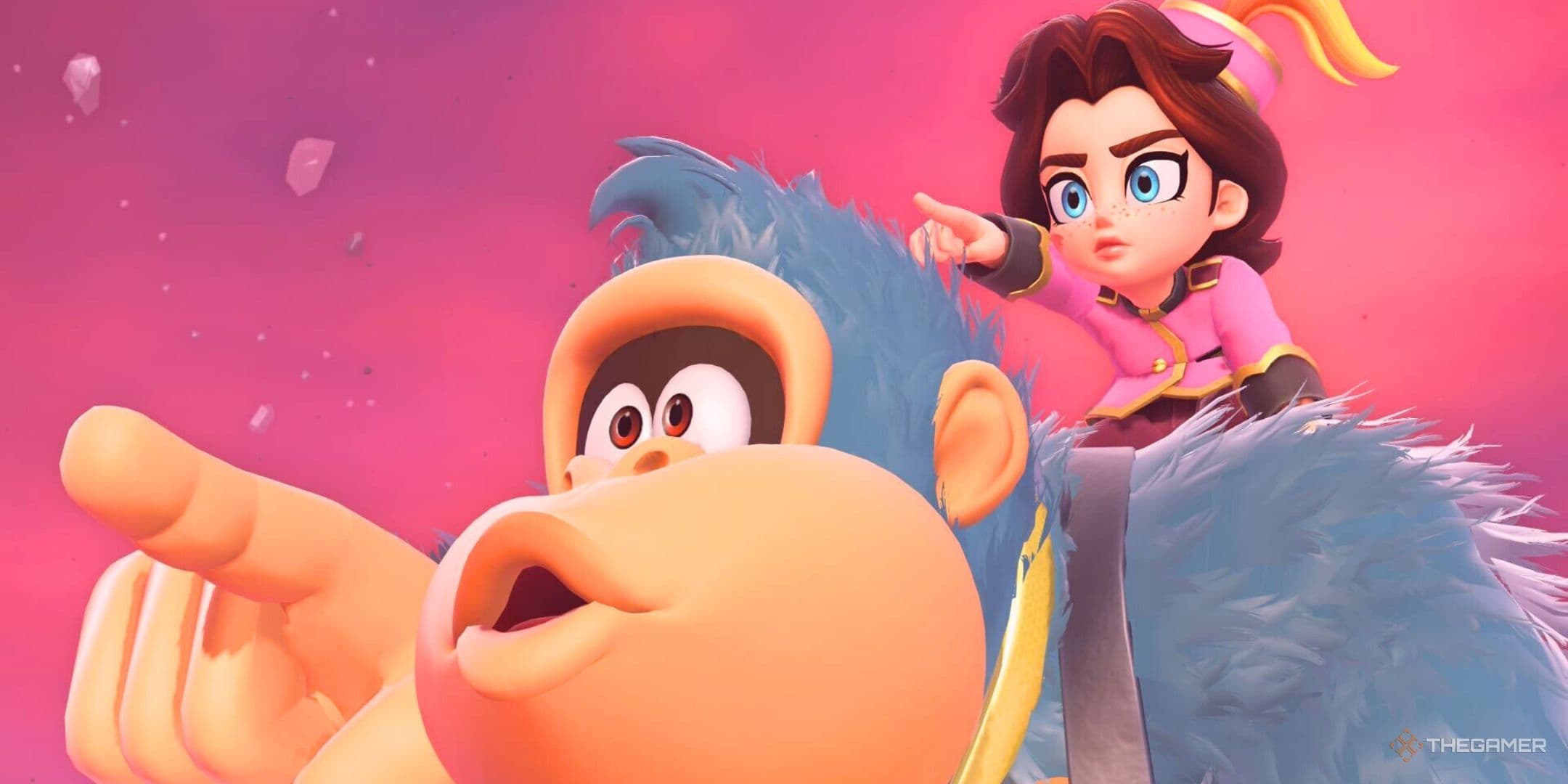
On top of that, Bananza goes for the kind of left-field Nintendo weirdness that’s hard to predict and even harder to fake: Donkey Kong transforming into different animal hybrids, powered by Pauline’s singing, while bulldozing through levels. That’s not “safe sequel design.” That’s Nintendo deciding the next big idea is allowed to be strange.
The takeaway: even if Bananza influences the next EPD project, Motokura is effectively warning us not to expect a carbon copy. The influence may be structural (how worlds are built), systemic (how abilities interact with environments), or philosophical (how the game invites play). But the surface—the characters, setting, and even genre emphasis—could shift dramatically.
What This Could Mean for Nintendo EPD’s Next Project (Without Overreaching)
Nintendo EPD is a massive internal division, and Motokura’s quote doesn’t specify which team, which director, or which franchise is next up. What we do know is that several members of Nintendo’s Entertainment Planning & Development Division (EPD) worked on Donkey Kong Bananza, reinforcing the idea that this wasn’t a one-off external experiment—it was a major internal production with direct lineage from the Super Mario Odyssey talent pool.
That’s why the “future hints” line hits so hard. It suggests Bananza isn’t just a Donkey Kong detour; it’s part of a broader creative continuum inside Nintendo.
So what’s the most responsible way to read this?
- Not as confirmation of a new 3D Mario.
- Not as confirmation of a Bananza sequel.
- Not as confirmation that destruction tech will define the next game.
Instead, read it as confirmation that Bananza’s ideas are now part of EPD’s shared R&D vocabulary. The next project—whatever it is—may carry forward lessons from Bananza’s sandbox structure, its environmental interaction, or its approach to “transformations” as a core gameplay identity.
Motokura also alluded to the long timelines involved. Super Mario Odyssey launched in 2017, and Donkey Kong Bananza arrived seven years later, landing in the Switch 2 launch year. That’s a reminder that even if Bananza is influencing the next big thing right now, we may not see the results for quite some time.
Release Context: Bananza’s Place in the Switch 2 Era (and What Players Have Now)
Part of why this conversation is happening at all is because Donkey Kong Bananza has been positioned as one of the Switch 2’s early defining games—a “killer app” that signals Nintendo’s intent to push beyond familiar comfort zones.
A few concrete details currently on the table:
- Donkey Kong Bananza released July 17, 2025
- Developer: Nintendo EPD
- Publisher: Nintendo
- ESRB: Everyone 10+ (Fantasy Violence, In-Game Purchases)
And for players looking beyond the base game, there’s also post-launch content already in the mix. DK Island and Emerald Rush have been mentioned as part of what Bananza players can dig into now, with Emerald Rush described as paid DLC featuring a new rogue-like mode and limited-time events that reward special statues.
That DLC detail is worth underlining, because it shows Nintendo experimenting not just with mechanics, but with engagement structure—rogue-like modes and limited-time events are a very specific kind of modern design lever. Whether that’s a one-off experiment for Bananza or another “hint” that migrates to future projects is impossible to say today, but it’s clearly part of the game’s identity right now.
What Remains Unknown
- Nintendo EPD’s “next project” hasn’t been identified. No official announcement has been made about what game Motokura is referring to.
- No platform, release window, or genre has been confirmed for the next EPD title.
- It’s unclear which specific Bananza ideas (destruction systems, sandbox structure, transformations, rogue-like DLC concepts, etc.) might carry forward.
- No sequel has been confirmed for Donkey Kong Bananza, and Motokura’s comments stop short of teasing one directly.
Nintendo EPD is telling us, in its own careful way, that Bananza is not an endpoint—it’s part of a living pipeline of ideas. If Motokura’s “freshness” mantra holds, the next game won’t simply repeat what worked. It’ll take what Bananza taught the team and twist it into something players haven’t seen yet—and that’s exactly when Nintendo is at its most dangerous.