Nintendo’s modern design philosophy didn’t just appear out of thin air with its newest wave of Switch 2 releases—it was hiding in plain sight back in 2021. New Pokémon Snap (developed by Bandai Namco and published by Nintendo and The Pokémon Company) looks, on paper, like a safe reboot of a beloved Nintendo 64 oddity. In practice, it helped normalize a kind of “vibes-first,” low-pressure, player-defined play that now feels foundational to where Nintendo is heading next.
And that matters, because the company’s current output—especially the early identity of Switch 2—has increasingly leaned into open-ended play where “winning” is less about failure states and more about expression, discovery, and self-directed fun.
Nintendo’s “vibes era” didn’t start with Switch 2—it started with New Pokémon Snap
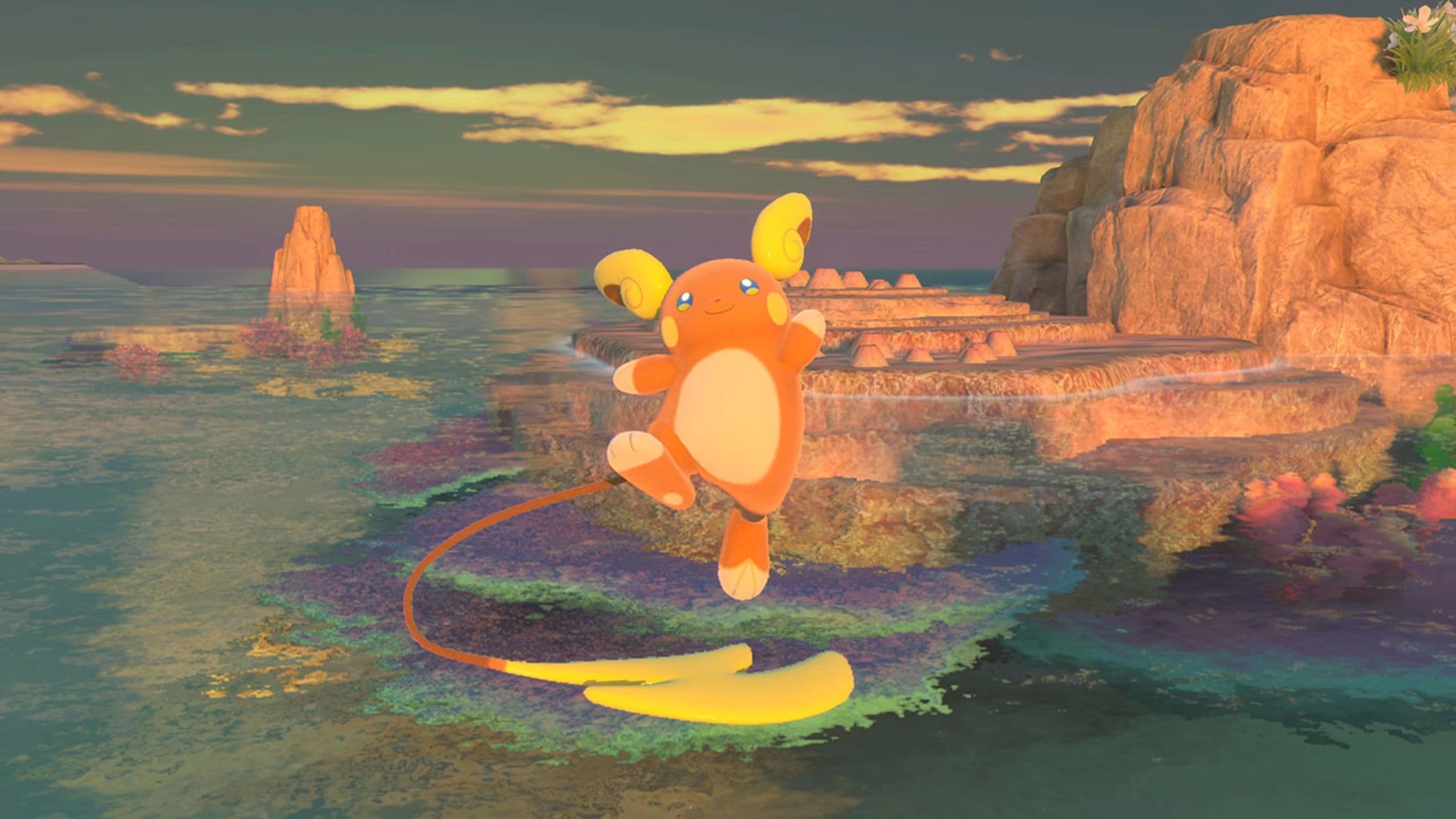
When New Pokémon Snap launched in 2021, it was easy to misread it. Fans had been asking for a sequel for years, and what they got was, in many ways, surprisingly conservative: you’re still riding a fixed path in a little vehicle, still snapping photos, still returning to a professor figure—Professor Mirror—who evaluates your work. You unlock more by scoring higher, and you gradually gain tools that coax Pokémon into different behaviors, plus the ability to run courses at different times of day.
That’s the structure. The real story is what the game doesn’t care about.
New Pokémon Snap isn’t a traditional “win/lose” experience. It’s not trying to be a hardcore photography sim where composition and editing are the point. It’s not even trying to be a typical cozy game built around optimization disguised as relaxation. Instead, it’s a game that quietly tells you: if you got the shot you wanted, you won.
That’s a radical stance for a big Nintendo-adjacent release—especially at a time when Nintendo’s Switch-era reputation was built on bold reinventions that were still unmistakably “video game-y” in their goals and structure. Think of how The Legend of Zelda: Breath of the Wild turned the franchise into a sweeping physics playground, or how Super Mario Odyssey doubled down on sandbox spectacle, or how Kirby and the Forgotten Land tested Kirby’s leap into 3D. Those games were experimental, but they still pushed you toward clear objectives.
New Pokémon Snap didn’t. It made “vibes” the objective, years before that became a recognizable throughline in Nintendo’s broader output.
Why New Pokémon Snap feels like a blueprint for Nintendo’s current design instincts
The most telling thing about New Pokémon Snap is how it reframes progression. Yes, you need higher ratings to unlock new Pokémon in an area, and yes, Professor Mirror’s judging can be inscrutable (or outright infuriating). But the emotional center of the game isn’t mastery—it’s moments.
The “reward” isn’t a trophy or a rank. It’s catching something like a glowing Pokémon in a perfect, moonlit scene, or snapping a shot of your favorite creature doing something unexpectedly cute. The game’s looseness—its willingness to let you define what a good run looks like—was unusual at the time. It landed in a strange middle ground: too conservative to feel like a big Nintendo swing, too freeform to be a serious sim, too directionless to fit the emerging “cozy” template.
That oddity now reads less like a misfit and more like a preview.
Nintendo’s recent output has increasingly embraced the idea that the point of play isn’t necessarily challenge or completion—it’s expression. The company has been testing what happens when you remove the sharp edges that traditionally define “game-ness,” and replace them with systems that encourage experimentation, sightseeing, and self-made stories.
That’s why New Pokémon Snap is quietly important: it helped legitimize a kind of design where the player’s personal definition of fun is the primary metric.
The ripple effect: Nintendo’s modern “make your own fun” momentum
Nintendo didn’t flip a switch overnight, but the trajectory is clearer now—especially when you look at how its newer games are being framed around feel, freedom, and discovery.
There’s been a visible push toward less punitive design: experiences where it takes real effort to “lose,” where the joy comes from messing around, poking at systems, and seeing what happens. Nintendo was already moving in this direction late in the original Switch lifecycle with Super Mario Bros. Wonder, which deemphasized the series’ traditional timed-stage pressure and encouraged players to explore at their own pace and chase surprises.
That same spirit—play as a mood, not a checklist—maps cleanly onto what New Pokémon Snap was doing in 2021, even if it didn’t get credit for it at the time.
And it’s not just a Nintendo-first-party phenomenon, either. The broader Pokémon ecosystem has been leaning into constant iteration and engagement loops across platforms, from mobile to console. In the last day alone, Pokémon’s spinoff landscape has been busy:
- Pokémon Trading Card Game Pocket is rolling out its next major update, Pulsing Aura, built around Mega Lucario ex, with additional cards like Mega Sceptile ex and Vaporeon ex, plus system changes like gold frames tied to collecting duplicates and a revamped mission structure. The update is slated to arrive April 27 at 6 p.m. PDT (with regional timing also pointing to April 28 in some territories).
- Pokémon Champions just received its Ver. 1.0.3 patch on Switch, addressing issues including an incorrect Leech Seed explanation, tutorial Pokémon gender listings, a Mega Evolution-related input problem, an Unnerve interaction bug, held-item speed order not reflecting ability activation order, and additional networking/visual issues.
- Pokémon Pokopia has a new update on Switch 2 expanding the ability to relocate Pokémon Centers.
Those updates aren’t directly about New Pokémon Snap, of course—but they underline the bigger point: Pokémon spinoffs are no longer side dishes. They’re where Nintendo and The Pokémon Company can test ideas, iterate quickly, and shape player habits across console and mobile ecosystems.
New Pokémon Snap stands out in that lineup because it wasn’t just content—it was a philosophy statement. It said a big-budget Nintendo-published game could be built around observation instead of domination, around capturing beauty instead of chasing a fail state.
Why this matters now: Nintendo’s next decade is being defined by “soft goals”
Nintendo has always been great at making play feel tactile and joyful, but the company’s current direction suggests something more specific: a future where games are designed around soft goals—objectives that exist, but don’t suffocate the player.
That’s exactly what New Pokémon Snap does. You can chase higher scores, unlock new Pokémon, and optimize routes. Or you can ignore the meta entirely and just hunt for your personal “perfect shot.” The game supports both, and it never punishes you for choosing the latter.
In hindsight, that’s not conservative design. It’s confident design.
It’s also a useful lens for understanding why Nintendo’s newer projects are increasingly comfortable with experiences that prioritize mood and experimentation. If Nintendo’s next decade is about expanding what “a Nintendo game” can be—less rigid, less punitive, more expressive—then New Pokémon Snap deserves to be recognized as one of the quiet cornerstones that helped get us here.
What Remains Unknown
Even with New Pokémon Snap’s legacy coming into focus, there are still big open questions about how far Nintendo will push this design direction:
- How consistently Nintendo will commit to less-directed, vibes-forward design across its biggest franchises over the next year remains to be seen.
- Some rumored and upcoming projects may inherently resist player expression due to their structure, but no official details have been confirmed.
- It’s unclear which future Nintendo and Pokémon spinoffs will take the biggest swings in redefining what progression and “success” look like.
What is clear: New Pokémon Snap wasn’t just a nostalgic revival. It was a quiet signal flare—one that’s now visible across Nintendo’s modern playbook.