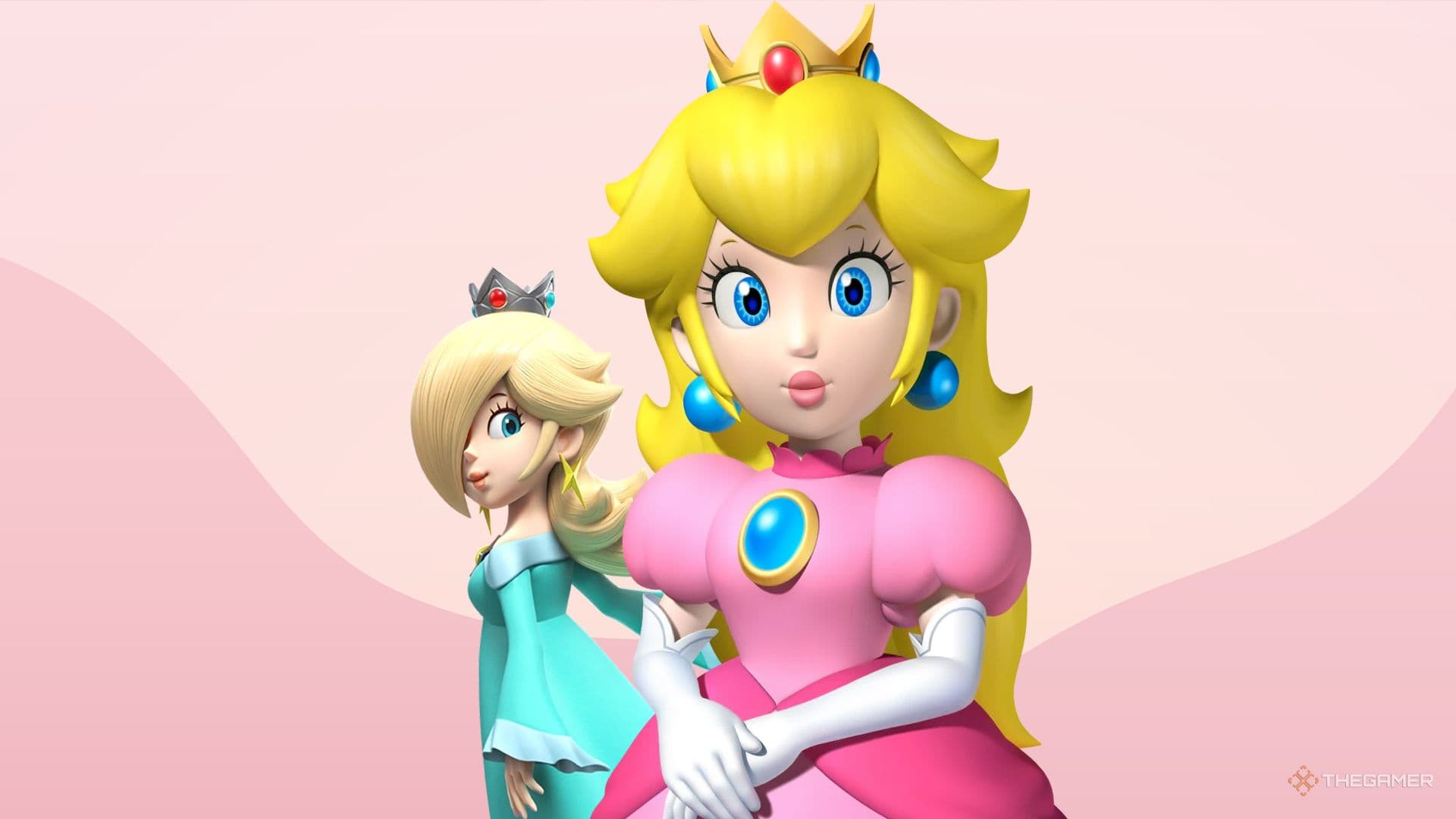
Nintendo’s famously “loose” Mario continuity just got a rare, concrete anchor: Shigeru Miyamoto has indicated that Princess Peach’s movie backstory—including the bombshell reveal that Peach and Rosalina are sisters—is something he wants future Mario games to stick to “as much as possible.” It’s a big deal not just for lore-hungry fans, but because it signals Nintendo may be more willing than ever to let its blockbuster film universe shape the games going forward.
And yes, it’s happening in the same week Miyamoto also publicly pushed back on the Super Mario Galaxy Movie’s bad reviews, calling the harsh critical reception “truly baffling” even as the film prints money and helps the franchise surge past $2 billion at the global box office.
The Big Canon Shift: Peach and Rosalina’s Relationship Isn’t “Just the Movie” Anymore
For decades, Mario storytelling has operated on a kind of cheerful ambiguity. Characters show up, worlds reset, and continuity is whatever the current game needs it to be. That’s not a criticism—it’s part of why Mario is so evergreen. But it’s also why any time Nintendo does nail down a character detail, it lands with outsized impact.
That’s exactly what’s happening here with Peach.
In The Super Mario Galaxy Movie, the film reveals that Princess Peach and Rosalina are sisters who were separated when they were young. Fans have speculated about a familial connection between the two dating back to the original Super Mario Galaxy era, but the games never confirmed anything outright. The movie did—and now Miyamoto is signaling that this isn’t a one-off cinematic invention that will be politely ignored once the next console Mario rolls around.
In comments translated from a Japanese interview, Miyamoto explained Nintendo’s long-standing reluctance to lock characters into heavy backstory. His reasoning is classic Nintendo: the company doesn’t want story “settings” to become a constraint on future gameplay ideas. But Miyamoto also made it clear that the movie changed the equation—because now that Peach’s origins have been decided for the film, he’s finding it “fun” to expand the character in new ways.
Most importantly, Miyamoto said: “Therefore, I'd like to adhere to the backstory established in the movie as much as possible in future games.”
That’s the line that matters. “As much as possible” is still Nintendo-speak—flexible, non-legalistic, and carefully future-proofed. But it’s also the closest thing Mario fans ever get to a continuity decree from the top.
If you’ve ever wanted Nintendo to treat Peach as more than a perpetual damsel-shaped objective marker, this is the kind of foundational character work that can actually move the needle. Not because Mario suddenly needs dense lore, but because even a little character grounding can create richer dynamics—especially when Rosalina is involved.
Why This Matters for the Future of Mario Games (Yes, Even If You Don’t Care About Lore)
Let’s be real: most people don’t boot up a Mario game hoping for a family tree. But canon decisions like this can still have real consequences—because they influence how Nintendo frames characters, relationships, and motivations across games, spin-offs, and marketing.
A few reasons this is bigger than “trivia”:
- Rosalina’s role can evolve. If Peach and Rosalina are sisters in Nintendo’s preferred “settings” going forward, Rosalina stops being just the cosmic, storybook-adjacent guardian figure who drops in when the vibe is celestial. She becomes part of Peach’s core identity.
- Peach gets a defined origin. Miyamoto explicitly said that before the film, Peach’s origins hadn’t been decided. That’s wild—yet totally believable for Mario. Now, the movie has effectively given Nintendo a reference point it can build from.
- The movie pipeline is influencing the games. This is the real tectonic shift. Nintendo historically treats adaptations as separate lanes. Here, Miyamoto is suggesting the opposite: the film’s creative choices can become the baseline for future game portrayals.
It’s also worth noting the meta-context: Nintendo and Illumination’s Mario films have leaned hard into giving characters more personality and backstory than the games typically bother with. That’s partly necessity—feature films need character arcs, not just level progression. But once you’ve put a big emotional “truth” on screen for millions of people, it becomes harder to pretend it never happened.
Miyamoto’s comments read like Nintendo acknowledging that reality—and choosing to embrace it rather than fight it.
Miyamoto on the Galaxy Movie’s Bad Reviews: “It’s Truly Baffling”
This canon news is arriving alongside another Miyamoto headline—one that’s less about lore and more about the increasingly tense relationship between blockbuster game adaptations and critical reception.
Miyamoto has reacted to the Super Mario Galaxy Movie’s negative reviews by calling the response “truly baffling.” He also said critics were even harsher on The Super Mario Galaxy Movie than they were on 2023’s The Super Mario Bros. Movie, and he described that as “rather odd,” even laughing about it in one translation.
His quote is pointed:
“We stepped in from another medium and did our best to help energize the film industry. And yet the very people who are supposed to champion the film industry are the ones being so negative; it’s truly baffling.”
There’s a lot packed into that. Miyamoto is essentially framing the film as a good-faith effort to “energize” cinema—and implying that critics, as supposed champions of film, should be more supportive of that mission.
That’s… a take.
It also lines up with another Miyamoto comment where he said he understood some criticism of the first movie, but expected things to be different this time—only to find the sequel’s criticism was harsher. In that same thread, the Super Mario Galaxy Movie is cited as sitting at a 43% approval rating on Rotten Tomatoes from critics (based on 206 reviews), compared to the first film’s 59%. Meanwhile, audience response is described as much stronger, with an 89% audience approval rating.
The tension here is familiar: critics want a movie to stand on its own as a film; audiences often want to feel the sugar-rush of recognition and spectacle. The Galaxy movie, by multiple accounts of its reception, is being criticized for being overloaded with references while coming up short on story.
Miyamoto’s surprise is the surprising part. The first movie already established the template: a dense barrage of Mario iconography, a brisk pace, and a tone that prioritizes momentum and fan-service over narrative depth. If Galaxy doubles down on that, harsher reviews aren’t exactly a meteor strike from nowhere.
But Miyamoto’s reaction does matter, because it shows Nintendo leadership is paying attention—and perhaps not thrilled that critical consensus isn’t matching commercial reality.
The Money Is Unstoppable: Mario Movies Pass $2 Billion Worldwide
Whatever you think of the reviews, the Mario movie machine is operating at a scale that most franchises would kill for.
The Super Mario Galaxy Movie has helped push the combined box office of the Mario film series past $2 billion globally—a staggering milestone for just two films. The Galaxy movie’s global box office is reported at $747.4 million as of last weekend, and it’s still in theaters, meaning it could potentially climb higher (with discussion that it has a chance to reach $1 billion, though it’s not expected to beat its predecessor).
For context, the original The Super Mario Bros. Movie is cited as surpassing $1.3 billion worldwide.
There’s also a notable comparison floating around: the Sonic film series reportedly sits at about $1.2 billion across three films. And while Sonic’s movies are described as reviewing better overall—complete with a cited Rotten Tomatoes score spread that includes Sonic 3 hitting 86%—Mario is simply playing a different sport financially right now.
This matters because money doesn’t just talk—it dictates strategy. When a franchise is this profitable, it gains the power to define its own rules. That includes rules about canon.
If Nintendo wants the movie backstory to become the “default” understanding of Peach and Rosalina going forward, the commercial dominance of the films makes that much easier to enforce culturally. Millions more people will meet these characters through the movies than through any single game release. Nintendo knows that. Miyamoto’s comments suggest he’s willing to lean into it.
What This Could Mean for Peach Going Forward
Peach has been in an interesting place lately. She’s still the iconic princess, but Nintendo has gradually broadened her image—more agency, more playability, more spotlight. The films accelerated that shift by necessity, giving her a more active role and clearer personality.
Now, with Miyamoto saying Peach’s origins weren’t decided until the movie, and that he wants to adhere to the movie’s settings in future games, it raises the possibility that Peach’s portrayal in upcoming titles could be more consistent—and more intentionally connected to Rosalina.
That doesn’t mean we’re suddenly getting a Mario RPG epic about royal lineage and childhood separation. Nintendo will always prioritize gameplay first; Miyamoto explicitly reiterated that he doesn’t want story to restrict what the team can do next.
But “gameplay first” doesn’t prevent Nintendo from using this new canon as seasoning—small moments, dialogue nods, character interactions, or even entire spin-off premises that wouldn’t have existed without a defined relationship.
And if you’re the kind of fan who’s been begging Nintendo to do anything meaningful with Rosalina outside of occasional cosmic cameos, this is the most promising signal in years.
What Remains Unknown
Even with Miyamoto’s unusually direct comments, there are still big unanswered questions:
- Which future Mario games will reflect this canon? No specific title has been announced as the first to incorporate Peach and Rosalina’s sister relationship.
- How strictly will Nintendo follow the movie backstory? Miyamoto said “as much as possible,” leaving room for flexibility or selective adoption.
- Will this extend beyond Peach and Rosalina? There’s no confirmation that other movie-originated character details will be treated as game canon.
- What does “canon” even mean for Mario long-term? Nintendo hasn’t outlined any formal continuity plan for the games, and historically the series has avoided rigid timelines or lore rules.
What is clear is that Nintendo’s biggest movie swing yet is no longer confined to theaters. Peach’s movie backstory isn’t just a cinematic flourish—it’s being positioned as the foundation for how Nintendo may write her in the games from here on out. And for a franchise that usually treats story like a light garnish, that’s a genuinely seismic shift.