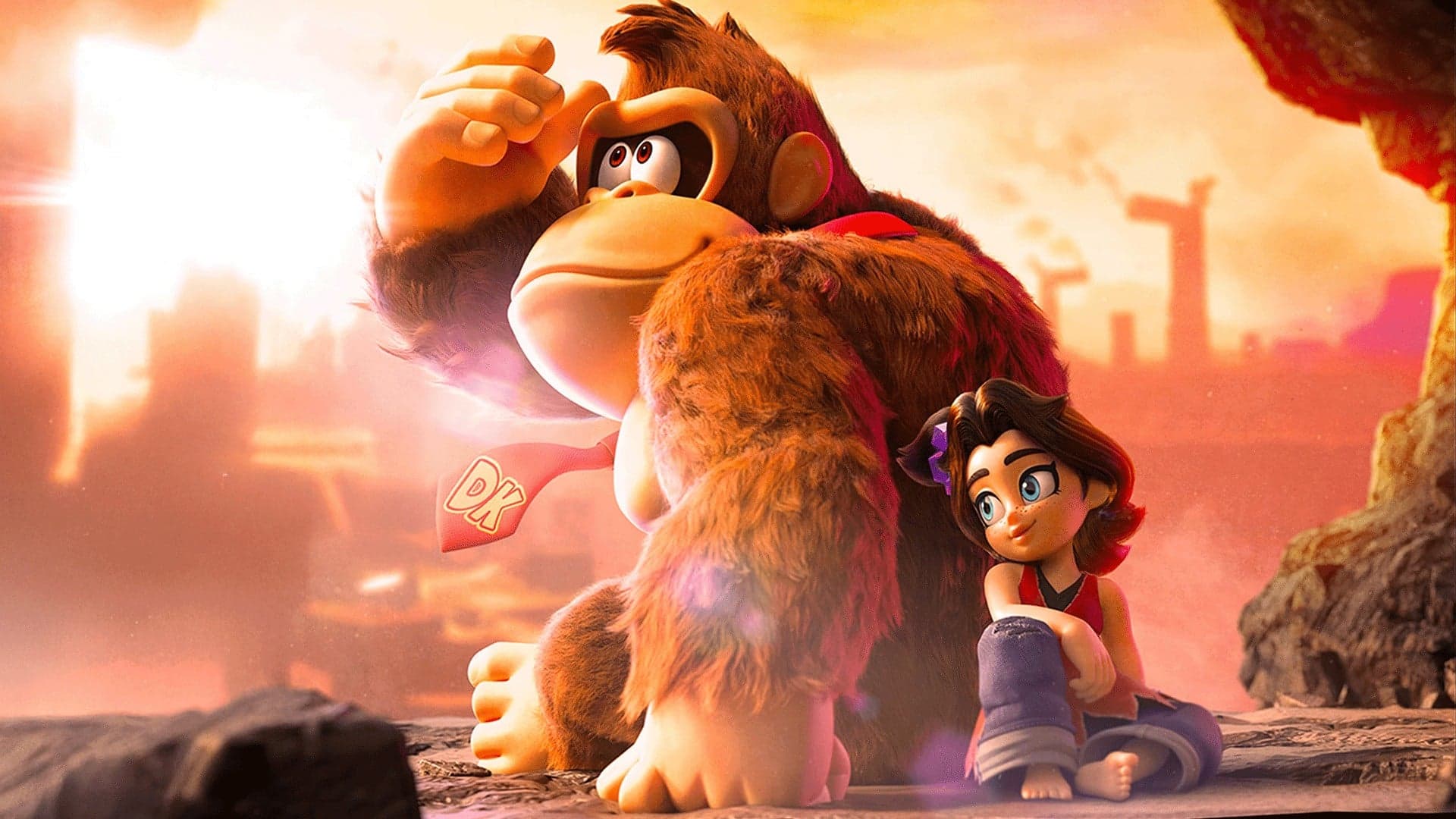
After years of waiting for Donkey Kong to properly swing back into the 3D platforming spotlight, Donkey Kong Bananza didn’t just arrive — it landed with the kind of impact Nintendo can build an era around. Producer Kenta Motokura says he can’t share “any specifics of future plans” for Donkey Kong just yet, but he’s openly relieved by how players have embraced DK’s return. And honestly? That relief feels earned when you look at how big Bananza has become for Nintendo Switch 2.
The game’s success is now forcing the obvious question: is this the start of a faster, more confident Donkey Kong future — or another long silence after a single blockbuster? Motokura isn’t answering that today, but the subtext is loud: DK still has serious runway.
What Motokura Actually Said — and Why It Matters
Motokura’s comments come from a recent interview conducted around the 2026 Game Developers Conference, where he spoke alongside programmer Tatsuya Kurihara about the game’s design, tech, and the team’s philosophy. When asked whether the positive reception to Donkey Kong Bananza might mean fans won’t have to wait so long for another mainline Donkey Kong game, Motokura didn’t tease a sequel, a spin-off, or even a roadmap.
Instead, he framed Donkey Kong as something bigger than a single project: a core Nintendo character that teams “borrow” to create software with. The key line is what comes next — Motokura says that seeing people have fun with Donkey Kong again helps him “communicate the potential” of the character, and that he feels “a sense of relief” knowing it’s something people can enjoy in the future as well.
Then the hard stop: “Unfortunately, I can’t talk about any specifics of future plans at this time.”
That’s not a confirmation of anything. But it is a meaningful temperature check from the producer of the game that just re-established DK as a modern headliner. Nintendo doesn’t always talk like this about characters it plans to leave dormant.
Donkey Kong Bananza Is Already a Switch 2 Pillar
Nintendo taking a Donkey Kong game and positioning it as a major Switch 2 launch-window title was, on paper, a gamble. Donkey Kong Bananza isn’t a safe “everyone expects it” reveal like a new 3D Mario would have been, and Motokura himself acknowledged the surprise factor: he said he didn’t know how people would react prior to the announcement, and that seeing players happy afterward was “really gratifying.”
The bet paid off in the most measurable way possible. Donkey Kong Bananza has sold over 4 million units worldwide, and it’s currently the second best-selling Nintendo Switch 2 title to date. It’s also picked up “a bunch of awards” since launch, and it was named Best Nintendo Game of 2025 by Game Informer, alongside receiving a 9/10 score there.
That commercial and critical momentum is the context behind Motokura’s “relief.” This isn’t a niche comeback story. It’s Nintendo proving — to itself as much as to the audience — that Donkey Kong can anchor a new hardware era with something bold and mechanically distinct.
And that matters because Donkey Kong’s modern history has often been defined by long gaps, hand-offs between teams, and a perception (fair or not) that he’s a legacy icon who shows up more reliably in party games and kart racers than in big, defining solo releases.
Bananza changes that narrative.
The “Elephant Bananza” Problem: When Fun Breaks the Balance (and Nintendo Knows It)
If Donkey Kong Bananza has a single mechanic that has become the lightning rod for debate, it’s the Elephant Bananza transformation — the most destructive of the game’s “Bananza Transformations,” and, by the developers’ own admission, potentially too much of a good thing.
Kurihara didn’t mince words when discussing it: “I think we can agree the most destructive transformation is the Elephant Bananza, and honestly speaking, it probably went too far. But at the same time, it’s fun, it feels good. And that’s what matters most.”
That quote is fascinating because it captures a very specific Nintendo design tension: the push and pull between tight, curated challenge and the sheer joy of letting players break the game’s rules — or in Bananza’s case, break the world itself.
The Elephant Bananza lets DK inhale a large volume of destructible terrain, store chunks of it, and throw them. In a game built around voxel-based destruction, that’s not just a power-up — it’s a wrecking ball that can flatten the intended pacing of exploration and resource gathering.
And yet Kurihara’s conclusion is the one that tells you exactly what kind of game Bananza wanted to be: if it “feels good,” it belongs. Balance is important, but the team clearly prioritized the tactile thrill of destruction as the heart of the experience.
Motokura reinforced that philosophy by explaining why Bananza structures transformations differently than traditional Mario games. Instead of requiring players to find an item to transform, Donkey Kong Bananza is designed so DK can transform “anytime” to “up the destruction.” That’s not a small design choice — it’s a mission statement.
Yes, Nintendo Noticed the Elephant Timing — and Says It Was a Coincidence
The elephant also created an unavoidable comparison point: Super Mario Bros. Wonder featured an elephant transformation not long before Donkey Kong Bananza did. Motokura says the overlap was “a complete coincidence,” and that he wasn’t too worried because the goals and gameplay effects were different.
He did, however, joke that if Wonder’s elephant had been “vacuuming out blocks,” he would’ve been worried.
It’s a great line, but it also underlines something important: Nintendo is very aware of how its ideas echo across franchises — and in this case, the team is adamant that Bananza’s elephant is about large-scale environmental manipulation and destruction, not just a cute visual gag.
Destruction, Voxels, and Why Bananza Started on Switch 1
One of the most revealing parts of the developers’ discussion is how clearly Donkey Kong Bananza was built around a single pillar: make “pretty much everything” destructible, and then commit to that premise so hard the entire game bends around it.
Motokura says the project began when his boss, Yoshiaki Koizumi, asked if they could create a Donkey Kong game using the same team that worked on Super Mario Odyssey. Motokura believed there was “a lot of potential” in using voxels — small 3D units of data — to achieve the destruction concept.
Kurihara adds that while the idea sounded fun early, the team wasn’t sure it was technically feasible at first. They had to work through that uncertainty during development, prototyping and layering ideas until it became a cohesive game.
The commitment went beyond the terrain. Kurihara explains that once the goal became “everything voxel, everything destructible,” enemies naturally had to follow. That premise then shaped boss design from the start: if bosses are voxel-based and destructible, encounters have to be built around that reality.
Level Design in a World Where Players Can Dig Anywhere Is a Different Beast
Motokura describes a key difference between Bananza and a more traditional 3D platformer like Super Mario Odyssey: the path from point A to point B still matters, but when the terrain is breakable and secrets can be hidden inside it, the “surface area” for discovery explodes — including the ability to explore inside the environment.
That creates a new kind of level design challenge: it’s not just about what you see, but what’s hidden, where it’s placed, and how the world holds up when players carve it apart.
Kurihara says the team added tools to support level designers, including a level editor feature described as a “break all” button that destroys everything so designers can see what’s hidden inside.
It Was Originally a Nintendo Switch Game — Until It Became a Switch 2 Showcase
Here’s a detail that will stick with hardware-watchers: Kurihara confirms development began on Nintendo Switch 1, and later shifted to Nintendo Switch 2. The core idea of destruction didn’t change, but when the team got access to Switch 2’s power, they decided to pour that extra spec directly into making destruction “more grand and even more fun.”
Kurihara specifically calls out having more memory to work with for voxels, describing it as “certainly welcome.”
That’s the kind of behind-the-scenes reality that explains why Bananza feels like a statement piece for Switch 2. It wasn’t merely “ported forward.” It was re-committed to as a technical showcase for what the new system could do when a team chooses one demanding feature and goes all-in.
Nintendo Is Watching Your Speedruns — and Admitting It Can’t Control You
One of the most modern realities of big releases is that players will stress-test your game in ways your QA team never could. Donkey Kong Bananza is no exception, and Motokura and Kurihara have discussed how players keep finding creative routes and unintended approaches — including in speedruns.
Motokura points to a philosophy he’s carried from past projects: you want clear lines of play so players understand what they’re supposed to do, but not necessarily how. The goal is to give players freedom and opportunity to use their own ideas to create the conditions for success.
Kurihara describes his own playtesting habits in a way that will sound extremely familiar to anyone who breaks platformers for fun: combining skills and tricks to reach places that look like you’re not supposed to be there, including building pathways out of voxels to access unusual areas.
Motokura even recalls moments from Super Mario Odyssey where the team chose not to “fix” terrain exploits because players might do it and enjoy it.
That’s a crucial lens for understanding Bananza: it’s not just a game where destruction is allowed; it’s a game where player expression is treated as part of the entertainment. Nintendo isn’t merely tolerating chaos — it’s designing for it, then accepting it can’t fully contain it.
Donkey Kong’s Redesign: Bananza Set the Model (and It Carried Into Mario Kart World)
Motokura also addressed Donkey Kong’s updated character model, which players noticed in early looks at Mario Kart World. According to Motokura, the model originated from the Donkey Kong Bananza team’s research-driven process of defining what Donkey Kong “should be” in this era — informed by conversations with Shigeru Miyamoto and Yoshiaki Koizumi.
Motokura says that model was then transferred to Mario Kart World for use there as well, though he notes the Mario Kart team had its own ideas for how to express Donkey Kong beyond the model itself.
This is a subtle but significant point: Bananza isn’t just a successful game — it’s shaping Donkey Kong’s broader brand presentation across Nintendo’s biggest franchises. That’s exactly what happens when a character gets re-centered internally.
The Quiet DK Momentum: Updates, DLC, and a Franchise That’s Moving Again
Even without a sequel announcement, Donkey Kong has been unusually active lately in ways that suggest Nintendo is paying attention to the character’s wider ecosystem.
- Nintendo rolled out a surprise update for Donkey Kong Country Returns HD on Switch, enhancing the experience on Switch 2 and adding Dixie Kong as a playable character.
- Donkey Kong Bananza received a paid DLC expansion, DK Island & Emerald Rush, which allows players to participate in regular in-game events.
None of that confirms what’s next. But it does paint a picture of a franchise that’s no longer sitting in a vault between occasional cameos.
What Remains Unknown
- Whether Donkey Kong Bananza will get additional DLC beyond DK Island & Emerald Rush.
- If Nintendo is planning a direct sequel to Donkey Kong Bananza or a different kind of mainline Donkey Kong game.
- Which team would handle the next major Donkey Kong project, and whether the Super Mario Odyssey team remains attached.
- Any release window, platform plans beyond Nintendo Switch 2, or official timeline for Donkey Kong’s next appearance in a starring role.
For now, Motokura’s message is clear even without specifics: Donkey Kong Bananza proved the appetite is real, the character still has enormous “potential,” and Nintendo’s creators feel the weight lift when fans show up and celebrate DK again. The future isn’t being discussed publicly yet — but after 4 million sales and a trophy case of awards, it’s hard to imagine Nintendo leaving this momentum on the table for long.