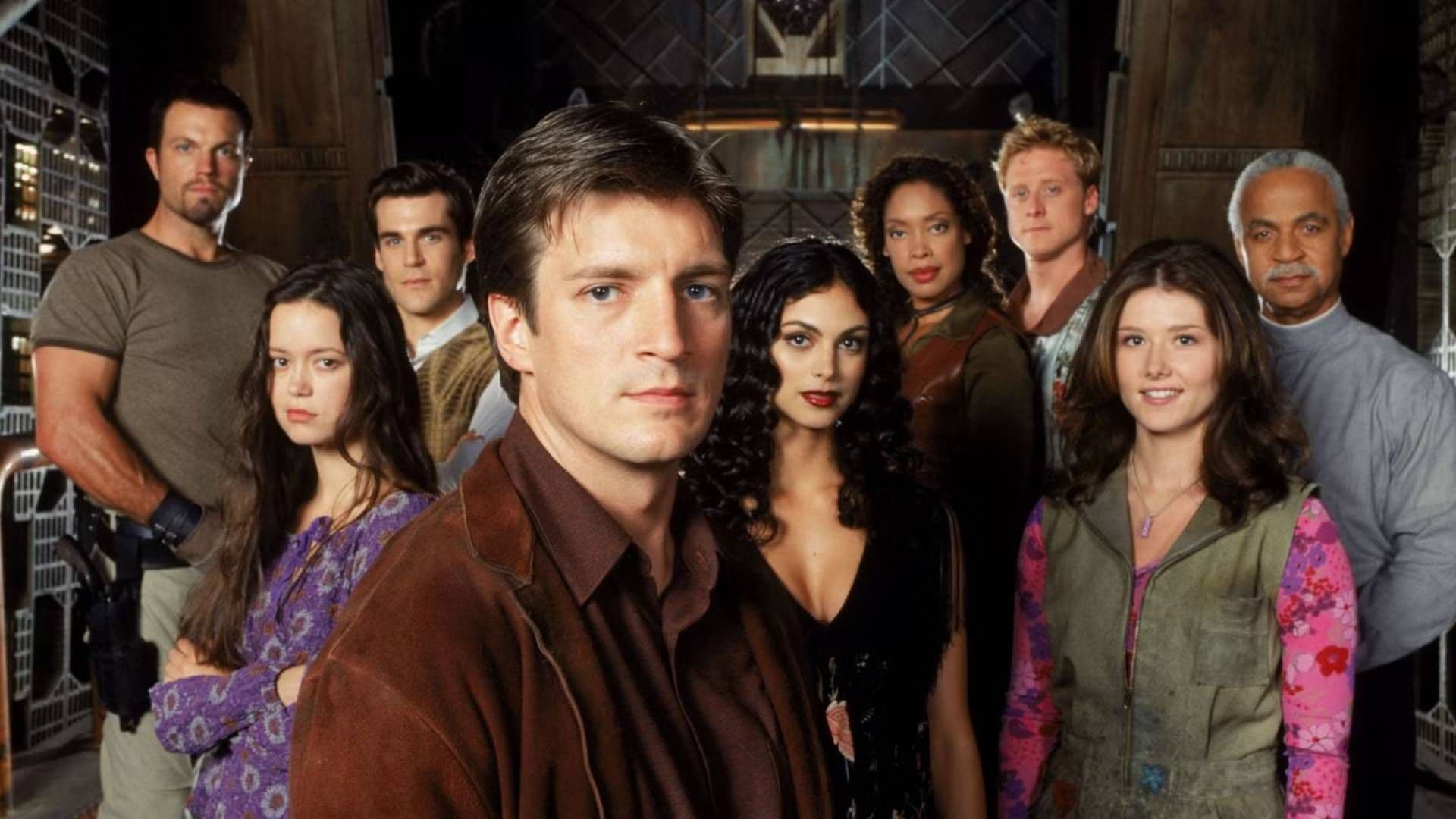
Twenty-four years after Firefly was yanked off the air and more than two decades after Serenity tried to give the crew a proper sendoff, Captain Malcolm Reynolds is steering the ship back into the black. Nathan Fillion has revealed an animated Firefly series is in active development, designed to sit between the original live-action TV show and the Serenity film—and crucially, it’s being built to bring back all surviving original cast members to reprise their roles.
There’s a catch, though: it doesn’t have a streaming home yet. This isn’t a “coming soon” victory lap—this is a project being shopped to potential streamers, and it lives or dies on whether someone decides to buy in.
What We Know So Far: A Canon Bridge Between Firefly and Serenity
The headline detail is the one that matters most to longtime Browncoats: this new series is being positioned as canon, and it’s set between the events of Firefly (the Fox series that aired in 2002) and Serenity (the feature film continuation).
That placement isn’t just a timeline trivia nugget—it’s the entire strategy. By living in that gap, the series can tell “new” stories without undoing what came later, while also sidestepping the logistical nightmare of trying to reunite a cast for live-action in 2026. Animation is the great equalizer here: it preserves the characters as fans remember them, and it makes it far easier to get everyone back in the same “room,” even if their schedules (and lives) have gone in wildly different directions since the early 2000s.
Fillion revealed the project at Awesome Con, describing it as in active development—not a vague pitch deck, not a “we’d love to,” but something that already has meaningful pieces in place.
One of those pieces is a pilot script, which has already been written. Another is the leadership team: Marc Guggenheim (known for Arrow and Legends of Tomorrow) and Tara Butters (known for Agent Carter and Gen V) are attached as showrunners.
On the production side, Fillion’s own Collision33 is working closely with rights-holders 20th Century. That’s a significant detail because it signals this isn’t a fan-driven side project operating in a legal gray zone. The rights situation is being handled properly, and the series is being developed with the people who can actually authorize it.
The other major “tell” that this is being treated as a true continuation: a social media post tied to the reveal included a shot of a script titled “Athenia” with a production label reading “Episode #1, 201.” That “201” is loaded with intent. It suggests the team isn’t thinking of this as a reboot, remake, or spinoff—they’re framing it as Season 2, spiritually and structurally, of a show that never got the chance to have one.
The Cast: “All Surviving” Original Actors, With One Painful Exception
The most emotionally resonant part of the announcement is also the simplest: the plan is for all surviving original cast members to return.
That matters because Firefly isn’t just beloved for its worldbuilding or its genre mash-up of frontier grit and spacefaring desperation. It’s beloved because the cast chemistry was lightning in a bottle. Fans didn’t just want “more stories in the ‘verse”—they wanted these people in that ship, bouncing off each other in that particular rhythm that made even quiet scenes feel like home.
However, there is one unavoidable complication. Ron Glass, who played Shepherd Book, passed away in 2016. The expectation, as discussed around the announcement, is that this will necessitate a recast for Book if the character appears in the animated series.
It’s also worth noting the series’ timeline choice—between show and film—does more than just enable “classic” adventures. It also navigates around the fact that Serenity sent “a couple of characters” to tragic ends. Setting the show earlier keeps the full crew’s dynamic on the table without having to retcon the film or dance around it.
Animation, Not Live-Action — and Why That’s a Smart Play
Some fans were hoping Fillion’s teasing would lead to a live-action return. That’s understandable; there’s a particular romance to seeing the real Serenity crew back on screen, older, scarred, still flying.
But animation is the pragmatic—and arguably creatively liberating—route. It’s the format that makes this feasible at all, especially if the goal is to reunite the cast rather than recast and “reimagine.” It also allows the series to lean into the scale the original show often implied but couldn’t always afford: bigger locations, stranger corners of the ‘verse, more ambitious action, and a broader sense of travel without the constraints of early-2000s TV budgets.
There’s also already a tangible sign of the animation pipeline taking shape. ShadowMachine, an award-winning animation studio with credits spanning Robot Chicken: Star Wars, BoJack Horseman, and Guillermo del Toro’s Pinocchio, has produced concept art connected to the project.
That’s not a trivial résumé. ShadowMachine’s body of work suggests range—comedy, character-driven drama, stylized genre storytelling—and if Firefly needs anything, it’s a studio that understands tone. This series lives and dies on balancing grit with warmth, cynicism with hope, and violence with humor. It can’t be flat. It can’t be generic. The art and animation have to carry the same personality the cast brings to the voices.
The Biggest Hurdle: It Still Needs a Streaming Home
Here’s the part that keeps this announcement from being a victory parade: the series is being shopped to prospective streamers, and it has not yet secured streaming rights.
In other words, the project is real enough to have a script, showrunners, rights-holder involvement, and concept art—but it’s not yet guaranteed to exist in a form fans can actually watch. The development is happening, but the greenlight is effectively dependent on a platform stepping up.
That’s why Fillion’s lead-up to the announcement matters. In the weeks prior, he’d been posting videos of himself approaching surviving cast members and asking them to join him, often saying, “it’s time.” That wasn’t just a cute nostalgia tour; it was momentum-building. It was a deliberate attempt to turn fan attention into the kind of measurable heat that makes executives believe a cult property can still cut through in a crowded streaming landscape.
And yes, the landscape is crowded. In 2002, Firefly was a weird, risky genre blend that didn’t fit neatly into a network TV box. In 2026, it’s competing for oxygen against an endless scroll of sci-fi, fantasy, reboots, and franchise extensions—many of them backed by budgets and marketing machines Firefly never had.
The irony is brutal: the show was “too niche” for its time, yet it helped define the kind of fandom-driven, long-tail genre obsession that streaming platforms now chase constantly. If any property has earned a second life through sheer cultural persistence, it’s this one.
Creative and Canon Notes: Joss Whedon Isn’t Involved
One of the most important clarifications to come out of the reveal: Joss Whedon is not personally involved in the animated series.
Fillion has said Whedon has given it his blessing, but the project is not being driven by him. That’s a major distinction, and it will shape how people talk about the series from day one. For some fans, it will be a relief—an opportunity for Firefly to move forward under new stewardship. For others, it will raise questions about whether the show can capture the same voice without the original creator’s direct hand on the wheel.
Either way, the showrunners attached—Guggenheim and Butters—signal a very specific kind of TV-making experience: franchise storytelling, character ensembles, serialized momentum, and the ability to juggle tone. That doesn’t guarantee success, but it does suggest the project isn’t being treated like a novelty. It’s being staffed like a real series that intends to run, not a one-off reunion special.
Why This Matters: Firefly Never Got a Fair Shot — and This Is a Rare Second Chance
It’s hard to overstate how unusual this moment is. Plenty of cult shows are beloved. Very few get to come back in a way that:
- keeps continuity intact,
- brings back the cast,
- and aims to tell new canon stories rather than simply remix old ones.
Firefly has lived for decades as a kind of pop-culture ghost ship—always referenced, always memed, always “what could have been.” Serenity gave it a conclusion of sorts, but it also closed doors. A canon series set between the two is a clever way to reopen those doors without pretending the film didn’t happen.
And if the “Episode #1, 201” label is truly representative of the team’s mindset, that’s the most exciting part of all: it’s not treating Firefly like a museum piece. It’s treating it like a show that was interrupted mid-sentence—and is finally getting to continue.
What Remains Unknown
Even with the announcement, there are still major unanswered questions:
- Which streaming service (if any) will pick up the Firefly animated series.
- A release window or production timeline has not yet been confirmed.
- The episode count, season structure, and whether this is planned as a limited run or ongoing series are unknown.
- The full cast list has not been formally enumerated in an official roll call beyond the “all surviving original cast members” framing.
- Whether (and how often) Shepherd Book appears, and who would voice him if he does, has not been confirmed.
- No official details have been shared about the show’s visual style, beyond the involvement of ShadowMachine concept art.
- Platforms beyond “streaming” have not been announced (no confirmation of any broadcast, theatrical, or physical release plans).
- No pricing applies yet, since there’s no confirmed platform or distribution model.
If this series lands a home, it won’t just be another nostalgia revival. It’ll be a rare case of a cult classic returning with its identity intact—cast, canon, and all—finally given room to breathe in the medium that’s most capable of sustaining it. The signal’s out. Now we find out if anyone’s willing to pay to boost it.