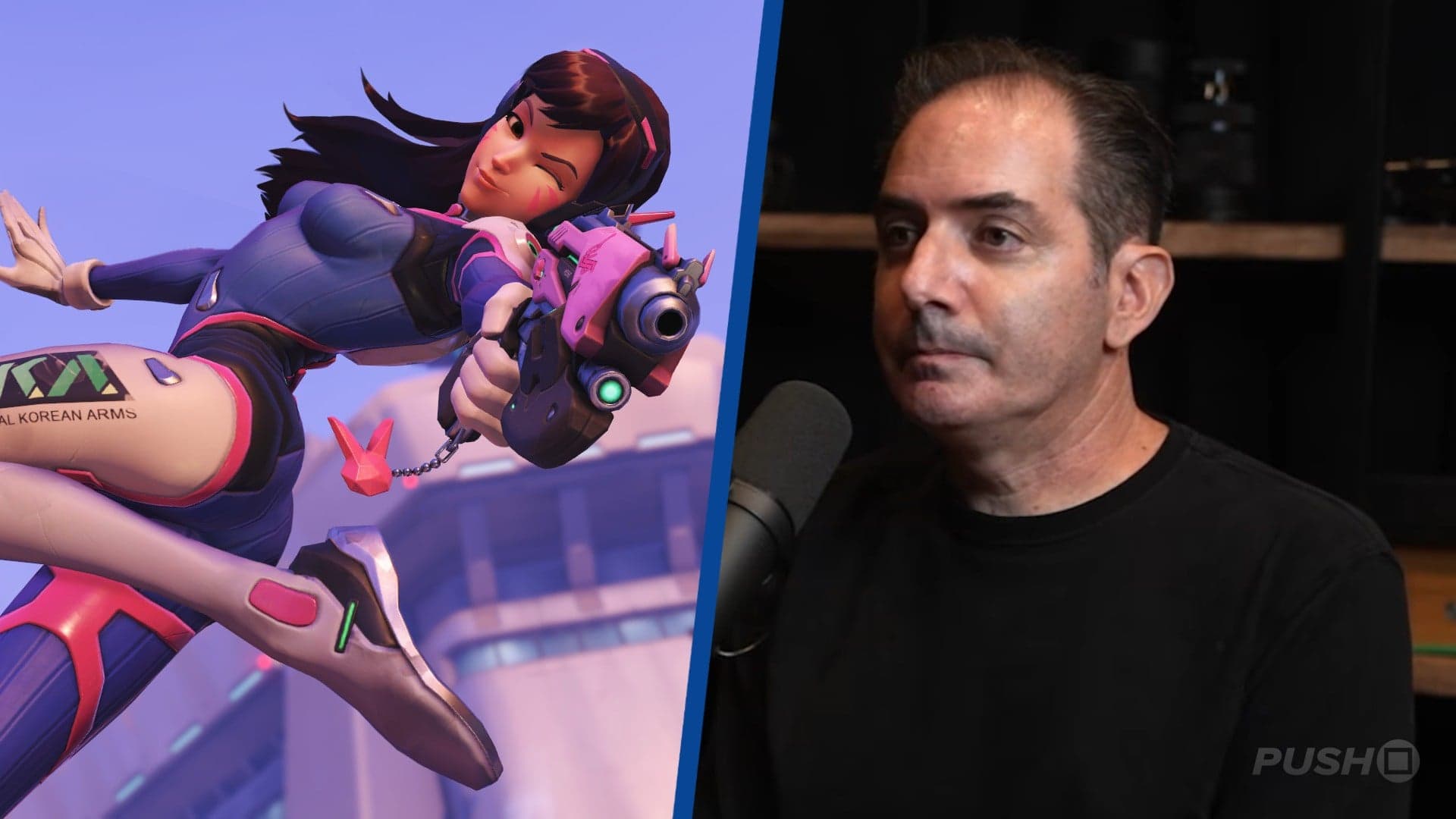
Jeff Kaplan — the longtime Overwatch director and co-creator who became the public face of Blizzard’s hero shooter — has finally put words to the moment that pushed him out the door in 2021. In a new interview on the Lex Fridman podcast, Kaplan says a meeting with Activision Blizzard’s then-CFO delivered an ultimatum so brutal it “ultimately broke” his Blizzard career: hit specific revenue targets, or “we’re going to lay off 1,000 people, and that’s going to be on you.”
It’s a jaw-dropping window into how financial pressure, investor expectations, and the weight of the Overwatch League era collided behind the scenes — and why one of Blizzard’s most recognizable creative leaders decided he couldn’t stay.
The CFO Meeting Kaplan Says “Broke” His Blizzard Career
Kaplan describes being called into the CFO’s office and being given a date — “at the time was 2020 and was going to slip to 2021” — alongside revenue requirements for Overwatch in that year and “recurring revenue” targets for every year after. The exact numbers were redacted in the interview, which Kaplan attributed to a confidentiality agreement.
Then came the line that, in Kaplan’s telling, changed everything: if Overwatch didn’t hit those targets, “we’re going to lay off 1,000 people, and that’s going to be on you.”
Kaplan’s reaction is as raw as you’d expect from someone who spent nearly two decades at a studio famous for its internal pride and craft-first identity. He calls it “the biggest f*** you moment I’ve had in my career,” adding that it “felt surreal to be in that condition.”
He also frames it as the moment his belief in a lifelong Blizzard career finally snapped. Kaplan says he loved Blizzard, thought he’d retire there, and “never thought the day would come” where he’d walk away — but that meeting was “it.” Kaplan adds that the CFO in question is no longer there.
Some coverage identifies the then-CFO as Dennis Durkin, and Kaplan himself does not name the executive in the quoted segment. What’s clear is the substance of the ultimatum Kaplan says he received: revenue targets tied to a threat of mass layoffs, explicitly pinned on him.
How Overwatch League Expectations Warped the Game’s Development
Kaplan doesn’t paint his departure as a single-issue rage quit. Instead, he lays out a broader story: Overwatch League became a gravitational force that pulled the franchise away from what he and the team wanted to build.
His core claim is that the League was “overmarketed” to the people paying to field teams — sold with sky-high promises that it could be “more popular than the NFL.” Kaplan describes a “roadshow” pitch deck culture where “you can put anything in a deck, and sell anything,” and says the result was a wave of commitments and expectations that the game’s development team ultimately had to service.
And once those expectations exist, they don’t just sit in a spreadsheet. Kaplan says the League’s structure and investor involvement interfered with Overwatch development priorities, to the point where “all your plans… kinda go out the window.”
His description is blunt: instead of building new world events and focusing on the future (including Overwatch 2), the team was “just treading water.” He characterizes the League’s trajectory as an attempt to “let’s make lots of money really fast,” with an original business model centered on in-person events, ticket sales, and merchandise.
But Kaplan argues reality hit fast. Global teams (he specifically mentions the mismatch of a London team and a Shanghai team) made the logistics of consistent in-game events and a coherent live plan far more complicated than the early optimism suggested. Merchandise did well, he says — but not remotely on the scale some people expected.
Then the pressure shifted back onto the game itself.
Kaplan describes investors essentially looking at Overwatch’s prior earnings and asking, in effect: if the live game made hundreds of millions, “what can we sell, and what can you give us?” That pressure, he says, landed on the development team at the same time as pressure to ship Overwatch 2 — and it came at the cost of the “care and love” that goes into the live service fundamentals players actually feel: events, heroes, maps, and consistent updates.
He also notes that he and product director Ray Gresko felt far more in control of Overwatch in the early years, before the League became what Kaplan calls an “albatross.”
The Live-Service Arms Race: “Fortnite Has 1400 People Working On It…”
One of the most revealing parts of Kaplan’s comments is how clearly it captures the modern AAA live-service panic: executives benchmarking success against the biggest game in the room, then demanding a copy-paste solution.
Kaplan describes the kind of meeting where someone says: “Fortnite has 1400 people working on it, so if we just hire 1400 people and make it free-to-play, we’ll make that money, right?”
That line matters because it’s not just about Overwatch — it’s about how creative leadership gets cornered when a game becomes a revenue engine first and a craft project second. Kaplan’s story is essentially a case study in what happens when a hit game is expected to grow forever, regardless of design realities, player sentiment, or the human cost of “targets” that can’t be negotiated with.
It also reframes the era leading up to Overwatch 2. Kaplan left Blizzard in 2021. Overwatch 2 later launched as a free-to-play game in Early Access form in 2022, before an official launch in 2023. Today, Blizzard has dropped the “2” and rebranded the game as simply Overwatch.
The game is currently available across PC, PS4, PS5, Xbox One, Xbox Series X|S, Nintendo Switch, and Nintendo Switch 2.
Kaplan’s comments don’t rewrite the franchise’s public history — but they do explain the internal temperature: a team trying to keep a live game healthy while being pulled into an esports mega-plan, a sequel mandate, and revenue expectations that came with existential threats attached.
Why This Matters Now (Even If You Don’t Play Overwatch Anymore)
Kaplan’s “biggest f*** you moment” quote is going to travel because it’s profane, personal, and painfully relatable to anyone who’s watched the games industry chew through talent. But the bigger story is what it implies about the structure around blockbuster live-service games.
When a CFO can credibly tell a creative lead that missing revenue targets will trigger layoffs for 1,000 people — and that the blame will be placed on that lead — you’re no longer talking about game direction. You’re talking about a system where human livelihoods become leverage in a performance negotiation.
And it’s hard not to connect this to the broader industry reality Kaplan gestures toward: investor pressure, escalating budgets, and the way live-service games are expected to behave like infinite-growth machines. Kaplan’s account also underlines how esports ambitions can become a parallel product that siphons attention and resources from the thing players actually log in for.
Even if you believe Overwatch is in a better place today than it was during its roughest stretches, Kaplan’s story is a reminder that the franchise’s turbulence wasn’t just a matter of balance patches or content cadence. It was also about competing priorities at the highest levels — and a creative leader deciding he couldn’t keep doing the job under those terms.
What Remains Unknown
- The redacted revenue targets: Kaplan says the figures were removed due to a confidentiality agreement, so the exact demands remain undisclosed.
- The full context of the CFO ultimatum: Kaplan recounts the meeting and the threat, but no additional internal documentation or official corporate statement has been provided.
- How widespread this kind of pressure was: Kaplan describes his experience, but it’s unclear how often similar ultimatums were delivered to other teams or leaders.
- The precise identity of the CFO in Kaplan’s account: Kaplan does not name the executive in the quoted remarks, though multiple reports point to the CFO at the time.