Diablo IV: Lord of Hatred is being positioned as a major course-correction and crescendo for Blizzard’s modern ARPG: a second expansion that pairs sweeping quality-of-life upgrades and endgame restructuring with an emotionally charged campaign built to close out the “Age/Hatred Saga.” Early reviews paint a picture of a package that’s often thrilling, frequently gorgeous, and—depending on who you ask—either the best Diablo 4 has ever been or a reminder that Diablo’s story ambitions can still clash with its grind-first DNA.
The headline takeaway: Lord of Hatred (launching April 28, 2026 on Diablo IV) looks like Blizzard swinging big—new region Skovos, new classes Warlock and Paladin, a level cap increase to 70, new/expanded skill trees, and new endgame systems like War Plans, plus the return of the Horadric Cube. The question isn’t whether there’s “enough” here. It’s whether Blizzard finally found the right rhythm between campaign spectacle and the loot chase that keeps Sanctuary spinning.
What Lord of Hatred Is (and Why It’s a Bigger Deal Than Vessel of Hatred)
Blizzard has a lot riding on Lord of Hatred because the first expansion, Vessel of Hatred, left a chunk of the community wanting more—more narrative momentum, more meaningful systems evolution, more reasons to believe Diablo 4’s live-service structure can deliver satisfying “chapters” instead of seasonal busywork.
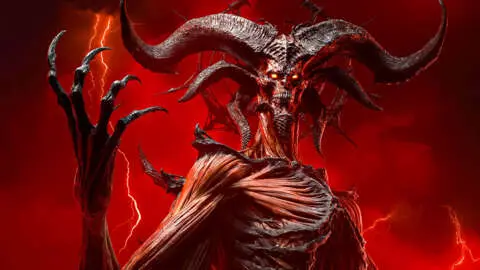
This time, the expansion is explicitly framed as a payoff: a trip to the long-teased Skovos and a major showdown with Mephisto, the Prime Evil of Hatred. Multiple reviews describe it as a story with real finality—one that picks up after Vessel of Hatred’s cliffhanger and aims to land the arc that began in Diablo IV’s base campaign.
The setting shift matters, too. Skovos is repeatedly described as a Mediterranean-leaning, Grecian-inspired region—sun-bleached ports, red-tiled roofs, seaside cities, and grand architecture that stands apart from the mud-and-misery palette Diablo 4 has leaned on since launch. That contrast isn’t just aesthetic window dressing; it’s used to sell the creeping corruption as Mephisto’s influence spreads. Several impressions emphasize the tension of watching a “bright” place rot in real time—an inversion of Diablo’s usual baseline gloom.
And yes, this is also the expansion where Lilith returns—something Blizzard has already acknowledged publicly. She’s not simply back for fan-service; she’s positioned in a new light, and her presence is central to how the campaign’s emotional beats land (or don’t).
Campaign and Story: A Proper Finale… or a Grind-Blocking Spectacle?
The most consistent praise across early coverage is that Lord of Hatred’s campaign is more cinematic, more eventful, and more emotionally aggressive than what came before—especially compared to Vessel of Hatred. It’s described as packed with twists, major character moments, and boss fights that aim for “earth-shattering” scale.
At the core is Mephisto’s latest play: he’s inhabiting the body of Akarat, a prophet-like figure, and using that guise to gather followers in Skovos. That premise is doing a lot of heavy lifting because it puts the player in a deliciously uncomfortable position: you know the “savior” is evil, but the world’s desperate people don’t exactly want to take moral guidance from a wandering engine of slaughter. One review even highlights how the protagonist’s frustration becomes meta—players can’t persuade the crowd, so they default to the one solution Diablo always offers: kill more monsters.
Where opinions split is in how the story is delivered and whether it complements Diablo 4’s core loop.
The “Blizzard still has it” camp
Some reviewers call this campaign one of Blizzard’s best works in years—lavish cinematics, strong direction, and a conclusion that doesn’t flinch. The expansion is praised for being willing to “kill its darlings,” for delivering a sense of closure, and for making the final boss encounter feel mechanically inventive and thematically earned.
There’s also a recurring point that Lilith remains Diablo 4’s most intriguing character, and that exploring her more deeply is one of the campaign’s biggest wins. Her visual design and Caroline Faber’s voice performance are singled out as elevating the material.
The “great story, wrong place” critique
On the other side, there’s a sharp argument that even a much-improved campaign can still be the worst way to play Diablo 4—because the loot and XP incentives don’t match the time investment. One review calls out the campaign’s loot tables as bafflingly stingy compared to other activities, making the story feel like a slog even when the cutscenes and boss fights are firing on all cylinders. The advice there is blunt: blast through it with a well-equipped character, because the grind systems elsewhere are simply more rewarding.
And then there’s the “conflicted” middle ground: players who enjoyed the campaign’s moment-to-moment action and spectacle but felt the narrative leaned too hard on emotional shock, or relied too much on Lilith’s duplicity in ways that reduce player agency. There’s also criticism that Skovos’ Amazon society—despite being thematically central—doesn’t always get the narrative weight its premise deserves, with key figures feeling underdeveloped or rushed.
The important thing is this: even the critics largely agree the campaign is a step up. The disagreement is whether Diablo 4’s structure can ever make a story campaign feel like the “main event” when the endgame is designed to be the real forever-home.
Skovos, Fishing, and the Expansion’s New Toys
Skovos is widely praised as a standout region—distinct from the mainland, rich in visual identity, and loaded with environmental storytelling. It’s described as beautiful but threatened, with corruption manifesting in grotesque ways: demons ravaging marinas and plains, living thorns assimilating flesh, temples flooded with lifeblood, libraries burned down. The vibe is clear: this is Diablo, even if the sun is out.
Beyond the main campaign path, the expansion includes:
- Sidequests
- New dungeons
- A fishing minigame (described as light and enjoyable by some, and tonally weird by others)
Fishing is the kind of feature that instantly tells you where Diablo 4 is in 2026: it’s not just chasing Diablo 2 nostalgia anymore; it’s also experimenting with modern live-service “downtime activities.” Whether that belongs in Sanctuary is… contentious. One take calls it a fun diversion with self-aware loot escalation applied to fish. Another argues it feels fundamentally incongruous to fish in a world where people are being dismembered by Hell.
That tonal friction is Diablo 4 in a nutshell: a grimdark world that also wants to be a long-term hobby game. Lord of Hatred doesn’t resolve that identity debate—but it does seem more confident about what it wants to be mechanically.
Two New Classes: Warlock and Paladin (and Why They Matter)
Lord of Hatred adds two new playable classes: Warlock and Paladin. That’s a big deal not just because new classes are the most immediate form of “fresh Diablo,” but because class design is where Blizzard can most directly influence buildcrafting, pacing, and endgame longevity.
Paladin: the fantasy fulfillment
The Paladin is widely framed as the classic sword-and-board holy warrior archetype Diablo 4 has been missing. Notably, the Paladin had already been available for months, having “shadow-dropped” in December (as described in one review). In other words: for many players, Paladin isn’t the novelty here—it’s the reliable anchor.
Warlock: complex, demanding, and divisive
The Warlock is the expansion’s wild card: a summoner-caster hybrid that multiple reviewers describe as Diablo 4’s most complex class. Mechanically, it’s built around managing resources (including Wrath and Dominance, per one account), tactical minion usage, and a playstyle that rewards planning and positioning.
But the Warlock is also polarizing:
- Some love the “heavy metal” maximalism—big demon buttons, explosive power, and the satisfaction of commanding a personal monster that can flatten rooms.
- Others feel it’s mechanically stranded between existing class identities, reading more like a flashy caster than a true minion-master in the tradition of Necromancer or Witch Doctor.
- There’s also the practical early-game critique: certain Warlock builds can feel light on crowd control early on, making leveling rough until the class comes online.
The broader point: Warlock seems designed to be mastered, not merely played. That’s a smart move for Diablo 4’s long-term health—assuming Blizzard can keep the class balanced and readable for players who don’t want to spreadsheet their fun.
Systems and Endgame: War Plans, Horadric Cube, Talismans, Skill Tree Revamp
If the campaign is the headline, the systems refresh is the real power play. Several reviews argue Lord of Hatred fundamentally improves Diablo 4’s core, particularly around buildcrafting and the loot chase.
Here’s what’s being highlighted most:
Level cap 70 and more Torment Tiers
The expansion raises the level cap to 70 and increases Torment Tiers up to 12, expanding the runway for progression and difficulty scaling.
Skill trees expanded and reworked (for all classes)
One of the most important notes: the skill tree revamp applies to all classes regardless of whether you buy the expansion (as described in one review). That’s huge, because it means Blizzard is treating this as a foundational update, not just paid power.
The rework is described as both simplified and more meaningful: skills now have multiple modifier choice points, including a “Variant” effect that can significantly transform how a skill behaves. The effect, according to one reviewer, is that builds become functional and interesting much earlier—without needing to wait for ultra-rare gear to “unlock” your character’s identity.
That’s not a small fix. That’s Diablo 4 addressing one of its most persistent criticisms: that the campaign leveling experience can feel like a tutorial for the endgame gear hunt.
War Plans: endgame playlists with progression
War Plans show up again and again as a quality-of-life and structure win. The concept is straightforward: you create a playlist of endgame activities—Nightmare Dungeons, Helltides, the Pit, Infernal Hordes, Tree of Whispers, Kurast Undercity, and more—and the system streamlines what you do next.
Key details that stand out:
- War Plans warp you to the queued activity, reducing map friction.
- They include progression trees for activities, letting you unlock modifiers that change risk/reward, objectives, enemy types, and rewards.
- The goal is to make Diablo 4’s endgame feel less overwhelming and more directed without turning it into a rigid checklist.
This is Blizzard trying to solve a real live-service problem: when you have “a million things to do,” players often feel like they have nothing to do. War Plans are a bid to make the endgame legible.
Horadric Cube returns
The Horadric Cube is back, and it’s being framed as a centerpiece crafting system that helps you refine gear and tweak affixes through recipes. One particularly striking detail: it can upgrade Common items into Uniques—a twist that turns the worst trash drops into potential jackpots.
That’s Diablo design at its best: taking the thing you ignore and making it exciting again.
Talismans and Charms
The expansion adds Talismans, a new set of loot slots where you equip Charms with beneficial effects, including set bonuses. Up to six can be worn, though slots must be unlocked. Some impressions suggest the power impact isn’t always obvious moment-to-moment, but the system adds another axis for specialization and long-term chasing.
Echoing Hatred events
Echoing Hatred is described as a survival-style wave challenge—dense enemy waves, escalating difficulty, and a pure “slaughter test.” The catch: it’s rare and difficult to access by design, and one reviewer only played it once via a press-only shortcut. So it’s a fun addition, but not yet positioned as a pillar feature.
Other quality-of-life improvements
The classic Diablo map overlay returns, and pathfinding is improved with clearer route marking. These are the kinds of changes that don’t sell expansions on their own, but they’re exactly what makes players stick around.
Pricing, Platforms, and Release Date
Diablo IV: Lord of Hatred launches April 28, 2026.
- Developer/Publisher: Blizzard Entertainment
- Price: $39.99 (at least on PC, per review information)
- Multiplayer: Yes
- Steam Deck: Verified (as noted in one review)
- Platforms: Diablo IV is available on multiple platforms, but specific platform availability for the expansion beyond PC is not fully detailed in the review excerpts referenced here. Blizzard has not been quoted in this roundup with a complete platform list.
Why This Expansion Could Be a Turning Point for Diablo 4
The most interesting tension around Lord of Hatred is that it’s being praised for two things that don’t always coexist in modern ARPGs:
- A campaign with genuine stakes and cinematic ambition
- A systems refresh that makes the grind feel smarter, smoother, and more personal
Historically, Diablo’s expansions tend to be remembered for what they did to the endgame. Reaper of Souls didn’t just add content—it redefined Diablo 3’s entire structure. The early read on Lord of Hatred is that Blizzard is trying to pull off a similar trick for Diablo 4: not merely adding another region and another villain, but tightening the whole machine so the “forever game” feels less like a pile of activities and more like a coherent ARPG ecosystem.
And yet, the critiques matter. If the campaign still doesn’t pay out loot at a rate that respects player time, that’s not a nitpick—that’s a fundamental mismatch between Diablo’s storytelling aspirations and its reward economy. Likewise, if the new systems stack complexity faster than Blizzard can teach it, newer or returning players could bounce off harder than ever, even as veterans celebrate the depth.
Still, the vibe is unmistakable: Blizzard is swinging with confidence again. Whether you’re here for the Mephisto finale, the Warlock’s demon-summoning buildcraft, or the Horadric Cube’s promise of turning trash into treasure, Lord of Hatred looks like the kind of expansion that can reframe the entire conversation around Diablo 4.
What Remains Unknown
- Full platform breakdown for Lord of Hatred in official terms has not been fully confirmed within the review details summarized here (beyond PC-specific information like price and Steam Deck verification).
- How Echoing Hatred is accessed in the live version (drop rates, triggers, requirements) remains unclear, given limited reviewer access.
- Long-term endgame balance—how War Plans progression, Horadric Cube crafting, Talismans, and the revamped skill trees will settle over weeks of seasonal play—can’t be fully judged before the broader player base stress-tests the systems.
- What Blizzard’s next step is after a story positioned as a major conclusion: no official announcement has been made about future expansions or the broader roadmap beyond this release window.