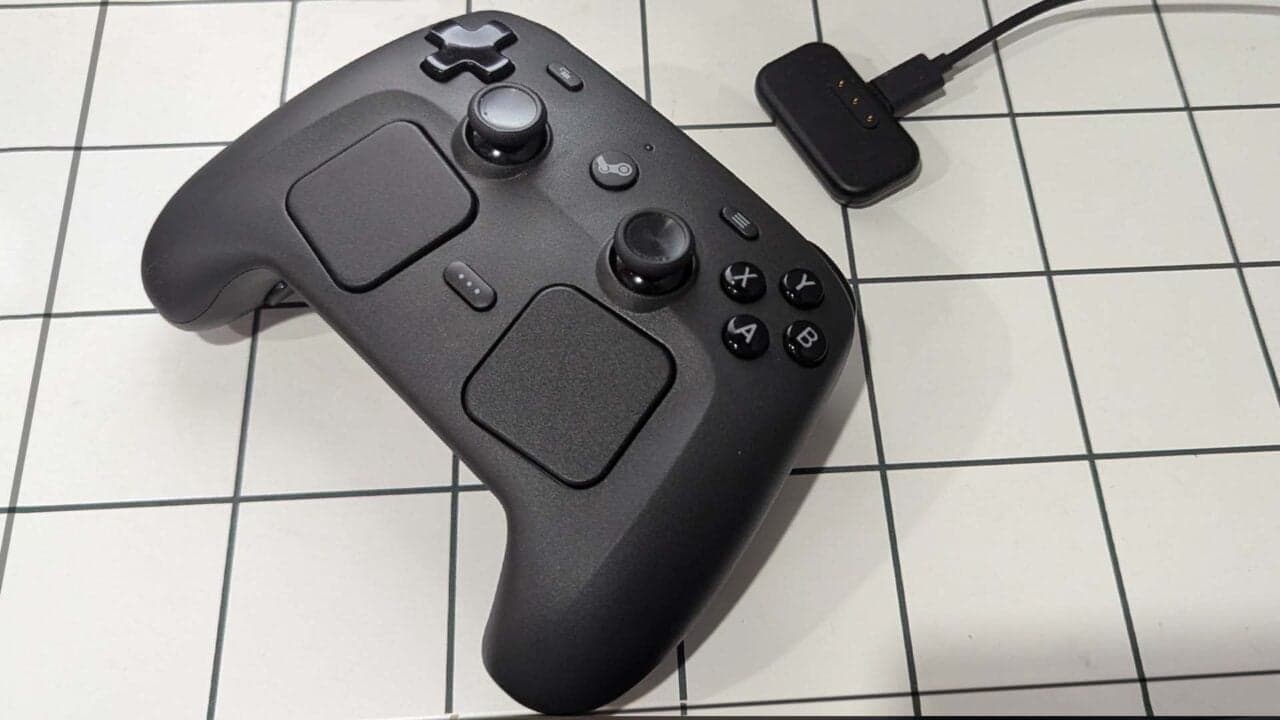
Valve is officially bringing the Steam Controller back on May 4, and early hands-on reviews paint a clear picture: this is the most “Valve” controller ever made—overbuilt, over-featured, and obsessively designed to make PC gaming from the couch feel frictionless. The catch is the price. At $99 / £85 / €99 (with additional regional pricing in some markets), it’s asking premium-controller money while also refusing to play nice with consoles.
Still, if you live in Steam’s ecosystem—especially if you dock a Steam Deck—this thing is shaping up to be a genuinely meaningful piece of hardware, not a nostalgia play.
The Big Picture: What Valve Actually Built This Time
Let’s get one thing straight: the original Steam Controller (2015) was a fascinating experiment that never fully escaped “weird peripheral” status. Valve clearly knows it. The new Steam Controller is built around a different philosophy: input parity with Steam Deck, but in a dedicated gamepad form factor that’s meant to feel familiar the second you pick it up.
That design goal shows up everywhere:
- A more traditional layout with two thumbsticks (symmetrical, DualSense-style positioning)
- Two square trackpads (Steam Deck-style) for mouse-like control
- Four rear grip buttons
- Gyro with Valve’s “Grip Sense” capacitive activation concept
- A dedicated Steam button and Quick Access Menu button for Steam-native navigation
In other words, Valve isn’t trying to replace an Xbox controller for everyone. It’s trying to solve a very specific PC problem: how do you comfortably control a PC—desktop, menus, launchers, strategy games, weird indie UI, the whole mess—from the couch without juggling a mouse and keyboard?
And the early consensus is that it mostly nails that mission.
The Puck Is the Secret Sauce (And the Reason Valve Can Ship This Now)
The standout hardware quirk isn’t even on the controller—it’s the included Steam Controller Puck, a small USB-connected device that acts as both:
- A 2.4GHz wireless transmitter (Valve cites ~8ms end-to-end latency at 5m, with 4ms polling), and
- A magnetic charging interface that the controller snaps onto.
Multiple reviewers describe the setup as refreshingly painless: plug the puck into your PC, let Steam detect it, do a quick update, and you’re off. The pitch is simple: no Bluetooth pairing drama, no driver scavenger hunts, no “why is Windows seeing this as a generic device today?” nonsense.
Valve has also said the puck is designed to avoid overcharging and help keep the battery healthy long-term.
There’s also a bigger industry context here: Valve has been blunt that the Steam Machine and Steam Frame are being impacted by the ongoing RAM and storage pricing/supply situation, while the controller is not—because, as Valve put it, it doesn’t have RAM or storage inside it. That’s the practical reason the controller is launching first.
Valve has also pushed back on the idea that it was “held” for a bundle: the controller is shipping now because it’s ready now, while the other hardware isn’t.
Specs, Features, and the “Steam Deck on Your Desk” Feel
On paper, the new Steam Controller reads like Valve crammed every input method it trusts into one slab:
- TMR magnetic thumbsticks with capacitive touch (aimed at long-term reliability)
- Two 34.5mm square trackpads with haptic feedback and pressure-sensitive click strength
- Four haptic motors (two in trackpads for tactile feedback, two high-output in grips for game haptics/rumble)
- 6-axis IMU (gyro + accelerometer)
- Four rear grip buttons
- USB-C, Bluetooth, and 2.4GHz wireless via puck
- 8.39Wh battery with Valve claiming 35+ hours of gameplay
- Weight: 292g (puck adds 16g)
The “feel” comparisons are telling. Several impressions say the core buttons, triggers, and sticks feel very close to the Steam Deck—except now they’re in a controller that’s actually shaped like a controller, not a handheld PC you’re trying to grip like a gamepad.
One reviewer even singled out the d-pad as a new favorite, and Valve has said it worked with fighting game players to refine those inputs.
But it’s not trying to be a competitive “pro” controller either. At least one review notes it’s not especially fast for competitive play, citing a 250 Hz polling rate. The vibe is clear: this is a “comfy gamer” controller—built for living room PCs, docked Deck setups, and anyone who wants mouse-like control without sitting upright at a desk.
Compatibility: PC-First, Steam-First, Console-Last (As in: Don’t)
This is where the Steam Controller’s identity gets sharp edges.
Valve’s message is consistent: this is a PC controller. It’s designed for Steam, and it’s designed to make Steam Input shine. It can also be used with devices running Steam or the Steam Link app, including Windows, Mac, Linux PCs, and even tablets/phones in some scenarios.
But if you’re hoping it’s a stealth console controller—don’t.
In testing, it reportedly did not function properly on PlayStation 5 beyond basic menu movement, and Valve has stated there’s no current support for Switch, Xbox, or PlayStation. There’s Bluetooth mode, yes, but the controller’s reason to exist is Steam integration and Steam Input configurability.
That Steam-first approach also affects non-Steam games. Some users report success running non-Steam titles through Steam with a bit of tinkering, but it’s not guaranteed to be seamless—especially when third-party launchers get involved.
Repairability and Modding: Valve Is Leaning All the Way In
One of the most exciting parts of this launch—especially for the enthusiast crowd—is how openly Valve is courting tinkerers.
Valve engineers have described the controller as intentionally easy to open: seven Torx screws, no snaps, no tabs, no “pry and pray.” The battery is designed to be easily serviceable, and Valve has said it wants customers to be able to swap parts and customize the controller.
Even better: Valve has confirmed it will provide replacement parts via iFixit after launch (not at launch). That mirrors the Steam Deck approach and is a big deal in a controller market that often treats repairability like a dirty word.
Valve has also said it plans to share 3D scans and schematics of the controller’s outer casing and shell to support modders—plus scans of the dongle/puck. That is an unusually open stance for mainstream gaming hardware, and it signals something important: Valve isn’t just selling a controller, it’s trying to seed a community around it.
The Missing 3.5mm Jack, the Phone-Ring Ping, and Other Very Valve Choices
Yes, it’s $99. No, it doesn’t have a 3.5mm headphone jack.
Valve’s reasoning is basically that PC players have plenty of other audio options—Bluetooth headsets, USB headsets, dongles—and it didn’t want to add the complexity of controller-based audio.
That won’t satisfy everyone (especially anyone who loves wired chat on console pads), but at least Valve is being direct about the trade-off.
And then there’s the most charmingly unhinged detail: the controller has a “find my controller” ping feature that makes it vibrate and emit a sound—specifically an old-school phone ringing noise. Valve has said an engineer thought it was funny, everyone agreed, and it shipped. That’s the kind of small, human weirdness you only get from Valve.
Valve has also said it’s open to doing additional colorways in the future, though nothing specific has been announced.
Price and Release: $99 Is the Whole Debate
Here’s the reality: $99.99 (or $99 in some listings) is a psychological wall for a lot of players. It’s higher than the default console controller most people mentally benchmark against, and it’s absolutely going to trigger the “I can get an Xbox pad for way less” argument.
But Valve isn’t really competing with the basic-controller tier. The Steam Controller is closer to the “feature-rich enthusiast” segment—except instead of selling you trigger stops, RGB, and tournament vibes, it’s selling you trackpads, Steam Input integration, and couch-PC freedom.
The release details are now concrete:
- Release date: May 4, 2026
- Release time (announced): 10:00 a.m. PT / 1:00 p.m. ET
- Price: $99 / £85 / €99
- Additional regional pricing has been listed in some markets, including $149 CAD, $149 AUD, and 419 złoty in Poland.
- Where to buy: Steam (pre-orders are live)
The bigger question is whether Valve can convince enough people that “it just works” is worth a hundred bucks—especially when the controller’s killer features are most valuable to a specific kind of player: someone who docks a Steam Deck, runs a living room PC, or wants mouse-like control without a mouse.
What This Means for Steam Machine (And Why It’s Still a Question Mark)
The Steam Controller launching now is both good news and… kind of ominous news.
Good news because it’s tangible: Valve hardware you can actually buy next week.
Ominous because it highlights how murky the Steam Machine situation remains. Valve has reiterated that other hardware plans have been impacted by the RAM/storage situation, and while there have been broad statements about 2026, a firm Steam Machine release date still hasn’t been confirmed. Valve has also said the Steam Machine will include a Steam Controller, so anyone buying the controller now is doing it because they want it now—not because they need it for the Steam Machine bundle.
Some commentary suggests the controller arriving solo makes a near-term Steam Machine launch feel less likely, but Valve hasn’t provided a concrete updated timeline in the announcements tied to the controller’s release.
What Remains Unknown
- Steam Machine release date and price: still not officially confirmed beyond broad 2026 messaging.
- Steam Frame release date and price: likewise still unconfirmed.
- How widespread certain reported firmware/compatibility issues are: at least one review described a serious boot/reboot issue on specific Asus X670 motherboard systems when the dongle was plugged in, and Valve was said to be investigating.
- When iFixit replacement parts will go live: confirmed for after launch, but no date has been announced.
- Future variants: Valve has expressed openness to additional colorways, but nothing has been formally revealed.
If Valve sticks the landing on firmware stability and keeps Steam Input improvements rolling, the new Steam Controller could become the rarest kind of PC accessory: a premium peripheral that actually earns its price by removing friction. Not by pretending you’re a pro—by letting you stay on the couch.