Housemarque is back with Saros, its next big sci-fi third-person shooter for PS5, and the verdict is loud: this is a more welcoming, more customizable riff on Returnal’s bruising roguelite formula—without fully abandoning the studio’s trademark “bullet-hell ballet.” The big question reviewers keep circling, though, isn’t whether Saros is good (most agree it is). It’s whether sanding down the pain also sands down the magic.
With Saros launching April 30, 2026 as a PlayStation 5 exclusive published by Sony Interactive Entertainment, the game is already shaping up as one of the year’s most important first-party releases—and a fascinating litmus test for what happens when a studio famous for punishing purity decides to open the doors wider.
What the reviews agree on: Housemarque still makes combat that rules
Even the more mixed takes land on the same foundation: Housemarque’s action remains the headline act. Saros is still built around that signature rhythm—constant motion, split-second dodges, and reading dense projectile patterns like you’re parsing a hostile language at full speed.
A lot of reviewers highlight how Saros keeps the studio’s bullet-hell DNA intact while layering in more defensive options and clearer visual communication. Combat is frequently described as demanding and precise, but also more legible than Returnal thanks to color-coded projectile behavior and a broader toolkit for dealing with incoming fire.
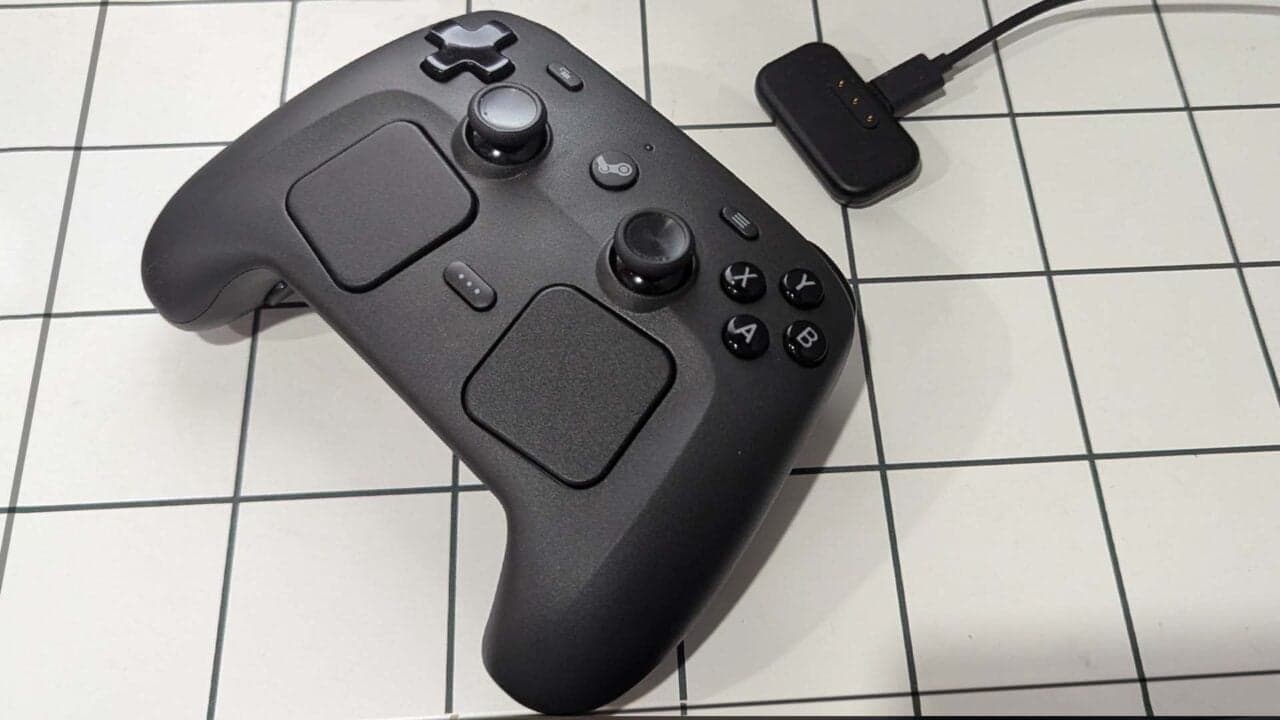
There’s also widespread praise for how Saros uses the DualSense. Multiple reviews point to adaptive triggers and haptics doing real work here—not just “vibration because PS5,” but tactile feedback that makes weapons feel weighty and alt-fire feel distinct. It’s the kind of implementation that reminds you why the controller mattered in the first place, and why so few studios truly commit to it.
Visually, Saros is being treated as a full-on PS5 showpiece. Reviewers repeatedly call out the particle-heavy spectacle of fights, the striking biomes of Carcosa, and the overall sense that Housemarque is flexing hard on atmosphere and effects. Whether you’re into the story or not, the moment-to-moment experience seems designed to overwhelm you in the best way.
The big change: Saros is more accessible—by design
The clearest throughline across the round-up is that Saros is easier to approach than Returnal. Not necessarily “easy,” but more accommodating, more adjustable, and less likely to slam the door in your face early.
A major reason is meta progression. Where Returnal could feel like a harsh teacher that demanded mastery before it offered mercy, Saros leans harder into permanent upgrades. Reviewers describe a system where currency collected across runs can be used to unlock nodes on a large skill tree—boosting stats and unlocking meaningful perks that persist beyond death.
On top of that, Saros introduces a pre-run modifier system that lets players tweak difficulty with trade-offs. The concept is consistent across impressions: you can give yourself an edge (like boosting damage or reducing incoming damage), but you’ll often have to accept a downside (like reduced resources retained after death). Some reviewers see this as a smart, flexible way to let more players engage with the game’s best content—especially bosses—without compromising the core identity.
And yes, bosses are a recurring highlight. Several reviews describe them as spectacular, intense, and memorable—big enough that a few could pass for “final boss” material in other games. That’s classic Housemarque: the studio understands escalation, and it understands how to turn mechanical stress into spectacle.
Where the split happens: does accessibility “overcorrect” the roguelite loop?
Here’s where the discourse gets spicy—and genuinely interesting.
One prominent criticism is that Saros may “overcorrect” for Returnal’s reputation for difficulty. The concern isn’t that players have options; it’s that the game can become too easy to trivialize, sometimes without clearly communicating how its systems interact.
One review argues that with enough permanent upgrades and favorable modifier trade-offs, you can effectively flip a few switches and turn yourself into an “overpowered king,” reducing the need for the classic roguelite cycle: die, learn, experiment, adapt, and claw your way forward with hard-earned mastery. In that framing, Saros risks becoming more of a power fantasy than a crucible—especially if build variety and meaningful run-to-run decision-making get flattened by permanent progression.
That same line of critique also calls out balance and clarity. If negative modifier traits don’t feel meaningfully punishing, the “trade-off” premise collapses, and players can accidentally drain tension from the experience while thinking they’re simply engaging with the game as intended.
But not everyone sees that as a problem—and some actively celebrate it. Other reviews argue that the accessibility tools are exactly what keeps the game from becoming frustrating, especially during repeated attempts or longer objective chains. The ability to tune difficulty (within limits) is framed as a quality-of-life evolution that respects players’ time while still allowing those who want a harsher experience to crank things back up.
In other words: Saros is being judged not just as a sequel-in-spirit to Returnal, but as a statement about what modern roguelites should be. Should the genre protect its teeth at all costs? Or is it better when more players can actually reach the best fights, the best biomes, and the endgame reveals?
Story and structure: ambition, symbolism, and a protagonist carrying a lot of weight
Narratively, Saros is also getting a more complicated reception.
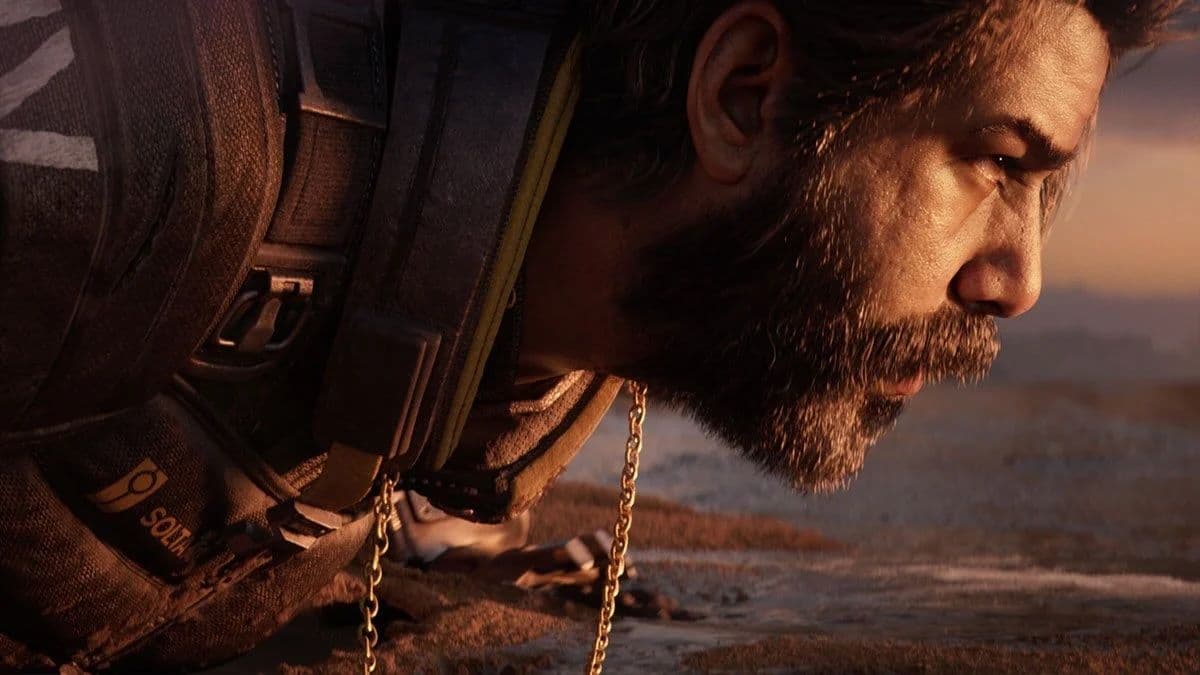
The setup is consistent across reviews: you play as Arjun Devraj (portrayed by Rahul Kohli) on Carcosa, part of an expedition tied to a corporation called Soltari after earlier colony ships/teams go silent. Arjun has personal stakes in the mission—he’s searching for someone connected to earlier expeditions—and the planet’s eclipses and shifting conditions feed into the game’s tone and structure.
Some reviewers praise Housemarque for retaining its distinctive “house style”: abstract symbolism, cryptic storytelling, and a psychological edge that’s more interested in mood and meaning than straightforward exposition. There’s admiration for the studio maintaining that identity within Sony’s first-party ecosystem, and for Kohli’s performance anchoring the experience.
At the same time, multiple reviews suggest the story doesn’t always land with the same force as Returnal’s. One critique argues that Saros pushes for a bigger, more ambitious story, but that its themes can feel too abstracted—ambitious, but not always emotionally sharp. Another notes that the broader cast can feel underdeveloped, with Arjun doing the heavy lifting while other characters leave less of an impression.
There’s also a recurring idea that the narrative and the roguelite structure don’t always harmonize as cleanly as they did in Returnal. Returnal famously fused its loop with its protagonist’s trauma in a way that made repetition feel thematically essential. Some reviewers feel Saros reaches for a similar marriage of mechanics and meaning, but doesn’t always achieve the same cohesion until later.
Still, even among criticisms, there’s a consistent respect for the ambition—and for the fact that Housemarque is still swinging for something stranger and more symbolic than the average blockbuster shooter.
Scores and early standing: a critical hit, with one notable outlier
On the numbers, Saros is landing strong—strong enough to immediately enter “Game of the Year conversation” territory for 2026.
At the time of writing in the round-up coverage, Saros is sitting at 88 on Metacritic, slightly above Returnal’s 86. Over on OpenCritic, it’s been cited at 92, after debuting higher and settling as more reviews arrived.
Specific callouts from the round-up include:
- GameSpot awards Saros a 9/10, with reviewer Richard Wakeling saying it “improves upon its spiritual predecessor in every conceivable way,” praising deeper combat, a malleable structure, and a narrative that pulled him in.
- IGN comes in notably lower with a 7/10, arguing that Saros “bites off more than it can chew,” with concerns about repetition versus progression and storytelling that doesn’t always pay off—though it still acknowledges the pull of the action and the compulsion to keep trying.
- Other reviews in the mix are broadly positive, with a lot of language framing Saros as a refinement or evolution of what Housemarque already does best—sometimes “streamlined,” sometimes “more accessible,” often “spectacular.”
That spread tells you something important: Saros isn’t dividing people on quality so much as on philosophy. If you wanted Housemarque to make Returnal 2 in everything but name—same brutality, same uncompromising loop—there’s a chance you’ll feel the edges have been softened too much. If you bounced off Returnal but always suspected there was brilliance behind the wall, Saros might be the version that finally lets you in.
Why this matters: Saros is Sony’s big PS5 test for 2026
Saros isn’t just “the next Housemarque game.” It’s one of Sony’s first major PS5 exclusives of the year, and it arrives with the kind of critical momentum that can define a platform’s narrative for months.
It’s also a rare thing: a big-budget, high-profile action game that still feels idiosyncratic. Even when reviewers disagree on balance or structure, they keep coming back to the same truth—Housemarque makes games that feel like Housemarque. The studio’s arcade roots are still visible in every fight, even as it leans further into prestige presentation and heavier narrative framing.
And the accessibility debate is going to echo beyond this release. Saros is effectively asking: can you make a roguelite shooter more welcoming without diluting the identity that made it special? Early reviews suggest the answer is “yes”… with an asterisk.
What Remains Unknown
- How the broader player base will use the difficulty and modifier systems once the game is in the wild; reviews suggest you can trivialize challenge, but it’s unclear how common that will be.
- Long-term community consensus on replayability and build depth, especially compared to Returnal, since some critiques point to less meaningful run-to-run experimentation.
- How stable the aggregate scores will be as more outlets publish reviews closer to launch.
- Any post-launch plans (updates, modes, or additional content) have not been confirmed in the available information.
Saros launches April 30, 2026, exclusively on PlayStation 5, developed by Housemarque and published by Sony Interactive Entertainment. If you loved Returnal, this is either your next obsession—or the moment you start arguing about what made that obsession work in the first place.