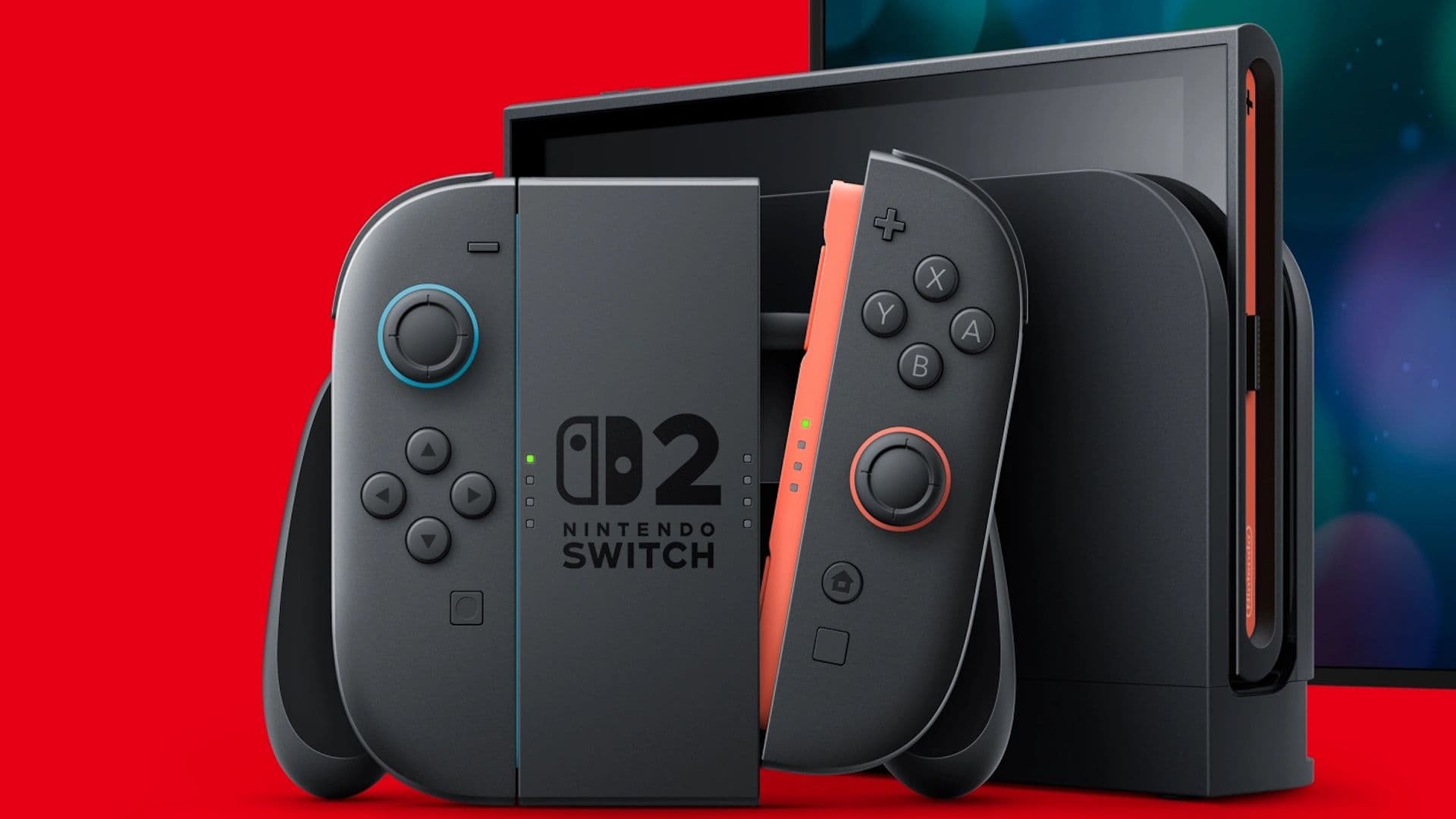
Nintendo is reportedly preparing a Nintendo Switch 2 hardware revision for Europe that would finally let owners swap the console’s battery themselves—no mail-in service, no specialized repair gauntlet. The same report claims Joy-Con 2 controllers are also being adjusted for easier battery replacement, a move aimed squarely at meeting Europe’s tightening repair and sustainability rules. If it happens as described, Europe could end up with the most consumer-friendly Switch 2 on the planet—and that’s a big deal for anyone who actually wants their handheld to last.
What’s reportedly happening in Europe—and why it matters
A Japanese business report (via Nikkei, echoed widely across the games press) says Nintendo is developing a European Switch 2 model with a user-replaceable battery, alongside Joy-Con 2 changes that would also make their batteries replaceable. The motivation is compliance: Europe is in the middle of a broad push to force electronics makers to design products that can be repaired rather than tossed.
Two overlapping regulatory currents are being cited in coverage:
- The EU Right to Repair Directive (passed by the European Parliament in April 2024) is designed to extend product lifecycles by improving access to repairs, spare parts, tools, and repair information, as part of the EU’s broader sustainability goals.
- Separately, the European Battery Regulation is being discussed as a driver for consumer-removable/replaceable batteries by 2027, specifically to address battery degradation and waste.
The practical takeaway is simple: Europe is making it harder for manufacturers to treat batteries like sealed, disposable components. And for a handheld console—where battery health is the difference between “still great” and “why does this die in 90 minutes?”—that pressure lands like a hammer.
If Nintendo really is building a Switch 2 revision around battery accessibility, it’s not just a compliance checkbox. It’s a meaningful quality-of-life upgrade for anyone who plays portable-heavy, travels, or keeps hardware for the long haul.
The current Switch 2 battery situation: service request, not a swap
Right now, replacing a Switch 2 battery (and the Joy-Con 2 batteries) isn’t positioned as a normal consumer operation. In at least some regions, the expectation is that you go through Nintendo support—effectively turning a predictable wear-and-tear issue into a logistics problem.
That’s the core tension Europe is trying to break: batteries degrade. That’s not a defect; it’s chemistry. Over time, lithium-ion cells hold less charge, and in worst cases can swell—an issue that’s not just inconvenient but potentially dangerous. When a device is designed so the battery can’t be replaced without friction, the “path of least resistance” becomes buying a new device. Regulators hate that. Consumers should hate it too.
Nintendo’s reported EU-facing revision would flip that script. If you can buy a replacement battery and install it safely, the console’s usable lifespan expands dramatically. That’s not a niche enthusiast win; it’s a mainstream one.
Joy-Con 2 getting replaceable batteries is quietly huge
The report doesn’t stop at the console. It also claims Nintendo is updating Joy-Con 2 for Europe with replaceable batteries.
That matters because controllers are often the first thing to feel “old” in a console generation—whether due to wear, charging issues, or other long-term reliability problems. Even if you baby your hardware, a controller battery that no longer holds a charge can turn a perfectly functional input device into e-waste.
There’s also a broader point here: if Nintendo is willing to redesign the Joy-Con 2 battery situation for Europe, it suggests the company is taking the regulatory moment seriously enough to rework accessories, not just the headline console shell. That’s meaningful effort—and it’s the kind of effort that, historically, tends to spread beyond a single region once manufacturing and supply chains settle.
One caveat: it’s currently unclear whether Nintendo will apply similar changes to the Switch 2 Pro Controller. At least one outlet notes that repairability criticism has been leveled at the Pro Controller’s battery design in the past, but there’s no confirmation yet that it’s included in this EU-focused revision.
Will this be Europe-only? For now, that’s the “catch”
Multiple reports frame the same frustrating hook: this revised Switch 2 model is only planned for Europe at the moment.
That’s the part that will sting for players elsewhere, because a user-replaceable battery is the kind of feature you want universally—especially for a hybrid console designed to live in backpacks, commute bags, and airplane trays for years.
The reporting does suggest Nintendo could expand the approach to other markets if similar laws pass or if consumer demand rises. In the U.S., some states have passed right-to-repair legislation, but nothing on the same scale as Europe’s current direction. Japan is also mentioned as a possible future candidate if the policy environment or consumer expectations shift.
There’s precedent for Europe forcing a change that becomes global. The most famous recent example is smartphones moving toward USB-C after EU pressure—once a company builds and ships a region-specific hardware variant, the business case for “just make one version worldwide” often gets stronger over time. That said, no official announcement has been made that Nintendo will standardize this globally, and the current reporting frames it as a Europe-targeted revision.
Timing, release window, and price: the big practical questions
Here’s where things get murkier.
One report suggests a new European Switch 2 version could be releasing this year. Another notes that the relevant requirement doesn’t kick in until 2027, implying the revision could arrive next year and still meet compliance. Yet another suggests Nintendo may want to move sooner to avoid legal trouble as EU rules begin taking effect.
So what’s the real release window? At this point, it’s not confirmed. The most consistent thread is that Nintendo is developing the revision and that it’s intended to arrive before the regulatory deadline becomes a hard wall.
Pricing is also a question mark. There’s no clear answer yet on whether this revised model would cost more than the standard Switch 2. That’s not a trivial detail—designing for easy battery access can affect internal layout, materials, fasteners, and assembly. It can be done elegantly, but it can also add cost.
And cost sensitivity is already part of the Switch 2 conversation. The Switch 2 launched in June 2025, and at least one report lists an original $449.99 USD MSRP. Meanwhile, broader industry chatter has pointed to component pricing pressure—particularly memory—driven by demand from data centers powering generative AI, with Nintendo leadership publicly discussing the difficulty of generalizing hardware-market conditions and the need to manage procurement over the medium to long term.
In other words: even without a battery revision, hardware margins and pricing are a live wire. A revised model could be a consumer win, but whether it’s a cheap consumer win remains to be seen.
Why this could become the “best” Switch 2 version (and why Nintendo might not want that)
If Europe gets a Switch 2 that’s meaningfully easier to maintain, it risks creating an awkward two-tier ecosystem:
- A European model that’s more repairable and potentially longer-lasting.
- Other regions stuck with a more sealed design that funnels battery issues into official service channels.
That’s not just a consumer fairness issue—it’s also a messaging problem. Nintendo has spent the Switch era selling the idea of a console that fits your life, travels with you, and stays relevant for years. A battery that can be swapped by the owner is perfectly aligned with that promise.
It also intersects with the collector and preservation angle. People still play old handhelds decades later, and battery replacement is one of the most common hurdles to keeping portable hardware alive. If Nintendo embraces replaceable batteries again—something that was more common in older handheld generations—it’s a quiet nod to longevity that the industry has largely abandoned.
But Nintendo also has reasons to be cautious. Modern consumer electronics moved away from removable batteries for design and engineering reasons—thinner profiles, structural rigidity, water resistance, and simplified manufacturing among them. A Switch 2 revision that makes batteries easily replaceable could introduce trade-offs in feel, durability, or internal packaging. Whether those trade-offs are real (or significant) is impossible to judge until the hardware is actually revealed.
Switch 2 momentum is strong—and that makes this revision even more interesting
This report lands at a time when Switch 2 is already in a position of strength. Nintendo has said the system has sold more than 17 million units as of December 31, 2025, with its first holiday season accounting for 7.01 million units. The original Switch has also crossed 155 million units, becoming Nintendo’s best-selling console ever, surpassing the DS.
That context matters because Nintendo doesn’t need a “save the platform” revision. This isn’t a desperate mid-gen pivot. It’s a compliance-driven redesign arriving while the console is already thriving—which suggests Nintendo is treating Europe’s regulatory direction as inevitable, not optional.
It also raises a practical question: if Nintendo is already reworking the hardware for Europe, how long before it becomes cheaper and simpler to unify production and ship the same repairable design worldwide? That’s not confirmed, but it’s the kind of manufacturing logic that has played out repeatedly in consumer tech.
What Remains Unknown
- Official confirmation: Nintendo has not officially announced a European Switch 2 revision with a user-replaceable battery.
- Release timing: Reports vary on whether it could arrive in 2026 or later; no firm date has been confirmed.
- Price impact: It’s unclear whether the revised model (and revised Joy-Con 2) would cost more than the current Switch 2.
- How “easy” replacement really is: “Replaceable” can mean anything from a simple latch to a guided-but-tool-required process; specifics haven’t been detailed.
- Pro Controller changes: There’s no confirmation that the Switch 2 Pro Controller will get a similar battery redesign.
- Global rollout: The revision is currently framed as Europe-only, with other regions only mentioned as possibilities if laws or consumer demand shift.
- Potential impact on original Switch in Europe: One report floats the possibility that the original Switch could be discontinued in the region due to falling short of repairability expectations, but nothing has been confirmed.