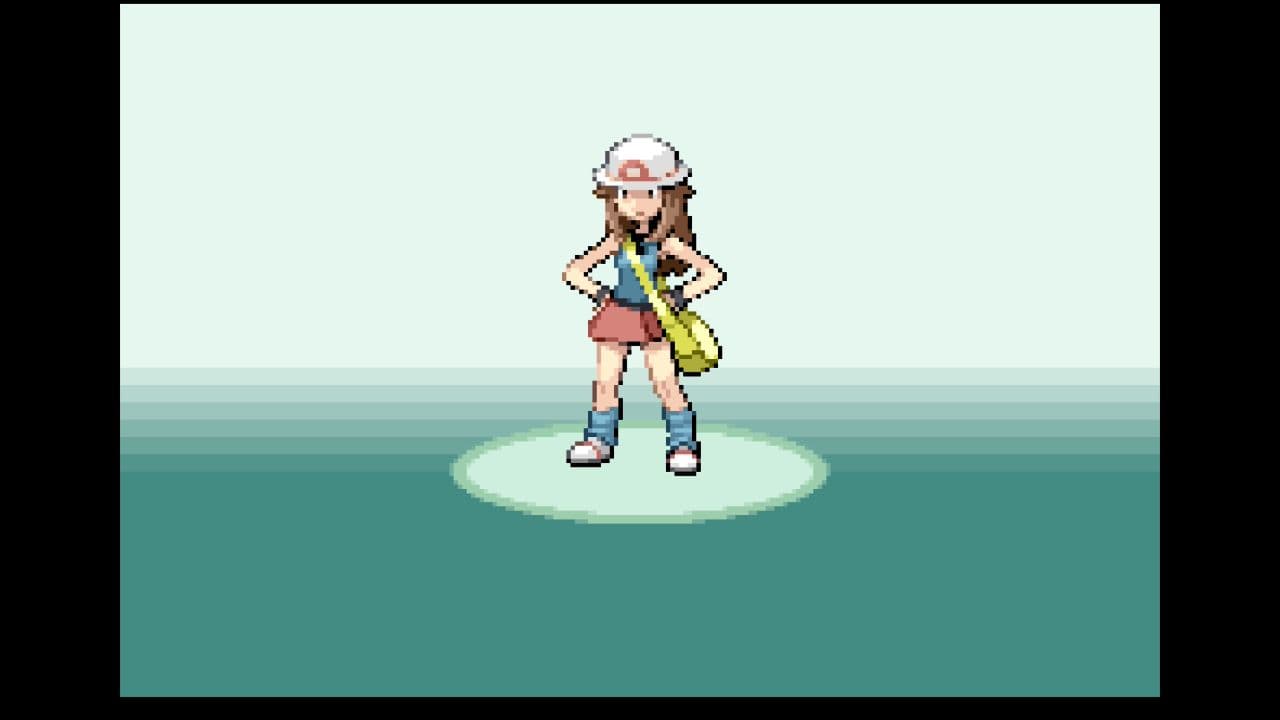
A newly translated developer interview has resurfaced a fascinating, frankly overdue truth about Pokémon FireRed and Pokémon LeafGreen: Game Freak wasn’t primarily chasing the boys who grew up on the original Game Boy releases. The remakes were deliberately tuned to appeal to girls and even older newcomers, with a development mantra that boiled down to making Pokémon approachable for people who don’t live and breathe games.
It’s a revelation that doesn’t just add trivia to the Kanto remakes—it helps explain why so much of modern Pokémon design is obsessed with onboarding, clarity, and “pick up and play” comfort. And in 2026, as Pokémon’s competitive scene prepares to shift to Pokémon Champions, it’s a reminder that the franchise has always been juggling two audiences: the hardcore and everyone else.
What the Interview Actually Says (and Why It Matters)
The key details come from a newly translated interview originally published in the March 2004 issue of Japanese magazine Nintendo Dream, translated for a new video by DidYouKnowGaming. In that interview, director Junichi Masuda describes a set of design decisions in FireRed/LeafGreen that were explicitly aimed at widening the audience beyond the presumed “default” Pokémon player.
The headline takeaway is blunt: Game Freak designed the remakes to primarily appeal to girls and the elderly, rather than focusing on boys who played the original Pokémon Red/Green (and Red/Blue) on Game Boy.
That’s not a throwaway quote, either. The interview ties that target audience to concrete, mechanical choices:
- Lowered difficulty: Masuda said the difficulty was reduced to appeal to girls.
- “Previously on your quest” recaps: Those boot-up recaps were added because girls were expected to have longer gaps between play sessions than boys.
- Pokédex presentation: Even the paper-like design of the in-game Pokédex was created with a female audience in mind.
This is the kind of behind-the-scenes context that changes how you read the entire package. For years, FireRed/LeafGreen have had a reputation among fans as “clean,” “friendly,” and “straightforward” remakes—especially compared to some of the series’ more punishing or opaque moments in earlier generations. Now we know that wasn’t accidental polish. It was the point.
And importantly, it’s not framed as patronizing in the interview details we have—it’s framed as intentional accessibility. Game Freak was trying to make Pokémon a game you could return to after a week, a month, or longer, and still feel oriented. That’s a design philosophy that has only intensified across the franchise.
“Pokémon That Even 60-Year-Olds Can Play”: Accessibility by Design
The most striking line from the translation isn’t even about gender—it’s about age. The translation notes that a slogan during development was to create:
“Pokémon that even 60-year-olds can play.”
That one sentence is basically a mission statement for what FireRed/LeafGreen became: a version of Kanto that’s readable, navigable, and hard to get lost in—both literally and figuratively.
The interview also gets wonderfully specific about how that philosophy translated into button mapping and environmental readability:
- People unfamiliar with controllers tend to press the triggers first, so Game Freak mapped a help menu to those buttons.
- Graphics lead Takao Unno recalled being directed to keep indoor environments simple, and to make doorways and stairs extremely obvious before being allowed to work on the rest of Kanto.
That’s not just “make it easier.” That’s user-experience thinking—anticipating what a new or lapsed player will do with the hardware in their hands, and what they’ll miss when scanning a room. It’s the kind of design discipline that a lot of games still struggle with, especially when they’re built by teams who are too close to their own systems.
One of the most charming examples called out is environmental: rugs that mark doorways extending beyond the edges of the room, making exits more visually legible. That’s the sort of detail you don’t consciously praise while playing—but you absolutely feel it when it’s missing.
FireRed and LeafGreen’s 2026 Re-Release Makes This Hit Even Harder
This interview is resurfacing at a perfect time, because Pokémon FireRed and LeafGreen were re-released this year as part of Pokémon Day celebrations. That means a lot of players are revisiting Kanto right now—some for nostalgia, others for the first time.
And here’s the key modern detail: FireRed and LeafGreen are available now on Nintendo Switch, with Pokémon Home compatibility coming in the future.
That “coming in the future” matters. The re-release puts these remakes back into circulation, but the full modern ecosystem integration—moving Pokémon into Pokémon Home—hasn’t been confirmed as live yet, only planned.
Still, the Switch availability alone is huge. It turns FireRed/LeafGreen from “historically important” into “immediately playable,” which invites a new wave of scrutiny. Players can now boot up the games and actively notice the exact design choices the interview describes: the recaps, the clarity of interiors, the way the game gently nudges you forward.
And it’s hard not to see the irony: a pair of remakes built around accessibility and broad appeal are now being recontextualized as design-forward artifacts—games that were quietly ahead of their time in how they thought about different kinds of players.
Pokémon’s Two Futures: Broad Accessibility vs. Competitive Standardization
While FireRed/LeafGreen are being re-examined through the lens of accessibility, Pokémon’s competitive scene is moving in the opposite direction: toward a standardized platform built specifically for battling.
Pokémon’s Video Game Championships (VGC) are officially transitioning from Pokémon Scarlet & Violet to Pokémon Champions in 2026, with Champions becoming the “standard platform for all competitive matches” going forward.
Here’s what’s confirmed:
- Pokémon Champions launches April 8, 2026.
- It’s free-to-start.
- It’s coming to Nintendo Switch, and Switch 2 users will get a free update at launch with enhanced visual performance.
- A mobile release is planned for later in 2026 (timing not yet specified).
- The first major event featuring Champions as the headline platform will be the Indianapolis Pokémon Regional Championships, running May 29–31, 2026, with registration opening April 1, 2026.
- Global Challenge I will run May 1–4, 2026.
- The 2026 Pokémon World Championships (Aug. 29–30, 2026) will use Pokémon Champions as its main battle platform.
So why bring this up in a story about FireRed/LeafGreen being designed for girls and older players?
Because it highlights Pokémon’s long-running balancing act. On one side, you have design decisions meant to welcome players who might not play every day, might not know controller conventions, and might need gentle reminders. On the other, you have a competitive ecosystem that’s now consolidating around a dedicated battle platform—one that, by definition, caters to players who do play frequently, follow formats, and optimize.
The franchise has always needed both. But the contrast is sharper in 2026 than it’s been in years:
- FireRed/LeafGreen represent Pokémon smoothing the path for newcomers and non-traditional audiences.
- Pokémon Champions represents Pokémon formalizing the path for competitors and spectators.
And if you’re a longtime fan, it’s worth sitting with the idea that these aren’t opposing philosophies—they’re complementary. Pokémon’s mass appeal is what makes a global competitive scene possible in the first place. You don’t get VGC without millions of casual players feeding the ecosystem, buying the games, and falling in love with the world.
The Bigger Takeaway: Pokémon’s Audience Was Never Just “Kids”
There’s a lazy shorthand people still use for Pokémon: “It’s for kids.” But the FireRed/LeafGreen interview details are a reminder that even in 2004, Game Freak was thinking in a more nuanced way.
Not “kids” as a monolith—girls, boys, older adults, and people who might not have the same habits or confidence with games. And crucially, the team wasn’t just changing marketing language; they were changing systems:
- Difficulty tuning
- Session-to-session memory aids
- UI aesthetics
- Button mapping for unfamiliar hands
- Environmental readability
That’s real design work, and it’s foundational to why Pokémon remains one of the few game series that can plausibly claim it’s for everyone—because, at key moments, it was actually built that way.
What Remains Unknown
Even with the translated interview details, there are still meaningful gaps that haven’t been officially clarified:
- How, specifically, difficulty was “lowered” in FireRed/LeafGreen beyond the general statement (exact mechanical changes aren’t detailed here).
- What the timeline is for Pokémon Home compatibility for the Switch versions of FireRed/LeafGreen beyond “coming in the future.”
- Full details of Pokémon Champions’ competitive formats and regulations beyond the confirmation that it becomes the standard VGC platform and the listed event schedule.
For now, what we do have is a rare, candid look at Game Freak’s intent—and it’s the kind of intent that makes Pokémon FireRed and Pokémon LeafGreen feel less like simple remakes and more like a turning point in how Pokémon learned to speak to the entire world.