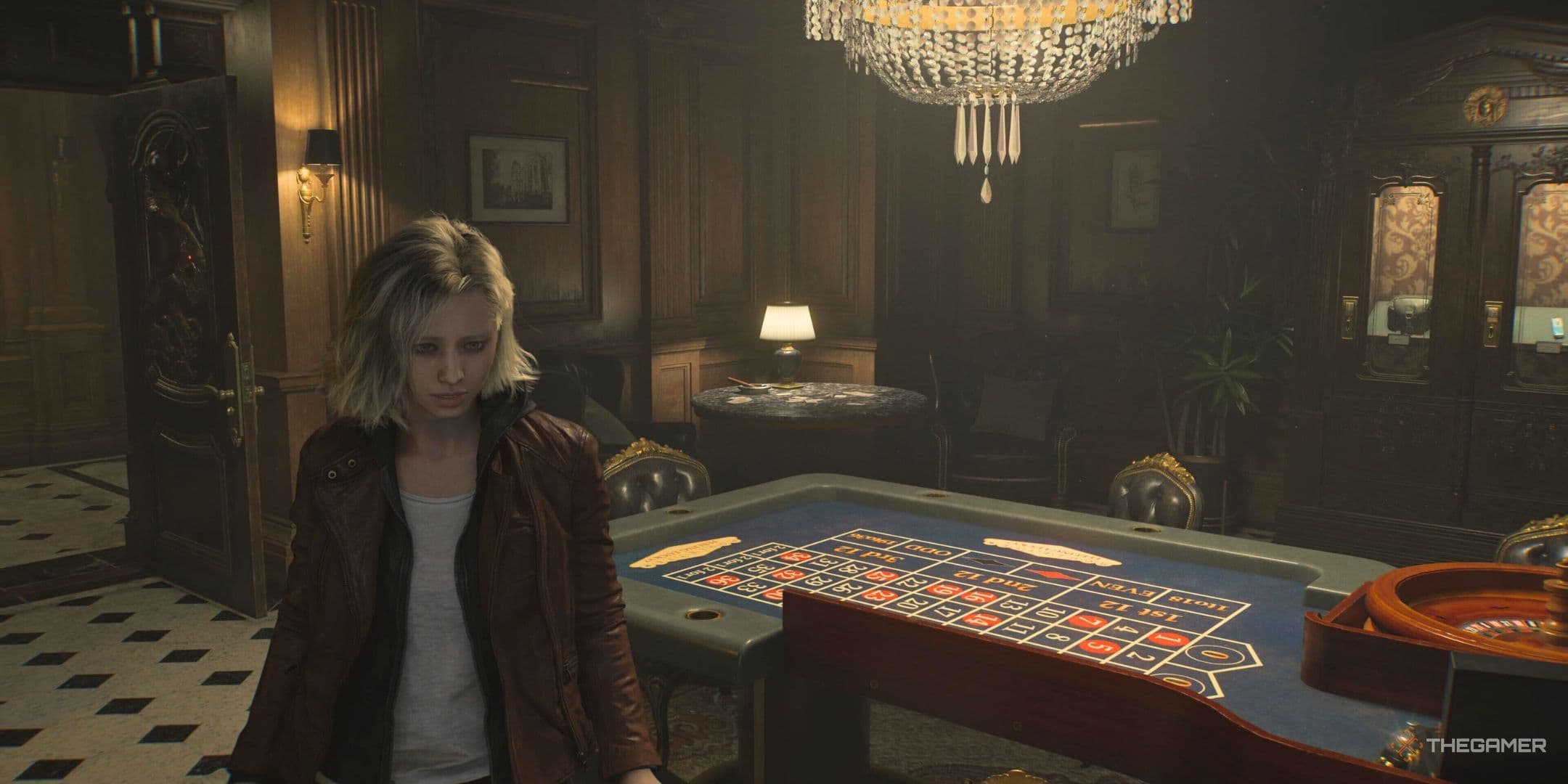
Resident Evil Requiem has barely been out the door, and the community is already doing what it does best: dissecting every prop, enemy, and one-off interaction for clues about what Capcom might be building next. The latest theory gaining traction is that Requiem’s assets and mechanics look tailor-made to be repurposed for the long-rumoured Resident Evil: Code Veronica and Resident Evil 1 remakes—an idea that fits Capcom’s modern playbook a little too well to ignore.
This matters because Capcom’s recent Resident Evil cadence hasn’t just been “good for a horror franchise.” It’s been borderline unreal for AAA development in 2026. If smart reuse is part of how Capcom keeps shipping big-budget survival horror at this pace, then Requiem may be more than a new entry—it may be a foundation.
Capcom’s “greatest hits” approach is fueling remake speculation
Since launching, Resident Evil Requiem has picked up a reputation for feeling like a series “greatest hits” in its final stretch, with familiar enemy types returning for another run at Leon. That’s not inherently a negative—Resident Evil has always thrived on remixing its own iconography—but it’s exactly the kind of design choice that makes fans start drawing lines between projects.
The theory goes like this: if Capcom is already building creatures, props, and set dressing that evoke older games, it’s not a huge leap to imagine those pieces being modified and tailored for future remakes. Not copy-pasted wholesale, but used as a starting point—models, animations, interaction logic, and encounter “grammar” that can be reworked into something bespoke.
And if there’s one publisher that has earned the benefit of the doubt on this kind of production efficiency lately, it’s Capcom. The company has been consistent since Resident Evil 7 (2017), rolling out remakes (RE2, RE3, RE4) alongside brand-new entries like Village and now Requiem—a run that’s hard to square with modern AAA timelines unless you assume the studio is being extremely deliberate about pipelines and reuse.
The Requiem assets fans think scream “Code Veronica remake”
A detailed fan deep dive circulating from Resident Evil community member SolidPyramid points to several Requiem elements that look like they could slot neatly into a Code Veronica remake—particularly environmental objects and set pieces that feel oddly “specific” for a single-use appearance.
One of the most talked-about examples is a roulette wheel found in the Care Centre parlour, which fans have compared to the Casino Bar in Code Veronica. It’s the kind of object that, on its own, could be dismissed as flavor—until you remember how Capcom often builds interactive spaces with reusable dressing and modular detail.
Other pieces fans are flagging as potential groundwork:
- Jail cells Grace encounters underground, which could be adapted to fit Code Veronica’s institutional and confinement-heavy vibes.
- A lighter Grace uses for a single scene—exactly the kind of small interaction system that could be expanded in a remake that leans into classic survival-horror utility items.
- A tyrant comparison: Code Veronica’s T-078 is being discussed in the same breath as Mr. X’s brief reappearance in Requiem, with fans noting a resemblance in silhouette and “tyrant language” that could make future development easier if Capcom is iterating on a shared base.
To be clear, none of this is confirmation that a Code Veronica remake exists, let alone that it’s using Requiem’s work directly. But the connective tissue fans are pointing at isn’t random: it’s about production logic. Capcom doesn’t need to reinvent every wheel if it already has one spinning convincingly in a shipped game.
The enemy lineup that has fans eyeing a Resident Evil 1 remake
The Resident Evil 1 remake rumors have been around long enough to feel like a ghost story you tell around a save room typewriter. But Requiem has given theorists fresh ammunition—particularly in its creature design.
Two enemies in Requiem, Titan Spinner and Plant 43, are being described by fans as extremely “old-school Resident Evil coded.” The speculation is that Capcom may be experimenting with spider and plant boss concepts in Requiem as a way to refine tech and encounter design before potentially returning to the Spencer Mansion.
The parallels fans are drawing are specific:
- Titan Spinner and Plant 43 are being viewed as potential groundwork for RE1’s Tiger Spider and Plant 42 boss concepts.
- Blister Heads are being compared heavily to Crimson Heads, with the idea being that if you’ve already nailed the look, movement, and “oh no” energy of a fast, aggressive evolved undead type, you’ve solved a big chunk of the remake problem.
This is the part of the theory that feels most compelling to me—not because it guarantees anything, but because it speaks to how Capcom tends to operate. When a studio is confident, it prototypes in public. It tests what works, what scares people, what reads clearly in motion, and what can be pushed further. If you were going to revisit RE1 with modern production values, you’d absolutely want your creature tech and animation language locked before you commit to rebuilding one of the most iconic horror settings in games.
Requiem’s performance capture reveals how Capcom is building “reusable” quality
Asset reuse isn’t just about monsters and props. It’s also about systems—and the way Capcom captured performances for Requiem hints at a studio investing in a pipeline that can scale.
In an interview, Angela Sant’Albano (Grace’s actor) described an audition process that included improvisation and an unusually intense prompt: she was asked to “die for about two to three minutes”—a slow, timed death with evolving direction mid-performance, including instructions like “and now a zombie has bitten your left leg” from casting director Kate Saxon.
That anecdote is funny in a grim Resident Evil way, but it also underlines something important: Capcom is chasing specificity. Not just “record lines,” but build a performance language that can carry horror up close.
Sant’Albano also described Requiem’s motion-capture process as more like theater, with Saxon encouraging actors not to think of it as a video game and to perform truthfully—“like theater-in-the-round,” but with the intimacy of a camera right in front of the face. Requiem’s production used props to suggest room layouts and key objects, and Sant’Albano said that aside from some combat/chase lines, all voiced lines were recorded during motion capture.
Why does that matter for remake speculation? Because if Capcom has built a robust cinematic and performance pipeline—blocking scenes with props, capturing full performances in one integrated process—that’s the kind of infrastructure that can support rapid iteration across projects. It’s not “reuse” in the sense of recycling a cutscene, but reuse in the sense of having a repeatable method for producing high-quality horror performances efficiently.
Sant’Albano’s behind-the-scenes details also highlight the practical constraints of mocap (like using a fake door so sensors aren’t blocked, and having to mimic realistic hand interaction without a true handle). Those are the kinds of production realities that studios learn to solve once—and then apply everywhere.
Even the way Sant’Albano approached a physically complex early scene—Grace strapped upside down to a gurney—speaks to a production that’s built to capture physicality. She wrote a beat sheet, treated it like choreography, and even asked the mocap team to suspend her partially upside down to make the movement feel truthful. That’s not a “cheap” way to make a game. That’s a studio investing in craft—and craft is exactly what you want if you’re going to remake sacred-text Resident Evil.
Release context: Requiem is out now, and Capcom has already teased more content
Resident Evil Requiem launched on February 27, 2026, developed and published by Capcom. It’s rated ESRB M (17+) for Intense Violence, Blood and Gore, Strong Language, and In-Game Purchases, and Capcom has confirmed that new content is coming to the game.
That confirmation is important, because it means Requiem isn’t a one-and-done release—it’s a living platform for additional material. And when a game is actively being expanded, it naturally becomes a richer “asset library” for the studio’s internal tech and content teams, whether or not any of it ever touches a remake.
Still, it’s worth keeping expectations grounded: Capcom has not officially announced a Code Veronica remake or a new Resident Evil 1 remake project here. The fan theory is about what could be happening behind the scenes, not what has been confirmed.
Why this theory feels plausible—even if it’s not proof of anything
There’s a reason this kind of speculation sticks to Capcom more than most publishers: Capcom has made reuse feel like an art form rather than a compromise. When it’s done well, reuse isn’t “samey”—it’s consistency. It’s a shared visual language, a coherent feel to interaction, and a faster path to polish.
And polish is the key word. Modern Resident Evil lives or dies on the little things: the weight of a door, the snap of a turn, the readability of a monster’s lunge, the way light catches on wet surfaces, the micro-pauses in a performance that sell fear. If Requiem has already built strong versions of those building blocks—whether it’s a lighter interaction, a cell block layout, or a plant-based horror encounter—then yes, it’s absolutely believable that Capcom would iterate on them rather than start from zero.
The community isn’t just “hoping” for remakes. It’s recognizing patterns in how Capcom ships games, and trying to predict what those patterns point to next.
What Remains Unknown
- Whether Capcom is actually developing a Resident Evil: Code Veronica remake (no official announcement has been made).
- Whether Capcom is actually developing a new Resident Evil 1 remake (no official announcement has been made).
- Which platforms any potential remakes would target, and what their release windows or pricing might be.
- Whether any specific Requiem assets, enemies, or mechanics would be reused directly, or simply served as internal prototypes.
- What Capcom’s confirmed upcoming Requiem content will include, and whether it will introduce additional “remake-adjacent” elements that fuel further theories.