Pokémon Pokopia is the kind of left-field Pokémon spin-off I’ve been begging Nintendo to greenlight for years: a low-stress, cozy simulation game that’s more about rebuilding a world than battling for badges. Developed by Omega Force and published by Nintendo, it casts you as Ditto in a quietly post-apocalyptic Kanto where humans—and even most Pokémon—have vanished, leaving you to restore life one habitat, one road, and one Pokémon Center at a time.
It’s wholesome, it’s melancholy, and it’s dangerously easy to lose hours to “just one more environment level.” On Nintendo Switch 2, it also runs smoothly enough to make the whole thing feel like the console’s first true “curl up and live here” showcase.
A Post-Apocalyptic Kanto That’s Cozy… and Kind of Sad
The premise is immediately weirder—and more emotionally pointed—than you might expect from a game that’s often described in the same breath as Animal Crossing.
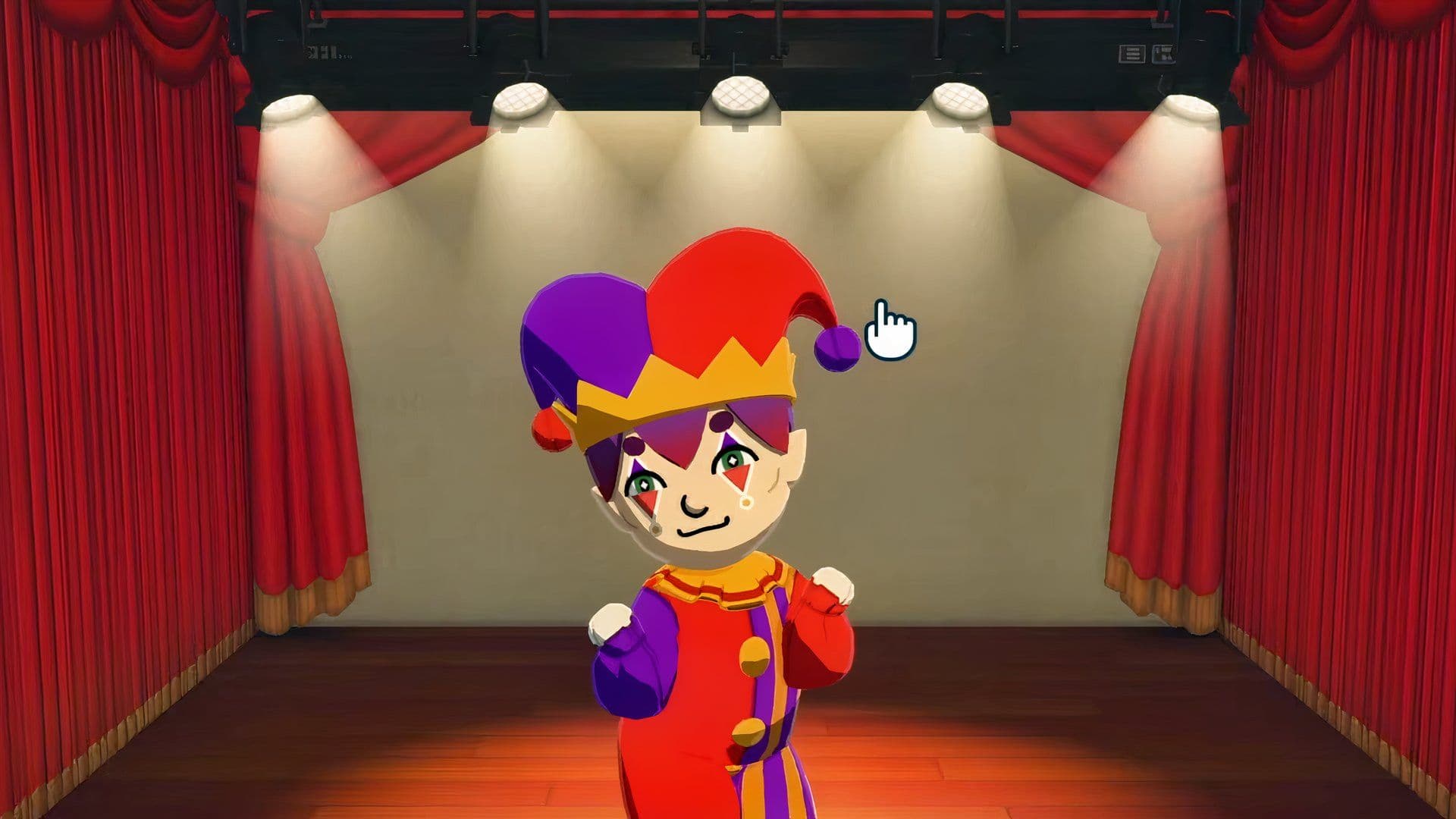
You play as Ditto, who wakes up after being stored in a PC and takes on a human form based on what it remembers its trainer looked like. That’s a clever narrative trick: you’re technically a Pokémon, but you’re also a stand-in for the missing people the world is aching for. From there, the game establishes its central mystery: all humans have disappeared, and Pokémon are gone too—until you begin restoring the region.
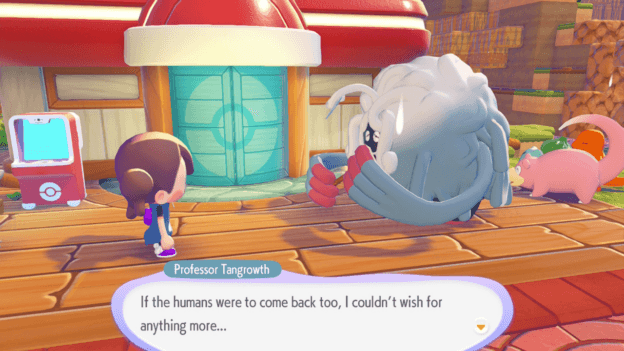
Your guide is Professor Tangrowth, and the tone lands in that bittersweet sweet spot: the world is desolate, but not hopeless. The story’s driving question—what happened to the humans, and how do you bring them back?—isn’t just flavor text. It’s threaded through exploration via collectible “human records” that slowly let you piece together what happened to the region.
That’s the first big win of Pokopia: it doesn’t treat “cozy” as synonymous with “empty.” It gives you a reason to care about the world beyond decorating it.
The Core Loop: Environment Levels, Terraforming, and Building Habitats
Mechanically, Pokémon Pokopia is built around one central goal: increase each territory’s environment level by rebuilding and rewilding the land. There are six territories total, with five tied to the main storyline. Each zone is considered “complete” (by the story’s standards) when you rebuild the Pokémon Center and reach environment level five.
How do you raise that environment level? Basically by doing everything the game wants you to do anyway:
- Terraforming
- Fixing roads
- Adding buildings and décor
- Creating habitats
- Bringing more Pokémon into the area
It’s a smart design because it avoids the most exhausting part of many sim and builder games: the feeling that you’re grinding currency or optimizing budgets. Pokopia explicitly isn’t about money management. It’s about restoration—figuratively and literally—and the systems reinforce that theme.
Ditto’s Power-Ups Are Your Tools (and Your “Progression”)
Instead of leveling up through combat, Ditto learns power-ups taught by other Pokémon. These abilities are both practical tools and a satisfying way to make befriending Pokémon feel meaningful.
Examples include:
- Squirtle teaching Water Gun, which increases humidity and lets you water plants and farms
- Bulbasaur teaching Leafage, which creates patches of grass
- Hitmonchan teaching Rock Smash, which helps break walls and terraform
These aren’t just “cute references.” They’re the backbone of how you reshape each zone.
Habitats: The Best Kind of Pokémon “Collecting” Puzzle
If you’ve ever wished Pokémon games leaned harder into ecology—how Pokémon live, where they appear, and what draws them in—Pokopia’s habitat system is your meal.
You create habitats using your abilities and the environment itself. A simple example is a 2x2 Tall Grass habitat, which can attract Pokémon like Bulbasaur and Squirtle (among others). But the system expands into combinations like:
- Hydrated Tall Grass (tall grass beside water)
- Shaded Tall Grass (tall grass near a tree)
And it’s not limited to grass. Habitats can be made from flowerbeds, trees, boulders, and décor items. That’s where the game starts to feel like a gentle, Pokémon-skinned remix of Minecraft’s “build to enable” logic—except the reward is a living, roaming ecosystem.
The game also tracks habitat discoveries through Ditto’s Habit Dex, which shows:
- How many Pokémon can appear in a habitat
- Their rarity
- The time of day and weather conditions they require
That turns collecting into deduction. You’re not just waiting for RNG; you’re learning the rules of the world and nudging it into place.
Real-Time Clock, Roaming Pokémon, and the Joy of Just Watching
One of Pokopia’s most inspired choices is something modern Pokémon has increasingly drifted away from: a real-time clock. Days are divided into morning, afternoon, evening, and night, and some Pokémon only appear at certain times.
That matters because Pokopia is at its best when it feels like a place you check in on, not a checklist you clear. The real-time clock encourages routine and anticipation—two things cozy games thrive on. It also gives the world texture: the same habitat can feel different depending on when you return.
And once Pokémon start coming back, the game leans into the simple pleasure of coexisting with them. Pokémon interact with each other and with objects in the environment on their own. The music is described as serene, and the overall presentation is built to support a “leave it running while you do something else” vibe.
That’s not a backhanded compliment. That’s the dream. A cozy sim should be able to function as a comforting space, not just a task machine.
Minigames, Toys, and Pokémon Being Pokémon
Pokopia also sprinkles in lighter interactions:
- Minigames like jump rope with Bulbasaur’s Vine Whip
- Décor items classified as toys (like blocks or a sandbox)
- Emergent little moments—like placing a sandbox and later discovering a sandcastle has appeared
It’s the kind of detail that makes a world feel inhabited rather than staged.
And yes, the game even lets you listen in on Pokémon conversations, which can be genuinely funny—like Machamp and Machoke boasting about their muscles.
Performance and Presentation on Nintendo Switch 2
On the technical side, Pokopia is reported to run smoothly on Nintendo Switch 2, with simple controls and no noted hiccups or lag. Visually, it’s described as crisp and vivid, with a focus on making Pokémon look “adorable” in motion.
That matters because this is a game that asks you to spend long stretches building, decorating, and observing. If it stuttered or fought you, the entire vibe would collapse. Instead, it sounds like the game’s performance supports its core identity: low-friction comfort.
The One Big Problem: The 30-Pokémon Per Area Limit
Here’s the catch—and it’s a meaningful one.
While there are about 300 Pokémon you can befriend, only around 30 can appear in an area at a time. If you exceed that, some Pokémon will despawn at random. That can create confusion when you’re trying to find a specific Pokémon and realize you haven’t seen others in days.
There is a workaround: using honey in a Pokémon’s habitat will spawn them back immediately. But the limitation still stings, because the fantasy Pokopia sells is a thriving, repopulated ecosystem. If you’re the kind of player who wants to build a bustling zone and watch dozens upon dozens of Pokémon interact, that cap is going to feel like the game tapping the brakes.
The likely reason is performance stability—keeping the game smooth by limiting active entities—but that’s an inference, not a confirmed technical explanation. What is clear is that the cap is the biggest friction point in an otherwise “sink into it” design.
The Community Is Doing What the Community Does (Machoke, Explained)
Pokopia’s cozy tone hasn’t stopped players from immediately finding… other kinds of entertainment.
One of the most talked-about examples is Machoke. Players have been sharing clips and screenshots of Machoke’s sleeping animation—specifically how it lounges on a bed in a way that has surprised (and delighted) parts of the community. The game allows you to have Pokémon live with you, and Machoke’s “posted up” sleeping pose has turned into a full-on social media moment, with some players leaning into the “house husband” bit intentionally.
It’s silly, it’s very internet, and it’s also a sign of something important: people are bonding with the game’s systems enough to create stories out of them. Cozy sims live and die by that kind of emergent attachment.
Verdict: A Pokémon Spin-Off That Understands Why Cozy Works
Pokémon Pokopia nails the fantasy of rebuilding a broken place with gentle, meaningful actions. The environment-level loop is satisfying without becoming a spreadsheet. The habitat system turns Pokémon collecting into an ecological puzzle. The real-time clock brings back a sense of anticipation that longtime fans have missed. And on Nintendo Switch 2, it sounds like the whole package runs with the smoothness a game like this absolutely needs.
The 30-Pokémon-per-area limit is the one design choice that threatens the “living world” illusion—especially when the game dangles a 300-Pokémon friendship ceiling in front of you. But even with that constraint, Pokopia’s blend of Pokémon + Animal Crossing + a touch of Minecraft is a potent formula.
If Nintendo is serious about expanding what Pokémon can be beyond the mainline RPG template, this is exactly the kind of swing it should keep taking.
What Remains Unknown
Even with a strong sense of how the game plays, there are still notable details that haven’t been confirmed publicly:
- Pricing for Pokémon Pokopia on Nintendo Switch 2 has not been specified here.
- A release date (beyond it being “new”) is not detailed here.
- Whether the 30-Pokémon area cap can be increased via settings, upgrades, or future updates has not been confirmed.
- No official details are provided here about post-launch support, expansions, or content updates.