Owlcat Games has confirmed it’s using generative AI during development of The Expanse: Osiris Reborn, but insists none of it will survive into the shipped product. The studio says the tech is being used strictly for prototyping and technical iteration—not for final art assets, writing, or voice work—at a time when players are increasingly allergic to anything that smells like AI-generated content sneaking into a launch build.
This matters because Osiris Reborn is shaping up to be one of the most closely watched sci-fi RPGs on the calendar, with a Spring 2027 release window, a closed beta starting April 22, 2026, and a day-one Game Pass Ultimate promise. When a game is courting Mass Effect comparisons this aggressively, trust is currency—and Owlcat is trying to bank it early.
What Owlcat Actually Said About Generative AI
Owlcat’s message is direct: generative AI is in the pipeline right now, but it’s not in the destination. During a press briefing, PR manager Katharina Popp explained the studio’s approach in unusually specific terms:
“We don't use it to create any assets that will be in the game.”
“We use it a lot for prototyping, trying things out, placeholders. They will all be replaced at the end.”
“We use it basically for trying out things on a technical level. For example, looking how a 2D image looks in 3D, or changing colours to what looks good. So it's basically for being able to iterate faster. But we don't use it to write, we don't use AI voice actors, so everything that will be in the final version will definitely 100 percent be human made.”
That’s the key promise: no AI-written text, no AI voice acting, and no AI-generated assets in the final release—with gen-AI framed as a temporary tool for experimentation and speed during development.
In other words, Owlcat is drawing a bright line between prototyping and shipping content. Whether players accept that distinction is going to depend on how transparent the studio remains between now and launch—and how confidently it can demonstrate that “placeholders” really were replaced.
Why This Is a Flashpoint Now (and Why Owlcat Addressing It Early Is Smart)
The industry has been drifting toward AI-assisted workflows for a while, but the player base has become far less tolerant of ambiguity—especially when studios can’t clearly explain what was generated, where it appears, and whether it was trained on ethically sourced material. Even when a developer claims AI was “just a tool,” the fear is always the same: that something slips through, gets discovered post-launch, and turns into a credibility crisis.
Owlcat’s approach here is notable for two reasons:
- They’re not pretending it isn’t happening. They’re acknowledging gen-AI use during development rather than waiting for a job listing, a leaked asset, or a datamine to force the conversation.
- They’re committing to a clean final build. “Everything… will definitely 100 percent be human made” is a strong, testable claim—one that will absolutely be scrutinized if the community starts combing through textures, concept remnants, or UI art down the line.
This also isn’t Owlcat’s first time in this debate. Back in 2024, the studio responded to backlash around a concept artist job advert that referenced “concept generation using AI and other modern tools,” clarifying that AI would be used for internal concept-related processes and that the final game would not include neural-network-generated art. That earlier clarification is now being echoed—more formally and more publicly—around The Expanse: Osiris Reborn.
The subtext is clear: Owlcat knows this topic can derail hype, and it wants to keep the conversation anchored to what players will actually get at launch.
The Expanse: Osiris Reborn’s Release Window, Platforms, and Closed Beta Details
Alongside the AI clarification, Owlcat’s big beats are all about timing and access. The Expanse: Osiris Reborn is currently slated for Spring 2027 on:
- PC (via Steam, Epic Games Store, and GOG)
- PlayStation 5
- Xbox Series X|S
On Xbox, it’s also confirmed for Xbox on PC and Xbox Cloud, and it will be an Xbox Play Anywhere title. The full game is also coming day one to Xbox Game Pass Ultimate.
Closed beta starts April 22, 2026 — but access is paywalled behind premium editions
Owlcat is running a closed beta beginning April 22, 2026, and it’s available on PC, PS5, and Xbox Series X|S—but only if you buy specific editions through the official website.
Beta access is tied to:
- Miller’s Pack (digital) — $79.99 / $80 USD (pricing is presented as $79.99 in one listing and $80 in another)
- Collector’s Edition (physical) — $289.99 USD
A Standard Edition is listed at $49.99, and it does not include beta access.
Owlcat has also said the beta will run from April 22 until launch in Spring 2027. That’s a long runway for a “closed beta,” especially for a single-player RPG, but Owlcat’s leadership has framed it as a feedback-driven iteration period—something the studio has done on prior projects.
What’s in the beta mission?
The closed beta includes a full mission from early in the game. Owlcat’s descriptions converge on the same core beats:
- You’ll visit Pinkwater 4 station (tied to Pinkwater Security, your employer)
- You’ll meet Zafar, who later joins your crew
- You’ll confront a powerful enemy and get a taste of combat, dialogue choices, and progression systems
One briefing description also notes the beta mission is the second mission in the game, taking place after you and your sibling escape catastrophe on Eros and acquire a ship.
Owlcat has been explicit that the beta build is work in progress and won’t reflect final quality, with a note that performance may vary and that Xbox Series X or PS5 is recommended on console.
What Kind of RPG Is This, Really? (Yes, It’s Wearing Mass Effect’s Jacket)
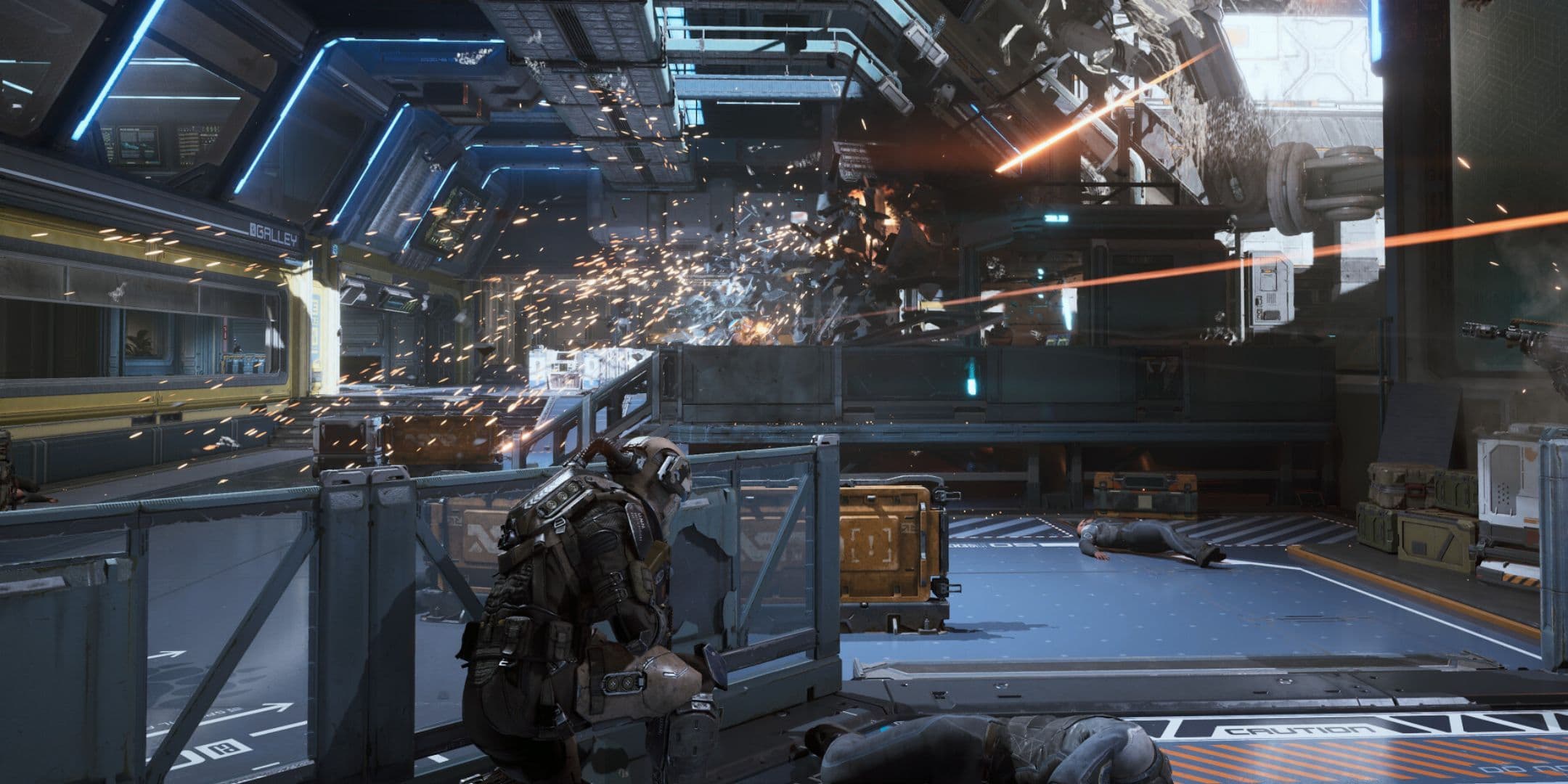
Owlcat is best known for deep, isometric CRPGs like Pathfinder: Kingmaker, Pathfinder: Wrath of the Righteous, and Warhammer 40,000: Rogue Trader. The Expanse: Osiris Reborn is a pivot: it’s a third-person, over-the-shoulder action RPG built in Unreal Engine 5, with cover-based shooting and cinematic dialogue presentation.
The comparisons to Mass Effect aren’t subtle, and Owlcat has acknowledged the inspiration. The feature set being discussed publicly includes:
- Cover-based third-person combat
- Squad/companion commands
- Cinematic dialogue with choices
- Romance
- RPG upgrades and customization
The tonal differentiator is just as important: The Expanse is grounded sci-fi. No “space magic,” no biotic-style power fantasy—just believable tech, hard edges, and the kind of political and cultural friction that made the books and show resonate.
The “Exploits” system puts companions at the center of combat
One of the more interesting mechanical hooks Owlcat is pushing is the Exploits system, which creates combat opportunities companions can trigger—sometimes to wipe out groups of enemies if you set it up right.
The Xbox breakdown describes moments where companions can interact with specific areas of the environment; you wait for enemies to cluster, then command the companion to act. It’s a smart way to make squadmates feel like tactical partners rather than cooldown dispensers.
Companions also matter even when they’re not in your active squad. Owlcat says crew members can provide support during missions regardless of whether they’re currently deployed with you—starting with Zafar in the beta, and expanding as you recruit more.
Companions revealed so far
Across the various reveals, Owlcat has named and described several companions, including:
- J / JJ — your identical twin, described as your impulsive but loyal right hand and executive officer
- Zafar — a calm, collected mechanical engineer; in combat he can deploy turrets and EMF devices
- Michael — a principled gunner with a military/private security background
- Regina — a well-connected liaison officer with strong marksmanship
- Teo — a loud combat medic who lost his medical license on Earth
- Polly — described as youthful, optimistic, and chatty; uses an SMG and demolition-oriented abilities
- Aleesha — an electronic warfare specialist with a snarky edge
The game’s setup, as described in official messaging, places you and your twin as Pinkwater Security mercenaries caught up in catastrophe tied to Eros, forced into desperate action and targeted by enemies connected to Protogen and its experiments.
Space Travel: No Time Management, But Cutscenes Will Sell the Journey
One of the most “Expanse” questions you can ask is: how do you handle travel times that realistically take days, weeks, or months? Owlcat’s answer is to avoid turning that realism into a management sim.
Game Design Director Leonid Rastorguev explained that Osiris Reborn will not include a time management mechanic for space travel, calling it excessive. Instead, the game will use short cutscenes and shipboard atmosphere to convey the passage of time—showing people eating, working out, communicating, and living aboard the ship to maintain immersion without bogging down pacing.
It’s a pragmatic call. The Expanse’s realism is part of its identity, but a strict simulation of travel time could easily become a friction point in an RPG built around momentum, missions, and character drama.
Why Players Should Care: This Is Owlcat’s Biggest Swing Yet—and Trust Will Decide the Landing
Even without the AI angle, The Expanse: Osiris Reborn is a high-stakes project for Owlcat. It’s a genre shift, a presentation shift, and a scale shift. The studio has said there are around 200 people working on the game, underscoring how ambitious this is compared to what many fans associate with Owlcat’s CRPG roots.
That’s exactly why the generative AI pledge matters. When a studio is reinventing itself in public—moving from dense isometric systems to cinematic third-person action RPG design—players are already watching for cracks: animation stiffness, combat feel, dialogue cadence, performance, and polish. Add AI suspicion to that pile and you’ve got a recipe for skepticism.
By drawing a hard line now—prototype with AI, ship with humans—Owlcat is trying to remove one of the biggest trust bombs before it detonates. It’s also setting itself up for accountability. If the final build truly is “100% human made,” Owlcat gets to claim a rare win: using modern tools to speed iteration without turning the final product into an ethical or artistic compromise.
But if anything slips through? The community will find it. And with a closed beta running from April 2026 to Spring 2027—available to paying founders—there will be a lot of eyes on this game for a long time.
What Remains Unknown
- How Owlcat will verify that no generative AI-created assets make it into the final release (no specific auditing process has been detailed).
- Whether the closed beta will expand beyond the single mission described, or remain a fixed slice of early-game content.
- Steam/retail beta access details beyond the current requirement to purchase Miller’s Pack or the Collector’s Edition via the official website.
- A firm release date in Spring 2027 (only the window has been announced).
- The full scope of romance options and companion roster, beyond the characters shown and named so far.